Meditative movement for breathlessness in advanced COPD or cancer: a systematic review and meta-analysis
- PMID: 37343961
- PMCID: PMC10282812
- DOI: 10.1183/16000617.0243-2022
Meditative movement for breathlessness in advanced COPD or cancer: a systematic review and meta-analysis
Abstract
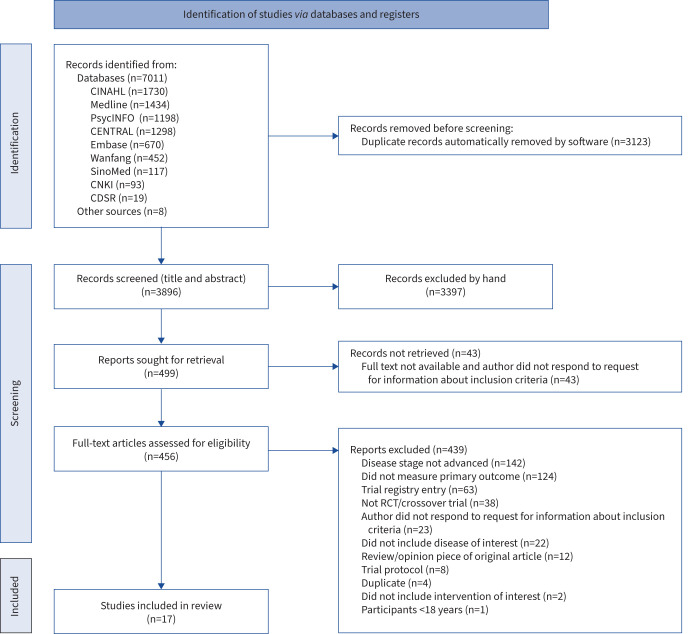
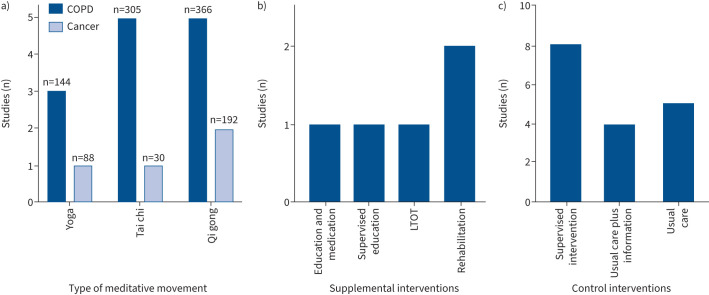
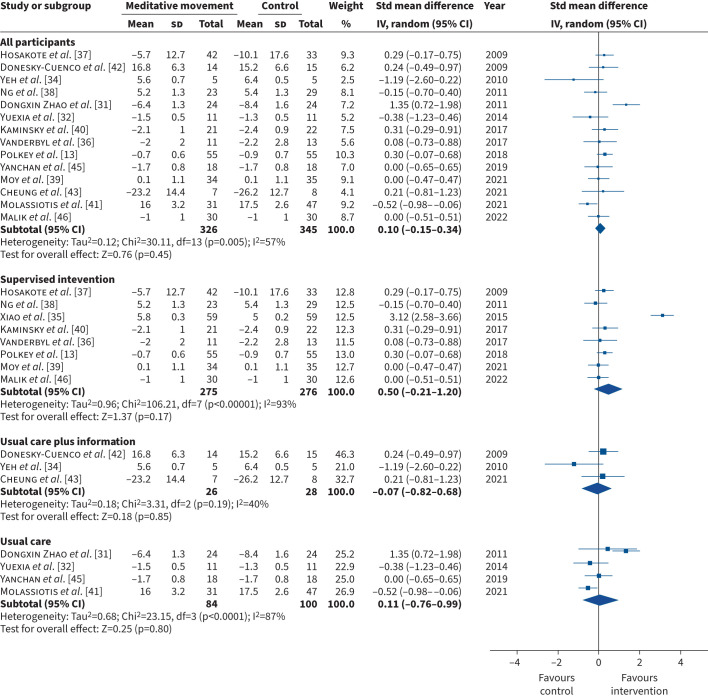
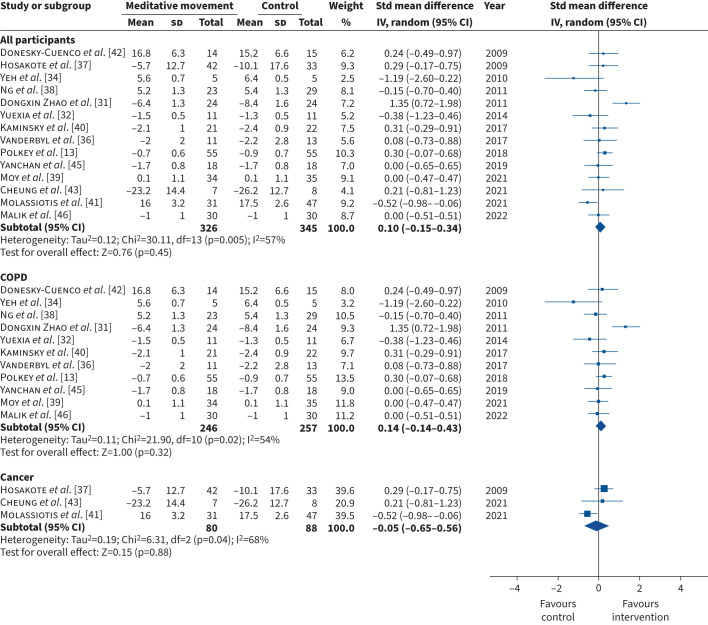
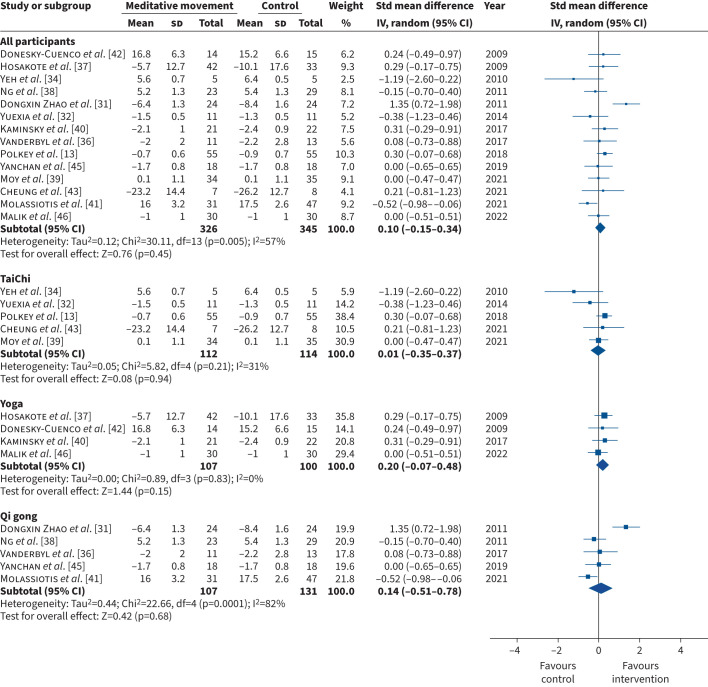
The effect of meditative movement, which includes yoga, tai chi and qi gong, on breathlessness in advanced disease is unknown. This systematic review aims to comprehensively assess the evidence on the effect of meditative movement on breathlessness (primary outcome), health-related quality of life, exercise capacity, functional performance and psychological symptoms (secondary outcomes) in advanced disease. 11 English and Chinese language databases were searched for relevant trials. Risk of bias was assessed using the Cochrane tool. Standardised mean differences (SMDs) with 95% confidence intervals were computed. 17 trials with 1125 participants (n=815 COPD, n=310 cancer), all with unclear or high risk of bias, were included. Pooled estimates (14 studies, n=671) showed no statistically significant difference in breathlessness between meditative movement and control interventions (SMD (95% CI) 0.10 (-0.15-0.34); Chi2=30.11; I2=57%; p=0.45), irrespective of comparator, intervention or disease category. Similar results were observed for health-related quality of life and exercise capacity. It was not possible to perform a meta-analysis for functional performance and psychological symptoms. In conclusion, in people with advanced COPD or cancer, meditative movement does not improve breathlessness, health-related quality of life or exercise capacity. Methodological limitations lead to low levels of certainty in the results.
Copyright ©The authors 2023.
Conflict of interest statement
Conflict of interest: C.M. Nolan reports personal fees from Novartis, consultancy work (not reimbursed) with Vicore Pharma and grants from the National Institute for Health and Care Research outside the submitted work. W.D-C. Man reports grants from the National Institute for Health and Care Research (NIHR), outside the submitted work. M. Maddocks reports grants from NIHR, outside the submitted work. The remaining authors have nothing to disclose.
Figures
References
-
- Moens K, Higginson IJ, Harding R, et al. . Are there differences in the prevalence of palliative care-related problems in people living with advanced cancer and eight non-cancer conditions? A systematic review. J Pain Symptom Manage 2014; 48: 660–677. doi:10.1016/j.jpainsymman.2013.11.009 - DOI - PubMed
Publication types
MeSH terms
Grants and funding
LinkOut - more resources
Full Text Sources
Medical