


Renin-Angiotensin System: Updated Understanding and Role in Physiological and Pathophysiological States
- PMID: 37350982
- PMCID: PMC10283427
- DOI: 10.7759/cureus.40725
Renin-Angiotensin System: Updated Understanding and Role in Physiological and Pathophysiological States
Abstract
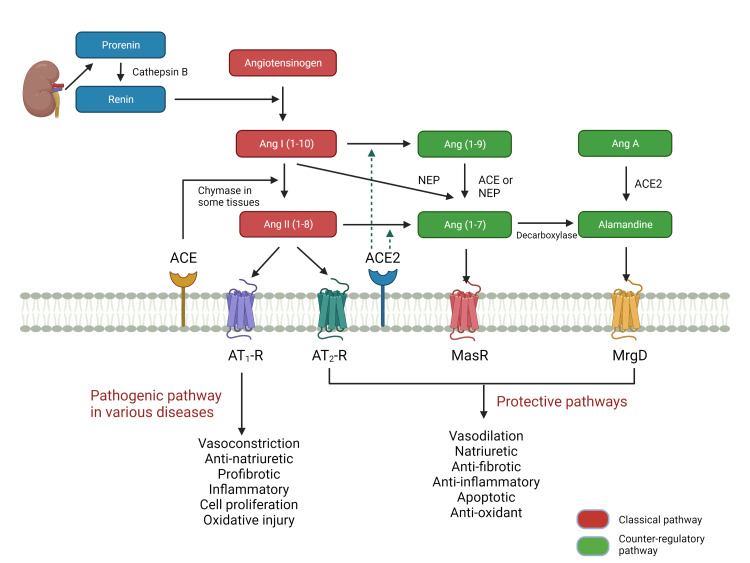
The classical view of the renin-angiotensin system (RAS) is that of the circulating hormone pathway involved in salt and water homeostasis and blood pressure regulation. It is also involved in the pathogenesis of cardiac and renal disorders. This led to the creation of drugs blocking the actions of this classical pathway, which improved cardiac and renal outcomes. Our understanding of the RAS has significantly expanded with the discovery of new peptides involved in this complex pathway. Over the last two decades, a counter-regulatory or protective pathway has been discovered that opposes the effects of the classical pathway. Components of RAS are also implicated in the pathogenesis of obesity and its metabolic diseases. The continued discovery of newer molecules also provides novel therapeutic targets to improve disease outcomes. This article aims to provide an overview of an updated understanding of the RAS, its role in physiological and pathological processes, and potential novel therapeutic options from RAS for managing cardiorenal disorders, obesity, and related metabolic disorders.
Keywords: cardio-protection; cardiovascular; hypertension; obesity; renin-angiotensin-aldosterone system.
Copyright © 2023, Kanugula et al.
Conflict of interest statement
The authors have declared that no competing interests exist.
Figures
References
-
- M. Physiology and pathophysiology of the adipose tissue renin-angiotensin system. Engeli S, Negrel R, Sharma AM. Hypertension. 2000;35:1270–1277. - PubMed
Publication types
LinkOut - more resources
Full Text Sources