. 2023 Jun 24;10(1):411.
doi: 10.1038/s41597-023-02306-9.

Biodiversity of Philippine marine fishes: A DNA barcode reference library based on voucher specimens

Affiliations

Biodiversity of Philippine marine fishes: A DNA barcode reference library based on voucher specimens

Katherine E Bemis et al. Sci Data. .

Abstract

Accurate identification of fishes is essential for understanding their biology and to ensure food safety for consumers. DNA barcoding is an important tool because it can verify identifications of both whole and processed fishes that have had key morphological characters removed (e.g., filets, fish meal); however, DNA reference libraries are incomplete, and public repositories for sequence data contain incorrectly identified sequences. During a nine-year sampling program in the Philippines, a global biodiversity hotspot for marine fishes, we developed a verified reference library of cytochrome c oxidase subunit I (COI) sequences for 2,525 specimens representing 984 species. Specimens were primarily purchased from markets, with additional diversity collected using rotenone or fishing gear. Species identifications were verified based on taxonomic, phenotypic, and genotypic data, and sequences are associated with voucher specimens, live-color photographs, and genetic samples catalogued at Smithsonian Institution, National Museum of Natural History. The Biodiversity of Philippine Marine Fishes dataset is released herein to increase knowledge of species diversity and distributions and to facilitate accurate identification of market fishes.


Conflict of interest statement

The authors declare no competing interests.

Figures
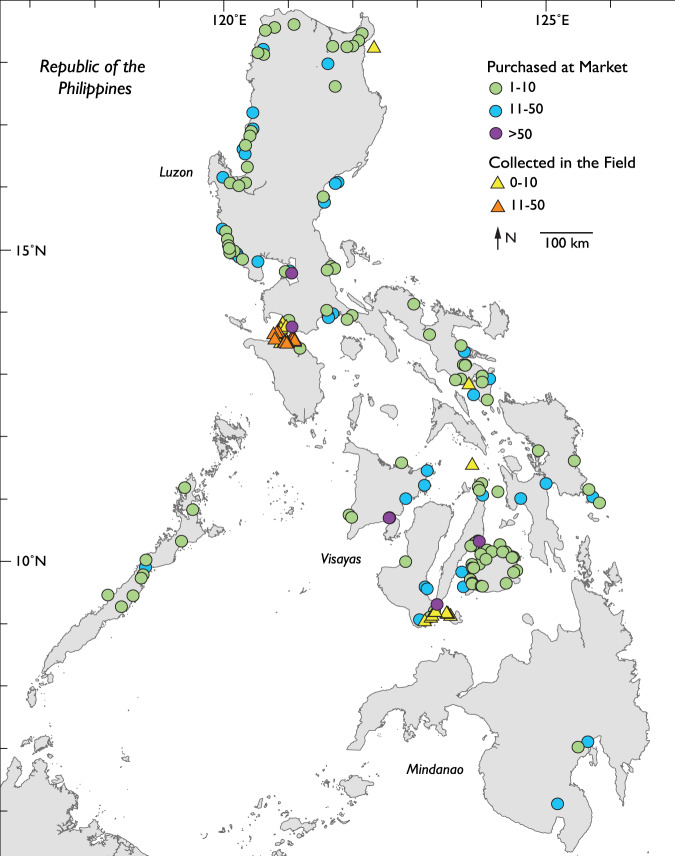
Fig. 1
Fig. 1
Map of sampling localities. For fishes purchased from markets, the market location is shown; vendors stated that fishes were captured from local coastal waters in the vicinity of the markets. For fishes collected in the field using rotenone while snorkeling, SCUBA diving, or using fishing gear, points on the map represent precise collection localities.
Fig. 2
Fig. 2
Methods for sequence identification and verification. Photograph of Plectranthias inermis USNM 431978, 33 mm SL.
Fig. 3
Fig. 3
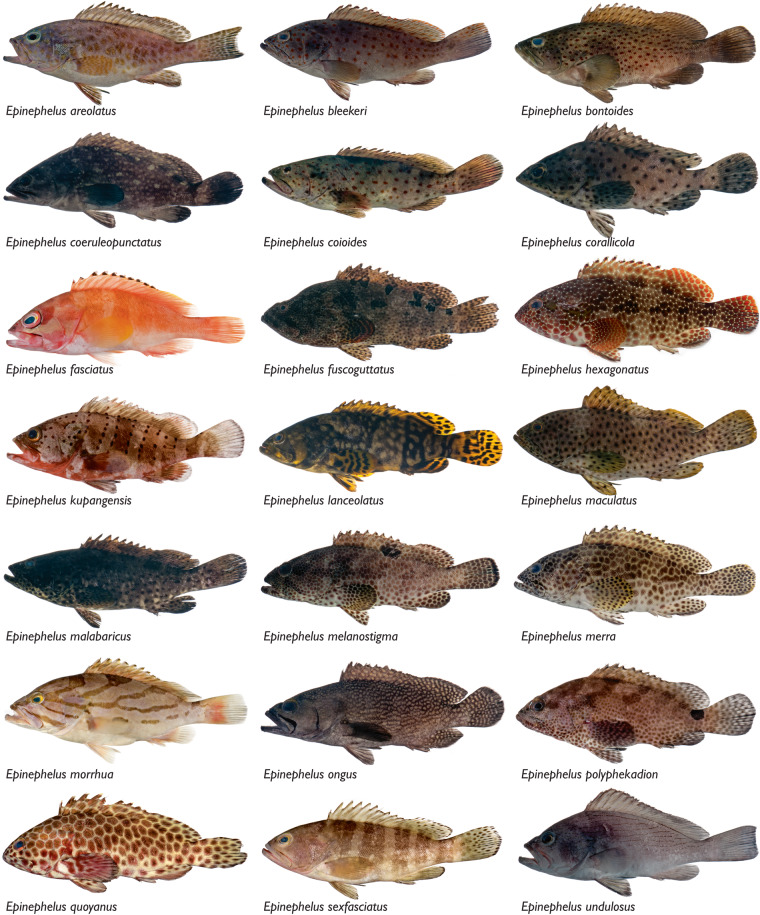
Photographs of groupers (Epinephelus), a challenging genus to identify and one that is frequently mislabeled. Live-color photographs, voucher specimens, and molecular sequence data enabled verified identifications of these specimens collected from Philippine fish markets. Epinephelus areolatus USNM 435700, 163 mm SL; E. bleekeri USNM 443235, 209 mm SL; E. bontoides USNM 403254, 160 mm SL; E. coeruleopunctatus USNM 431516, 223 mm SL; E. coioides USNM 435656, 237 mm SL; E. corallicola USNM 431624, 143 mm SL; E. fasciatus USNM 403060, 108 mm SL; E. fuscoguttatus USNM 431625, 261 mm SL; E. hexagonatus USNM 443283, 152 mm SL; E. kupangensis USNM 443558, 172 mm SL; E. lanceolatus USNM 431627, 204 mm SL; E. maculatus USNM 431623, 250 mm SL; E. malabaricus USNM 431611, 261 mm SL; E. melanostigma USNM 431622, 204 mm SL; E. merra USNM 443288, 144 mm SL; E. morrhua USNM 403199, 252 mm SL; E. ongus USNM 435567, 170 mm SL; E. polyphekadion USNM 423651, 154 mm SL; E. quoyanus USNM 445240, 215 mm SL; E. sexfasciatus USNM 445239, 151 mm SL; and E. undulosus USNM 431568, 181 mm SL.
Fig. 4
Fig. 4
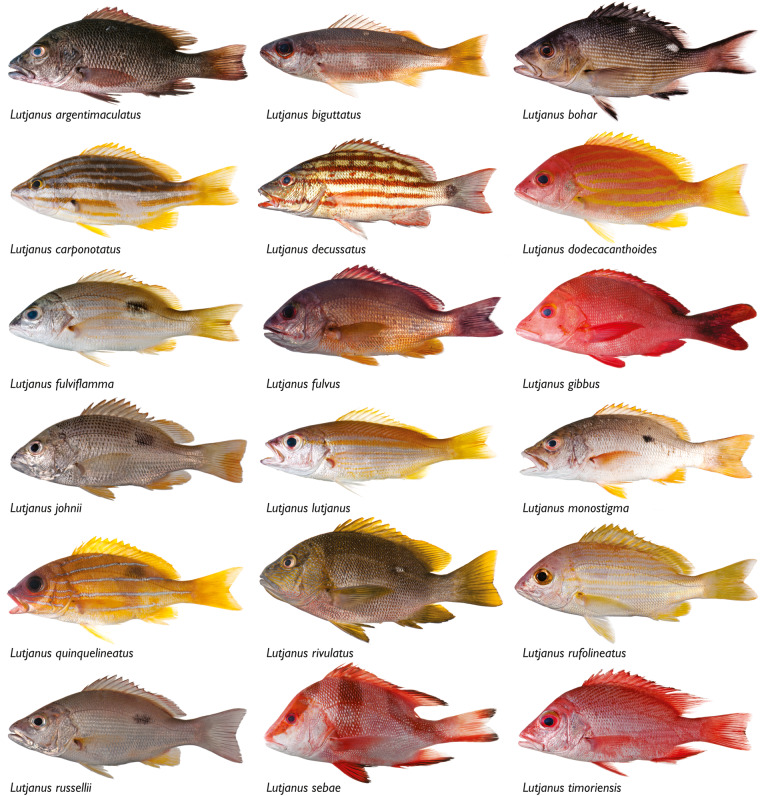
Photographs of snappers (Lutjanus) a commercially important genus; live-color photographs, voucher specimens, and molecular sequence data enabled verified identifications of these specimens collected from Philippine fish markets. Lutjanus argentimaculatus USNM 403082, 182 mm SL; L. biguttatus USNM 443245, 145 mm SL; L. bohar USNM 445453, 185 mm SL; L. carponotatus USNM 424827, 110 mm SL; L. decussatus USNM 445218, 170 mm SL; L. dodecacanthoides USNM 443545, 142 mm SL; L. fulviflamma USNM 403054, 134 mm SL; L. fulvus USNM 435687, 166 mm SL; L. gibbus USNM 403099, 223 mm SL; L. johnii USNM 423648, 139 mm SL; L. lutjanus USNM 403104, 127 mm SL; L. monostigma USNM 403313, 168 mm SL; L. quinquelineatus USNM 423610, 149 mm SL; L. rivulatus USNM 438092, 205 mm SL; L. rufolineatus USNM 445298, 148 mm SL; L. russellii USNM 423649, 144 mm SL; L. sebae USNM 403135, 256 mm SL; and L. timoriensis USNM 403119, 160 mm SL.
Fig. 5
Fig. 5
Species diversity included in the Biodiversity of Philippine Marine Fishes dataset. (a) Number of species by family; families represented by a single species shown to the right of the graph. (b) Number of newly sequenced species within each family in the dataset. Gold bars represent species publicly available for the first time; gray bars represent species for which some genetic data are available publicly but are first publicly available herein for COI.

References

    1. GAO. Seafood fraud: FDA program changes and better collaboration among key federal agencies could improve detection and prevention. GAO-09-258. United States Government Accountability Office, Washington, D.C., USA. (2009).
    1. NOAA Presidential Task Force on Combating Illegal Unreported and Unregulated (IUU) Fishing and Seafood Fraud Action Plan. Federal Register. 2015;80:66867–66879.
    1. Handy SM, et al. A single laboratory validated method for the generation of DNA barcodes for the identification of fish for regulatory compliance. J. AOAC Int. 2011;94:201–210. doi: 10.1093/jaoac/94.1.201. - DOI - PubMed
    1. Deeds JR, et al. Protocol for building a reference standard sequence library for DNA-based seafood identification. J. AOAC Int. 2014;97:1–8. doi: 10.5740/jaoacint.14-111. - DOI - PubMed
    1. Eischeid AC, Stadig SR, Handy SM, Fry FS, Deeds JR. Optimization and evaluation of a method for the generation of DNA barcodes for the identification of crustaceans. LWT Food Sci. Tech. 2016;73:357–367. doi: 10.1016/j.lwt.2016.06.033. - DOI