


Regorafenib prevents the development of emphysema in a murine elastase model
- PMID: 37357536
- PMCID: PMC10471461
- DOI: 10.5483/BMBRep.2023-0072
Regorafenib prevents the development of emphysema in a murine elastase model
Abstract
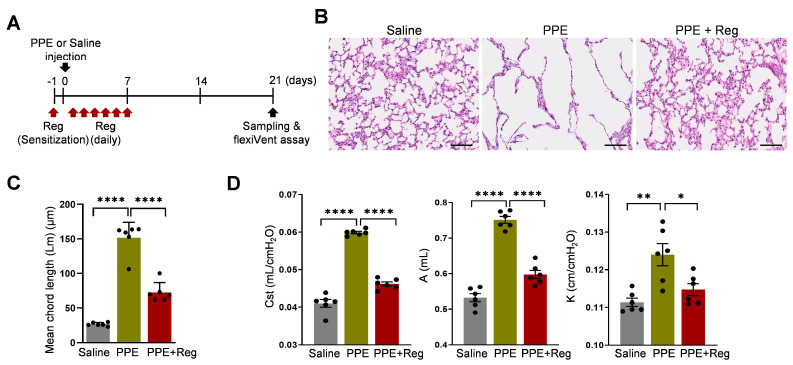
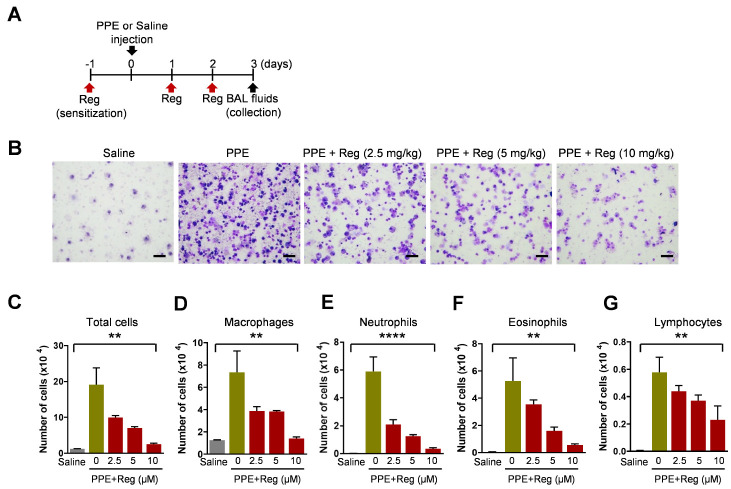
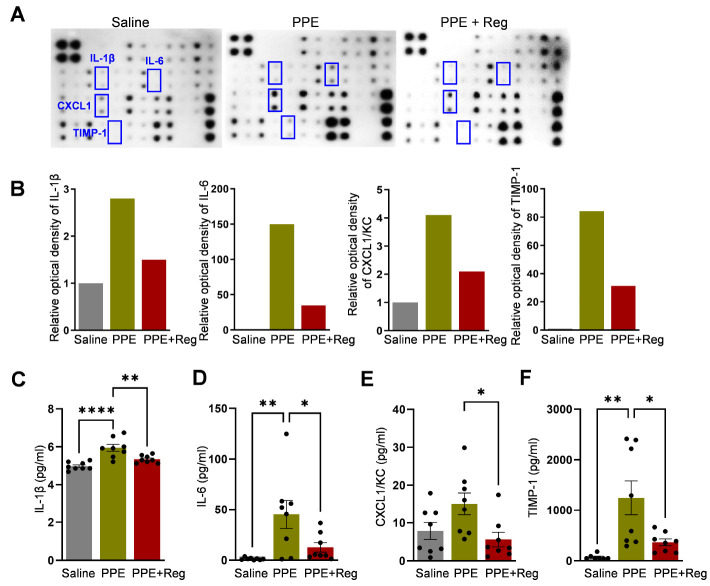
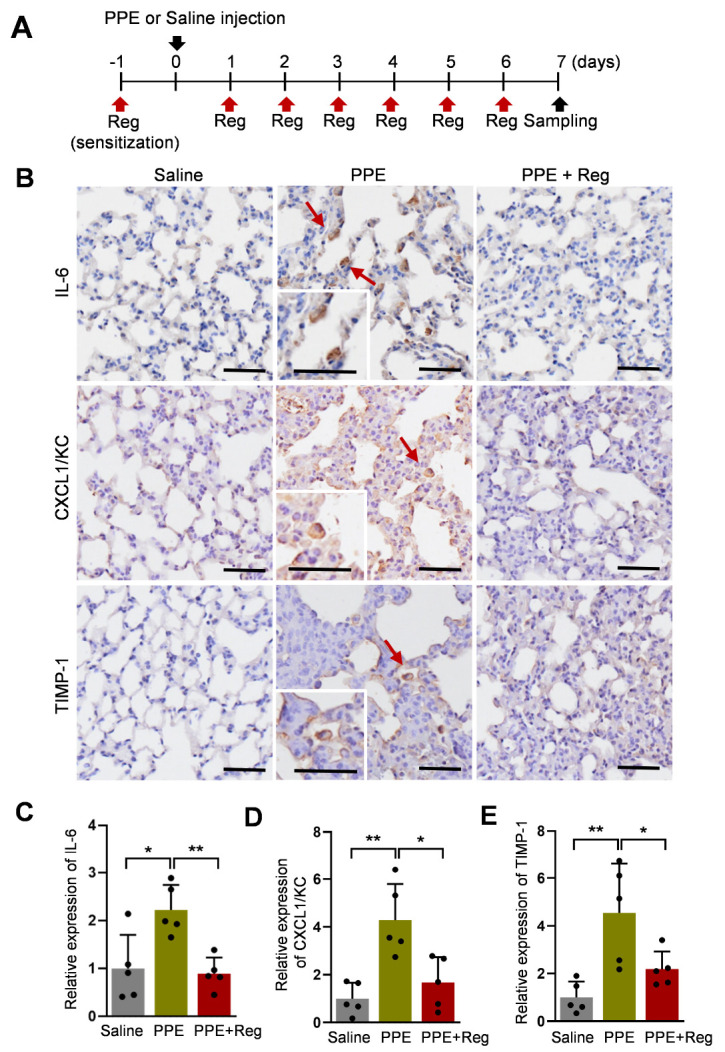
Emphysema is a chronic obstructive lung disease characterized by inflammation and enlargement of the air spaces. Regorafenib, a potential senomorphic drug, exhibited a therapeutic effect in porcine pancreatic elastase (PPE)-induced emphysema in mice. In the current study we examined the preventive role of regorafenib in development of emphysema. Lung function tests and morphometry showed that oral administration of regorafenib (5 mg/kg/day) for seven days after instillation of PPE resulted in attenuation of emphysema. Mechanistically, regorafenib reduced the recruitment of inflammatory cells, particularly macrophages and neutrophils, in bronchoalveolar lavage fluid. In agreement with these findings, measurements using a cytokine array and ELISA showed that expression of inflammatory mediators including interleukin (IL)-1β, IL-6, and CXCL1/KC, and tissue inhibitor of matrix metalloprotease-1 (TIMP-1), was downregulated. The results of immunohistochemical analysis confirmed that expression of IL-6, CXCL1/KC, and TIMP-1 was reduced in the lung parenchyma. Collectively, the results support the preventive role of regorafenib in development of emphysema in mice and provide mechanistic insights into prevention strategies. [BMB Reports 2023; 56(8): 439-444].
Conflict of interest statement
The authors have no conflicting interests.
Figures
References
-
- Abboud RT, Vimalanathan S. Pathogenesis of COPD. Part I. The role of protease-antiprotease imbalance in emphysema. Int J Tuberc Lung Dis. 2008;12:361–367. - PubMed
Publication types
MeSH terms
Substances
LinkOut - more resources
Full Text Sources
Medical
Research Materials
Miscellaneous
