Review
. 2023 May 11:1-16.
doi: 10.1038/s44222-023-00067-z. Online ahead of print.

Biomolecular sensors for advanced physiological monitoring

Affiliations
Review

Biomolecular sensors for advanced physiological monitoring

Connor D Flynn et al. Nat Rev Bioeng. .

Abstract

Body-based biomolecular sensing systems, including wearable, implantable and consumable sensors allow comprehensive health-related monitoring. Glucose sensors have long dominated wearable bioanalysis applications owing to their robust continuous detection of glucose, which has not yet been achieved for other biomarkers. However, access to diverse biological fluids and the development of reagentless sensing approaches may enable the design of body-based sensing systems for various analytes. Importantly, enhancing the selectivity and sensitivity of biomolecular sensors is essential for biomarker detection in complex physiological conditions. In this Review, we discuss approaches for the signal amplification of biomolecular sensors, including techniques to overcome Debye and mass transport limitations, and selectivity improvement, such as the integration of artificial affinity recognition elements. We highlight reagentless sensing approaches that can enable sequential real-time measurements, for example, the implementation of thin-film transistors in wearable devices. In addition to sensor construction, careful consideration of physical, psychological and security concerns related to body-based sensor integration is required to ensure that the transition from the laboratory to the human body is as seamless as possible.

Keywords: Analytical biochemistry; Analytical chemistry; Sensors.


Conflict of interest statement

Competing interestsS.O.K. and H.Y. are cofounders and equity holders in Arma Biosciences, which is commercializing new sensing technologies.

Figures

Fig. 1
Fig. 1. Timeline of biomolecular sensor development.
Timeline of major events regarding the evolution of biomolecular sensing, including the first evidence of urine analysis; the first connection between sweet urine and diabetes-like illness; the rediscovery of the connection between sweet urine and diabetes in Europe; the development of primitive metal salt glucose tests,; the first incorporation of a biological recognition element into a colorimetric biomolecular sensor; the first proposed electrochemical biomolecular sensor; the first commercial, portable glucose sensor; the first commercial electrochemical glucose sensor; and the US Food and Drug Administration (FDA) approval of the first continuous glucose monitor.
Fig. 2
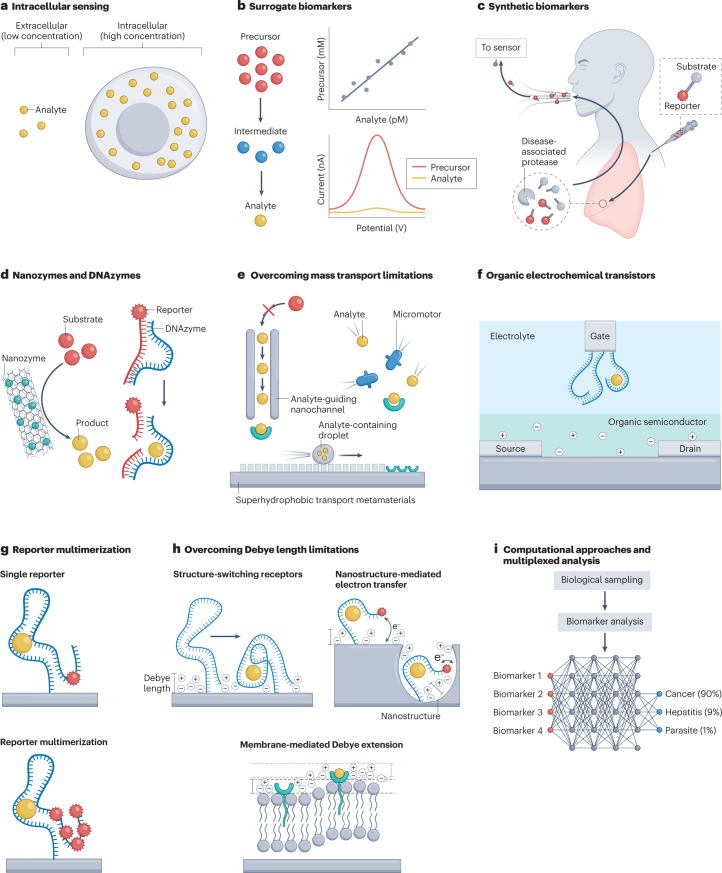
Fig. 2. Strategies for amplifying biomolecular interactions.
a, Intracellular sensing allows access to new, high-concentration biomarkers. b, Surrogate biomarkers can provide alternative detection pathways for trace analytes. c, Synthetic biomarkers can be introduced to the body to amplify biomolecular processes and enable their detection. d, Nanozymes and DNAzymes provide alternative catalytic routes for analyte monitoring. e, Mass transport advances, including analyte-guiding nanochannels, superhydrophobic transport metamaterials and analyte mixing micromotors increase the rate of interaction between an analyte and its recognition element. f, Organic electrochemical transistors serve as powerful amplifiers for biomolecular interactions. g, Reporter multimerization enhances the signal output from affinity interactions. h, Debye length-manipulating approaches, including structure-switching receptors, nanostructure-mediated electron transfer and membrane-mediated Debye extension bypass traditional Debye limitations to extend transducer influence and increase signal generation. i, Computational approaches, combined with multiplexed analysis, may allow health state amplification for predictive medicine. Part c is adapted from ref. , Springer Nature Limited. Part e (analyte-guiding nanochannel) is adapted from ref. , Springer Nature Limited. Part e (superhydrophobic transport metamaterials) is adapted from ref. , Springer Nature Limited. Part f is adapted from ref. , Springer Nature Limited. Part h (structure-switching receptor) from Nakatsuka, N. et al. Aptamer-field-effect transistors overcome Debye length limitations for small-molecule sensing. Science 362, 319–324 (2018). Adapted with permission from AAAS. Part h (nanostructure-mediated electron transfer) is adapted from ref. , CC BY 4.0 (https://creativecommons.org/licenses/by/4.0/). Part h (membrane-mediated Debye extension) is adapted from ref. , Springer Nature Limited.
Fig. 3
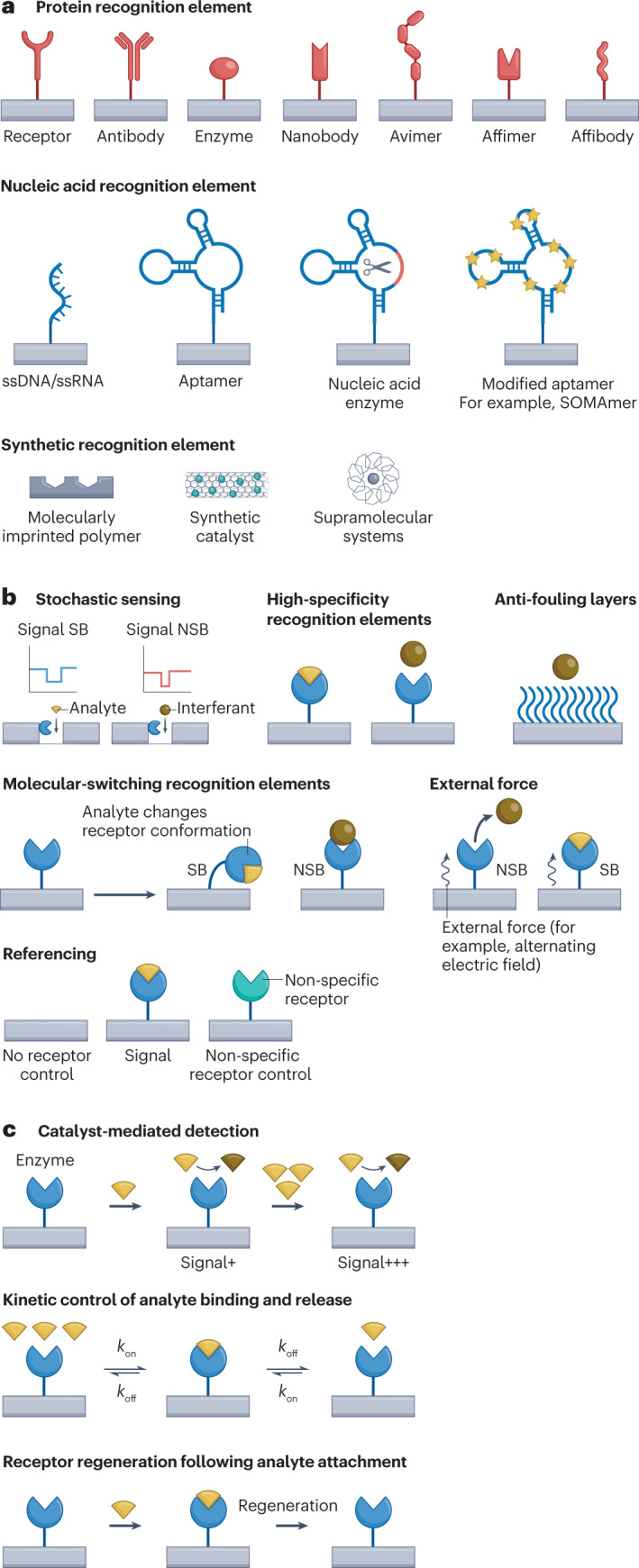
Fig. 3. Considerations for biomolecular sensor recognition element selection.
a, Classes of available recognition elements (protein, DNA and synthetic) including both traditional and emerging receptors. b, Strategies for prevention of non-specific binding (NSB). c, Recognition-element-based strategies for continuous monitoring include catalyst-mediated detection, kinetic control of analyte binding and release, and receptor regeneration following analyte attachment. koff, dissociation rate constant; kon, association rate constant; SB, specific binding; SOMAmer, slow off-rate modified aptamer; ssDNA, single-stranded DNA; ssRNA, single-stranded RNA.
Fig. 4
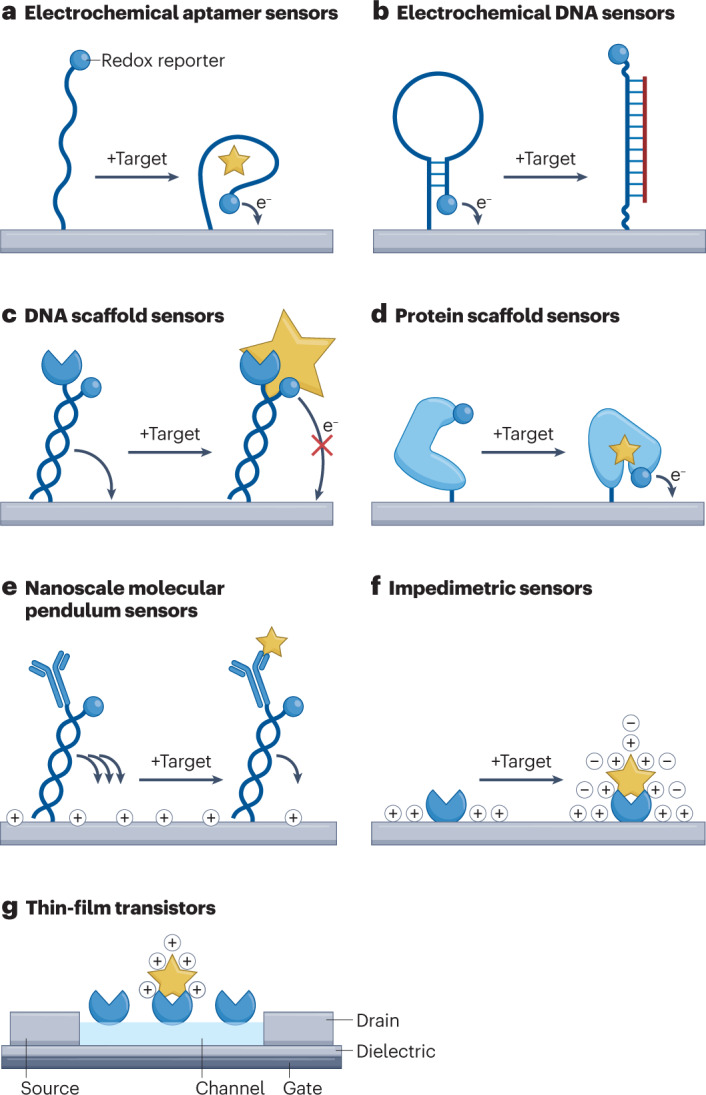
Fig. 4. Strategies for reagentless biomolecular analysis.
a, Electrochemical aptamer-based sensors rely on aptamer binding-induced proximity changes between a redox reporter and an electrode. b, Electrochemical DNA sensors use hairpin DNA structures to detect DNA through binding-induced redox reporter proximity changes. c, DNA scaffold sensors rely on steric hindrance from small receptor-bound analytes to alter redox readout. d, Protein scaffold sensors use conformational changes in redox-tagged protein receptors to detect bound analytes. e, Nanoscale molecular pendulum sensors exploit hydrodynamic differences between bound and unbound probes to temporally separate redox readout. f, Impedimetric sensors rely on interfacial capacitance changes to detect analyte binding. g, Thin-film transistors use interaction-mediated alterations in current flow to detect analyte–receptor binding. Part a is reproduced with permission from Xiao, Y., Lubin, A. A., Heeger, A. J. & Plaxco, K. W. Label-free electronic detection of thrombin in blood serum by using an aptamer-based sensor. Angew. Chem. Int. Edn Engl. 44, 5456–5459 (2005). Copyright Wiley-VCH GmbH. Part b is adapted with permission from Fan, C., Plaxco, K. W. & Heeger, A. J. Electrochemical interrogation of conformational changes as a reagentless method for the sequence-specific detection of DNA. Proc. Natl Acad. Sci. USA 100, 9134–9137 (2003). Copyright (2003) National Academy of Sciences, USA. Part e is adapted from ref. , Springer Nature Limited.
Fig. 5
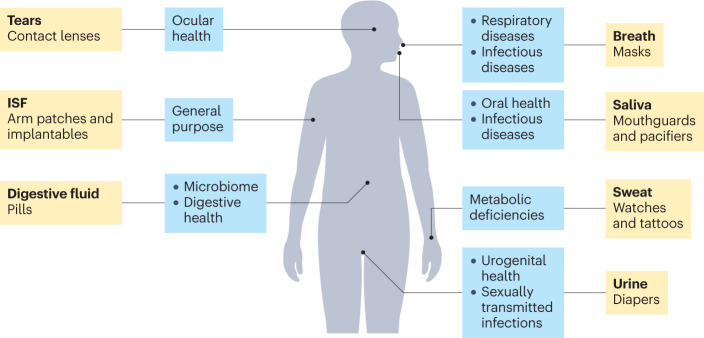
Fig. 5. Biological fluid considerations for body-based sensing systems.
Approaches to incorporating body-based sensors into everyday life, showing frequently used biological fluids and specific applications for these fluids (apart from general applications that multiple fluids can be used for), and existing commercial products that can house these fluid-sampling devices.

References

    1. Ji S, et al. Matching the kinetics of natural enzymes with a single-atom iron nanozyme. Nat. Catal. 2021;4:407–417. doi: 10.1038/s41929-021-00609-x. - DOI
    1. Armstrong JA. Urinalysis in Western culture: a brief history. Kidney Int. 2007;71:384–387. doi: 10.1038/sj.ki.5002057. - DOI - PubMed
    1. Karamanou M, Protogerou A, Tsoucalas G, Androutsos G, Poulakou-Rebelakou E. Milestones in the history of diabetes mellitus: the main contributors. World J. Diabetes. 2016;7:1–7. doi: 10.4239/wjd.v7.i1.1. - DOI - PMC - PubMed
    1. Thomas MC, Jandeleit-Dahm K, Bonnet F. Beyond glycosuria: exploring the intrarenal effects of SGLT-2 inhibition in diabetes. Diabetes Metab. 2014;40:S17–S22. doi: 10.1016/S1262-3636(14)72691-6. - DOI - PubMed
    1. Guthrie DW, Humphreys SS. Diabetes urine testing: an historical perspective. Diabetes Educ. 1988;14:521–525. doi: 10.1177/014572178801400615. - DOI - PubMed

LinkOut - more resources