


State of the Art in Prostate-specific Membrane Antigen-targeted Surgery-A Systematic Review
- PMID: 37361200
- PMCID: PMC10285550
- DOI: 10.1016/j.euros.2023.05.014
State of the Art in Prostate-specific Membrane Antigen-targeted Surgery-A Systematic Review
Abstract
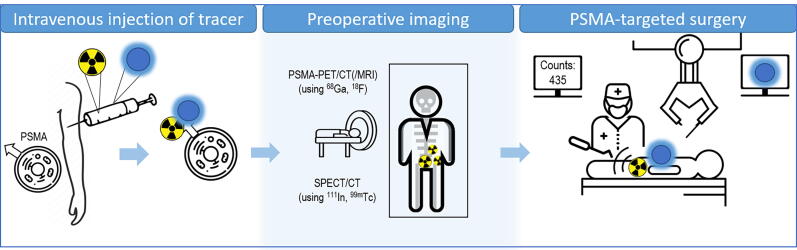
Context: Identifying malignant tissue and leaving adjacent structures undisturbed constitute an ongoing challenge in prostate cancer (PCa) surgery. Image and radioguided surgical technologies targeting the prostate-specific membrane antigen (PSMA) receptor may facilitate identification and removal of diseased tissue.
Objective: To perform a systematic review of the clinical studies on PSMA-targeted surgery.
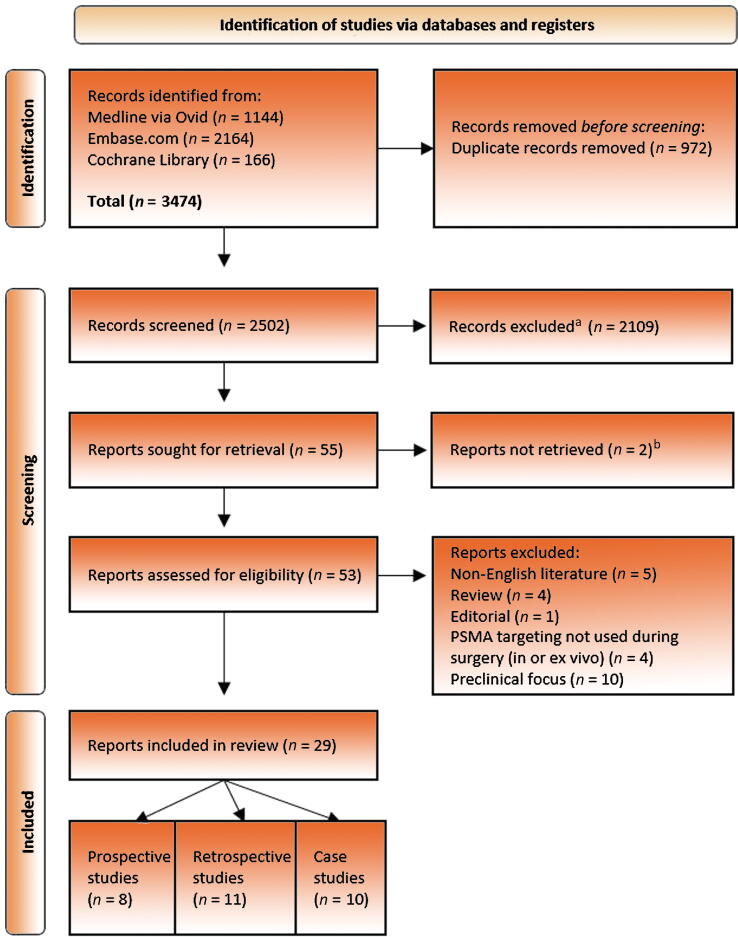
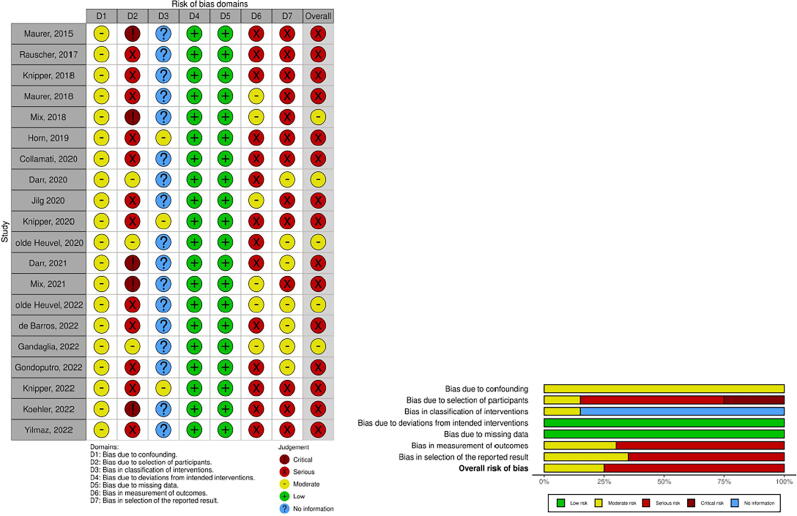
Evidence acquisition: The MEDLINE (OvidSP), Embase.com, and Cochrane Library databases were searched. Identified reports were critically appraised according to the Idea, Development, Exploration, Assessment, Long-term framework criteria. The risk of bias (RoB) was assessed as per the Risk Of Bias In Non-randomized Studies-of Interventions tool. The strengths and limitations of the techniques and corresponding oncological outcomes were extracted as areas of interest. Data were reported according to the Preferred Reporting Items for Systematic Reviews and Meta-analyses guidelines.
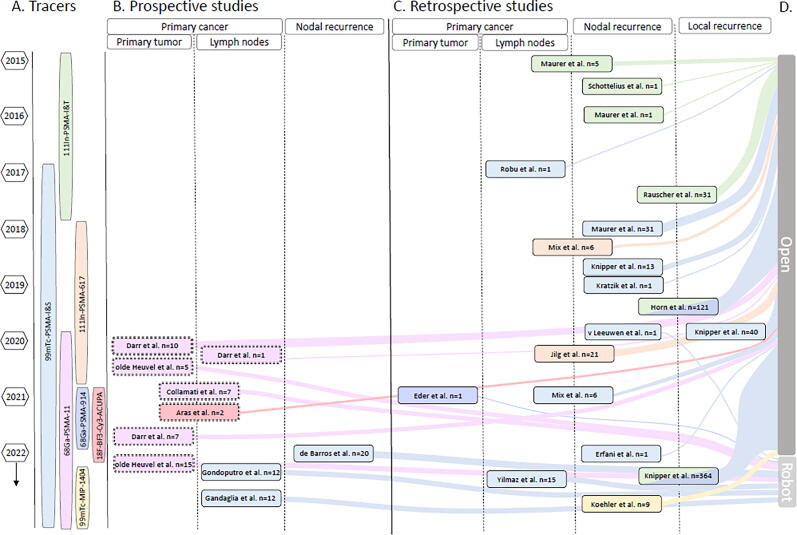
Evidence synthesis: In total, 29 reports were selected, including eight prospective studies, 12 retrospective analyses, and nine case reports, all with a high or an unclear RoB. In 72.4% of studies, PSMA targeting was achieved via radioguided surgery (RGS), predominantly using 99mTc-PSMA-I&S (66.7%). Hybrid approaches that complement RGS with optical guidance are emerging. The majority of studies retrieved were pilot studies with a short follow-up. In 13 reports, salvage lymph node surgery was discussed (44.8%). In 12 more recent reports (41.4%), PSMA targeting was studied in primary PCa surgery (50.0% lymph nodes and 50.0% surgical margins), and four studied both primary and salvage surgery (13.8%). Overall, specificity was higher than sensitivity (median 98.9% and 84.8%, respectively). Oncological outcomes were discussed only in reports on the use of 99mTc-PSMA-I&S in salvage surgery (median follow-up of 17.2 mo). A decline in prostate-specific antigen level of >90% ranged from 22.0% to 100.0%, and biochemical recurrence ranged from 50.0% to 61.8% of patients.
Conclusions: In PSMA-targeted surgery, most studies address salvage PSMA-RGS using 99mTc-PSMA-I&S. Available evidence suggests that the specificity of intraoperative PSMA targeting is higher than the sensitivity. The studies that included follow-up did not yet objectify a clear oncological benefit. Lacking solid outcome data, PSMA-targeted surgery remains investigational.
Patient summary: In this paper, we review recent advances in prostate-specific membrane antigen (PSMA)-targeted surgery, which is used to help identify and remove prostate cancer. We found good evidence to suggest that PSMA targeting helps identify prostate cancer during surgery. The oncological benefits have yet to be investigated further.
Keywords: Fluorescence-guided surgery; Image-guided surgery; Prostate cancer; Prostate-specific membrane antigen; Radioguided surgery.
© 2023 The Author(s).
Figures
References
-
- Zhang R., Li T., Ye L., Lin L., Wei Y. The evidence behind robot-assisted abdominopelvic surgery. Ann Intern Med. 2022;175:W22. - PubMed
-
- Dell’Oglio P., Mottrie A., Mazzone E. Robot-assisted radical prostatectomy vs. open radical prostatectomy: Latest evidences on perioperative, functional and oncological outcomes. Curr Opin Urol. 2020;30:73–78. - PubMed
-
- Knipper S., Tilki D., Mansholt J., et al. Metastases-yield and prostate-specific antigen kinetics following salvage lymph node dissection for prostate cancer: a comparison between conventional surgical approach and prostate-specific membrane antigen-radioguided surgery. Eur Urol Focus. 2019;5:50–53. - PubMed
-
- Perera M., Papa N., Roberts M., et al. Gallium-68 prostate-specific membrane antigen positron emission tomography in advanced prostate cancer—updated diagnostic utility, sensitivity, specificity, and distribution of prostate-specific membrane antigen-avid lesions: a systematic review and meta-analysis. Eur Urol. 2020;77:403–417. - PubMed
Publication types
LinkOut - more resources
Full Text Sources
Miscellaneous
