Pleiotropy of autism-associated chromatin regulators
- PMID: 37366052
- PMCID: PMC10399978
- DOI: 10.1242/dev.201515
Pleiotropy of autism-associated chromatin regulators
Abstract
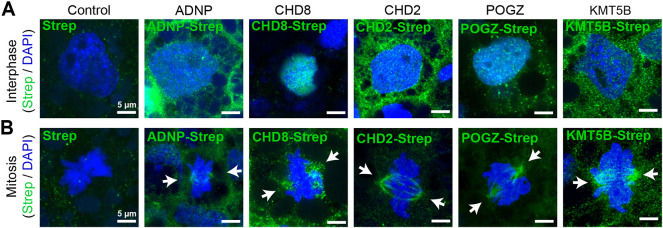
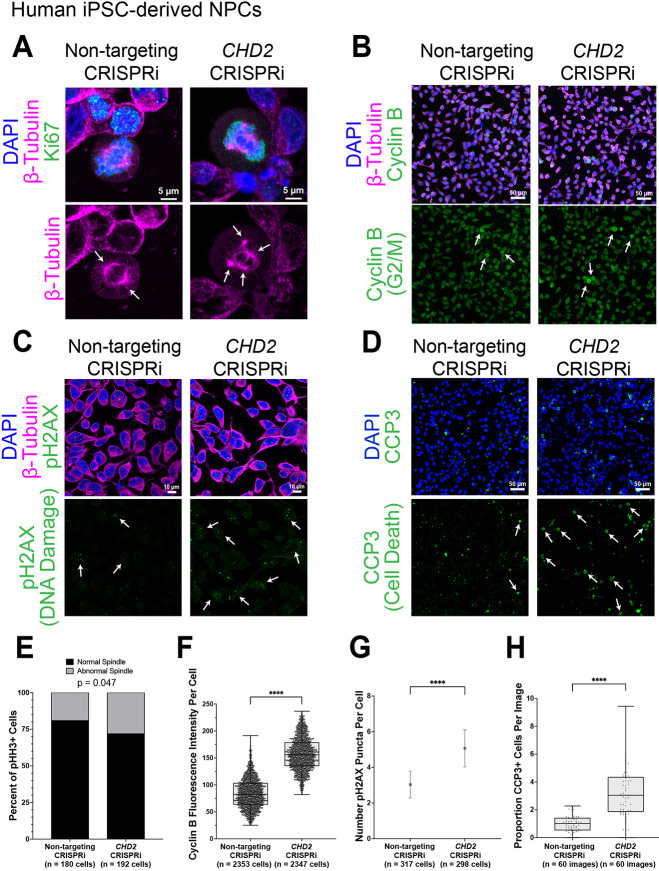
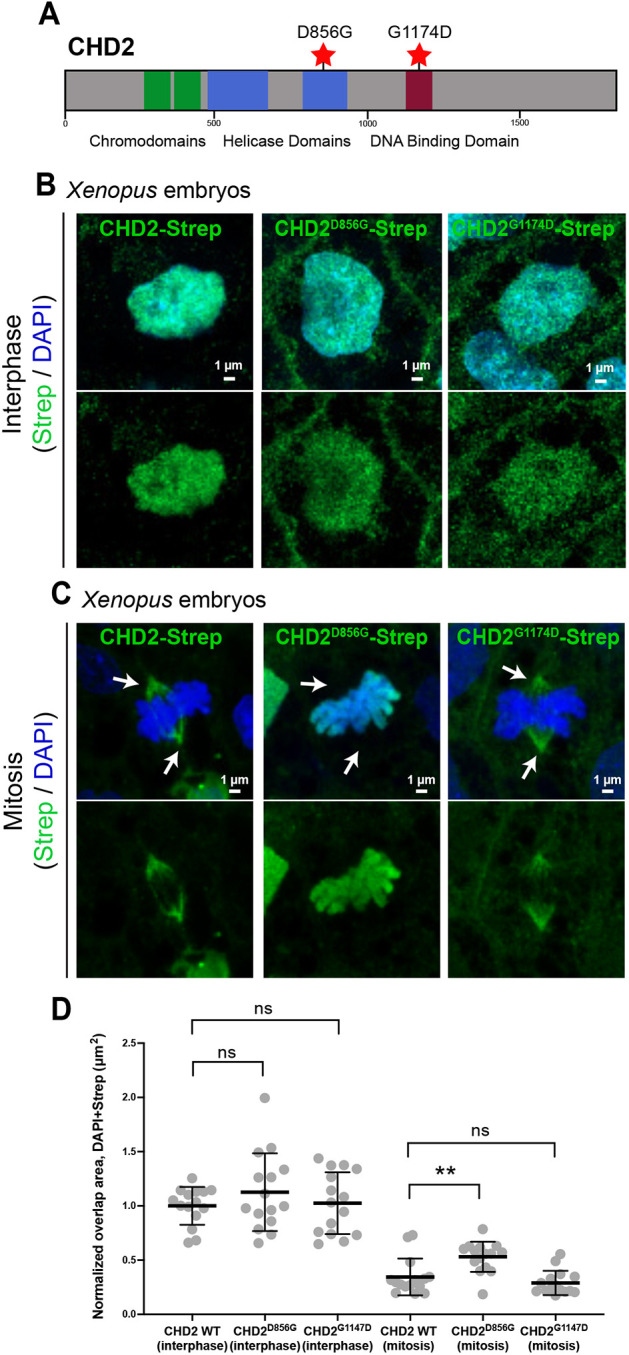
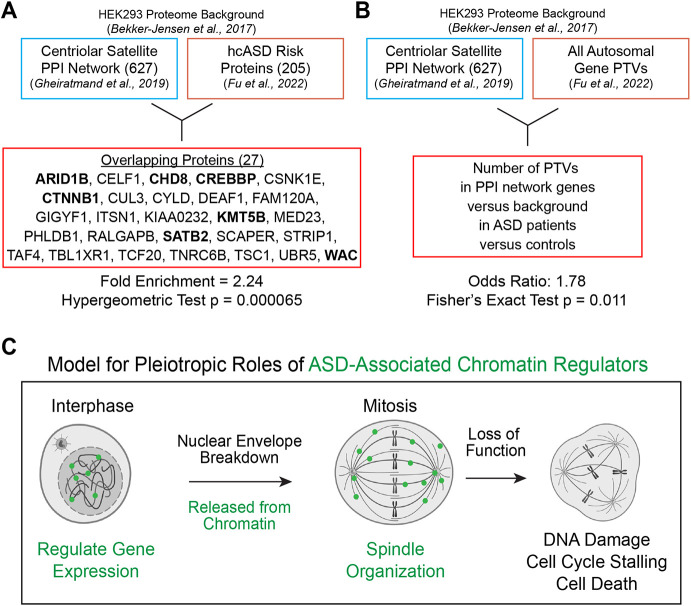
Gene ontology analyses of high-confidence autism spectrum disorder (ASD) risk genes highlight chromatin regulation and synaptic function as major contributors to pathobiology. Our recent functional work in vivo has additionally implicated tubulin biology and cellular proliferation. As many chromatin regulators, including the ASD risk genes ADNP and CHD3, are known to directly regulate both tubulins and histones, we studied the five chromatin regulators most strongly associated with ASD (ADNP, CHD8, CHD2, POGZ and KMT5B) specifically with respect to tubulin biology. We observe that all five localize to microtubules of the mitotic spindle in vitro in human cells and in vivo in Xenopus. Investigation of CHD2 provides evidence that mutations present in individuals with ASD cause a range of microtubule-related phenotypes, including disrupted localization of the protein at mitotic spindles, cell cycle stalling, DNA damage and cell death. Lastly, we observe that ASD genetic risk is significantly enriched among tubulin-associated proteins, suggesting broader relevance. Together, these results provide additional evidence that the role of tubulin biology and cellular proliferation in ASD warrants further investigation and highlight the pitfalls of relying solely on annotated gene functions in the search for pathological mechanisms.
Keywords: Xenopus; Autism spectrum disorder; Cell cycle; Chromatin; Cilia; Human; Microtubules; Spindles; Tubulin.
© 2023. Published by The Company of Biologists Ltd.
Conflict of interest statement
Competing interests The authors declare no competing or financial interests.
Figures
References
-
- Adhya, D., Swarup, V., Nagy, R., Dutan, L., Shum, C., Valencia-Alarcón, E. P., Jozwik, K. M., Mendez, M. A., Horder, J., Loth, E.et al. (2021). Atypical neurogenesis in induced pluripotent stem cells from autistic individuals. Biol. Psychiatry 89, 486-496. 10.1016/j.biopsych.2020.06.014 - DOI - PMC - PubMed
-
- Assia Batzir, N., Posey, J. E., Song, X., Akdemir, Z. C., Rosenfeld, J. A., Brown, C. W., Chen, E., Holtrop, S. G., Mizerik, E., Nieto Moreno, M.et al. (2020). Phenotypic expansion of POGZ-related intellectual disability syndrome (White-Sutton syndrome). Am. J. Med. Genetics A 182, 38-52. 10.1002/ajmg.a.61380 - DOI - PMC - PubMed
-
- Bassan, M., Zamostiano, R., Davidson, A., Pinhasov, A., Giladi, E., Perl, O., Bassan, H., Blat, C., Gibney, G., Glazner, G.et al. (1999). Complete sequence of a novel protein containing a femtomolar-activity-dependent neuroprotective peptide. J. Neurochem. 72, 1283-1293. 10.1046/j.1471-4159.1999.0721283.x - DOI - PubMed
-
- Bekker-Jensen, D. B., Kelstrup, C. D., Batth, T. S., Larsen, S. C., Haldrup, C., Bramsen, J. B., Sørensen, K. D., Høyer, S., Ørntoft, T. F., Andersen, C. L.et al. (2017). An optimized shotgun strategy for the rapid generation of comprehensive human proteomes. Cell Syst. 4, 587-99.e4. 10.1016/j.cels.2017.05.009 - DOI - PMC - PubMed
Publication types
MeSH terms
Substances
Grants and funding
LinkOut - more resources
Full Text Sources
Medical
Research Materials