


Plant Secondary Metabolites: The Weapons for Biotic Stress Management
- PMID: 37367873
- PMCID: PMC10302943
- DOI: 10.3390/metabo13060716
Plant Secondary Metabolites: The Weapons for Biotic Stress Management
Abstract
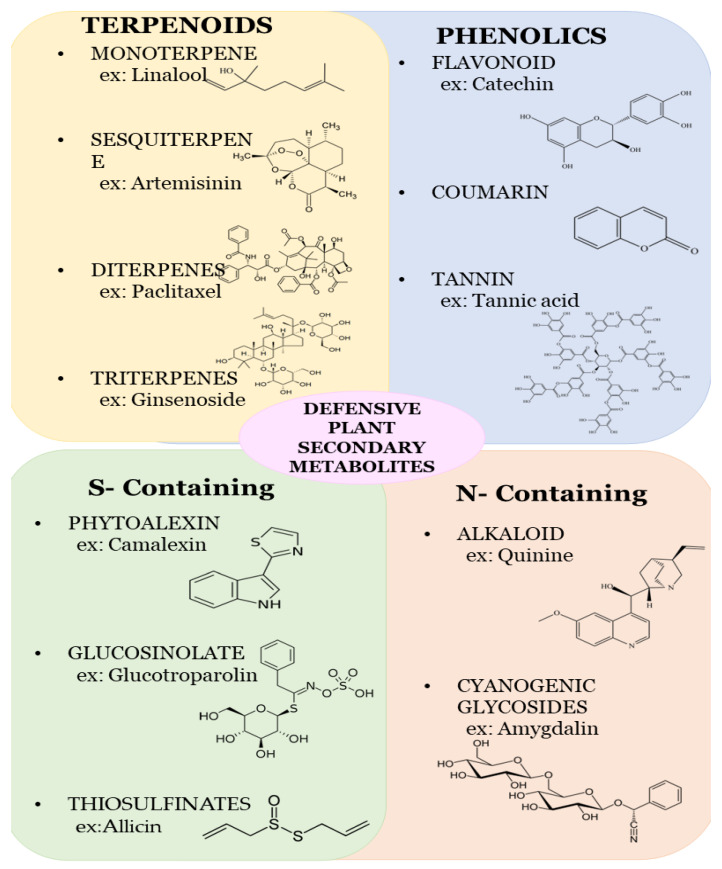
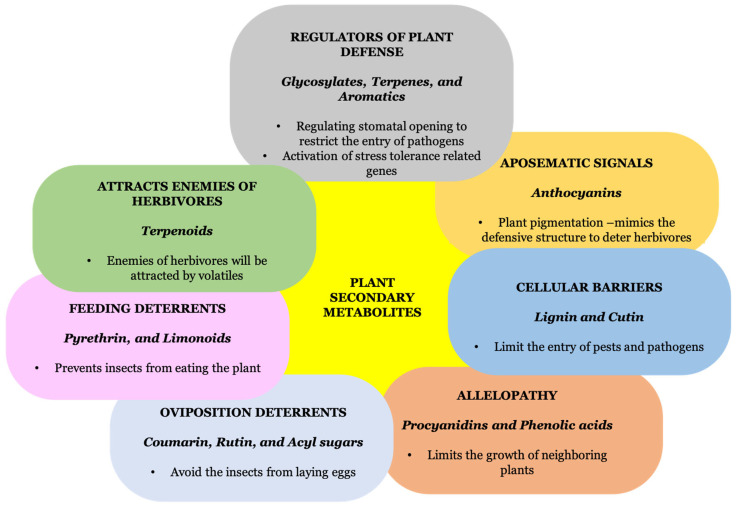
The rise in global temperature also favors the multiplication of pests and pathogens, which calls into question global food security. Plants have developed special coping mechanisms since they are sessile and lack an immune system. These mechanisms use a variety of secondary metabolites as weapons to avoid obstacles, adapt to their changing environment, and survive in less-than-ideal circumstances. Plant secondary metabolites include phenolic compounds, alkaloids, glycosides, and terpenoids, which are stored in specialized structures such as latex, trichomes, resin ducts, etc. Secondary metabolites help the plants to be safe from biotic stressors, either by repelling them or attracting their enemies, or exerting toxic effects on them. Modern omics technologies enable the elucidation of the structural and functional properties of these metabolites along with their biosynthesis. A better understanding of the enzymatic regulations and molecular mechanisms aids in the exploitation of secondary metabolites in modern pest management approaches such as biopesticides and integrated pest management. The current review provides an overview of the major plant secondary metabolites that play significant roles in enhancing biotic stress tolerance. It examines their involvement in both indirect and direct defense mechanisms, as well as their storage within plant tissues. Additionally, this review explores the importance of metabolomics approaches in elucidating the significance of secondary metabolites in biotic stress tolerance. The application of metabolic engineering in breeding for biotic stress resistance is discussed, along with the exploitation of secondary metabolites for sustainable pest management.
Keywords: aposematic signals; biopesticides; biotic stress; companion farming; feeding deterrents; metabolomics engineering; plant secondary metabolites.
Conflict of interest statement
The authors declare no conflict of interest.
Figures
References
-
- Verma S., Nizam S., Verma P.K. Biotic and abiotic stress signaling in plants. In: Sarwat M., Ahmad A., Abdin M.Z., editors. Stress Signaling in Plants: Genomics and Proteomics Perspective. Volume 1. Springer; New York, NY, USA: 2013. pp. 25–49.
-
- Gull A., Ahmad Lone A., Ul Islam Wani N. Abiotic and Biotic Stress in Plants. IntechOpen; Rijeka, Croatia: 2019. Biotic and abiotic stresses in plants.
-
- Sobiczewski P., Iakimova E.T., Mikiciński A., Węgrzynowicz-Lesiak E., Dyki B. Necrotrophic behaviour of Erwinia amylovora in apple and tobacco leaf tissue. Plant Pathol. 2017;66:842–855. doi: 10.1111/ppa.12631. - DOI
Publication types
Grants and funding
LinkOut - more resources
Full Text Sources
