


Are Microplastics Toxic? A Review from Eco-Toxicity to Effects on the Gut Microbiota
- PMID: 37367897
- PMCID: PMC10304106
- DOI: 10.3390/metabo13060739
Are Microplastics Toxic? A Review from Eco-Toxicity to Effects on the Gut Microbiota
Abstract
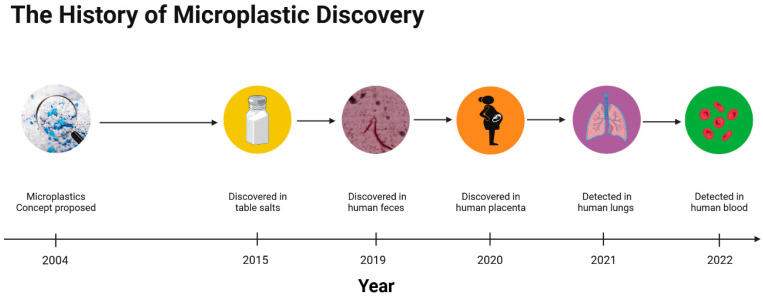
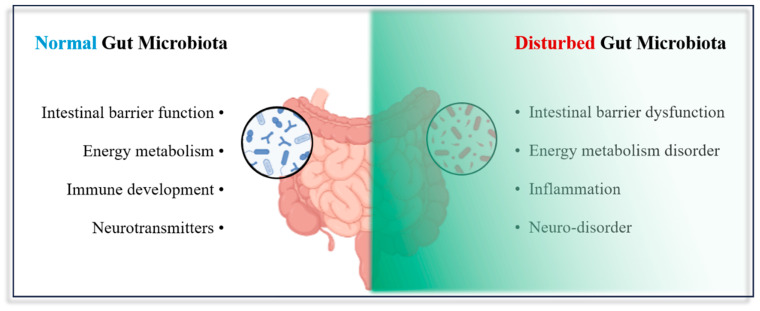
Emerging studies have presented an initial picture of the toxic effects of exposure to environmental micro- and nanoplastics. They have indicated that micro- and nanoplastics may induce toxicity by leading to oxidative stress, energy metabolism disorders, gene damage, and so forth in environmental organisms, marine invertebrates and vertebrates, and laboratory mouse models. In recent years, micro- and nanoplastics have been discovered in human fecal samples, placentas, lung tissue, and even blood; thus, micro- and nanoplastics pose an alarming and ever-increasing threat to global public health. However, current research on the health effects of micro- and nanoplastics and the possible adverse outcomes in humans has only presented the tip of the iceberg. More robust clinical data and basic experiments are still warranted to elucidate the specific relationships and mechanisms. In this paper, we review studies on micro- and nanoplastic toxicity from the perspectives of eco-toxicity, the adverse effects on invertebrates and vertebrates, and the impact of micro- and nanoplastics on the gut microbiota and its metabolites. In addition, we evaluate the toxicological role of micro- and nanoplastic exposure and its potential implications in respect to human health. We also summarize studies regarding preventive strategies. Overall, this review provides insights on micro- and nanoplastic toxicity and its underlying mechanisms, opening up scientific avenues for future in-depth studies.
Keywords: gut microbiota; micro- and nanoplastics; microplastics; polystyrene; toxicity.
Conflict of interest statement
The authors declare no conflict of interest.
Figures
References
Publication types
LinkOut - more resources
Full Text Sources
