


Gender and racial differences in first and senior authorship of high-impact critical care randomized controlled trial studies from 2000 to 2022
- PMID: 37368060
- PMCID: PMC10299980
- DOI: 10.1186/s13613-023-01157-2
Gender and racial differences in first and senior authorship of high-impact critical care randomized controlled trial studies from 2000 to 2022
Abstract
Background: Females and ethnic minorities are underrepresented in the first and senior authorships positions of academic publications. This stems from various structural and systemic inequalities and discrimination in the journal peer-review process, as well as educational, institutional, and organizational cultures.
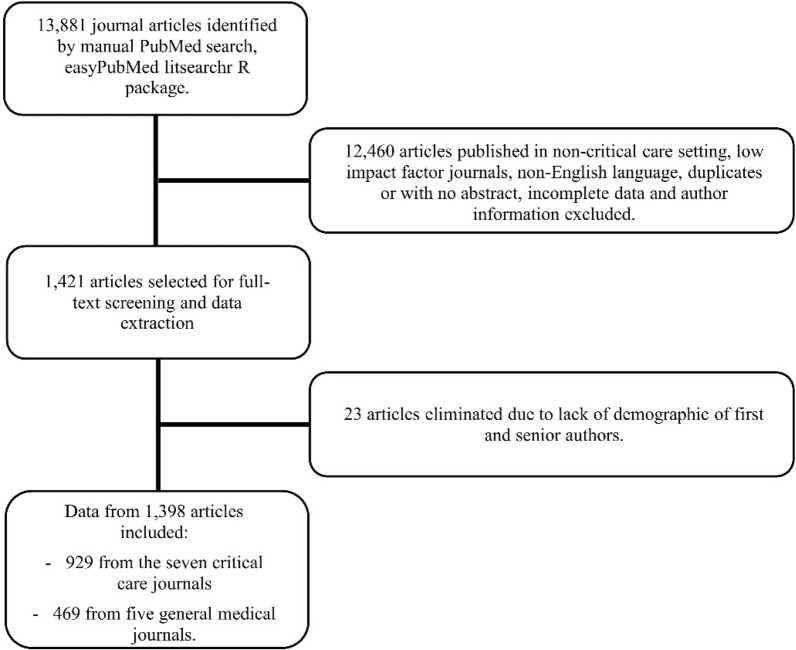
Methods: A retrospective bibliometric study design was used to investigate the representation of gender and racial/ethnic groups in the authorship of critical care randomized controlled trials in 12 high-impact journals from 2000 to 2022.
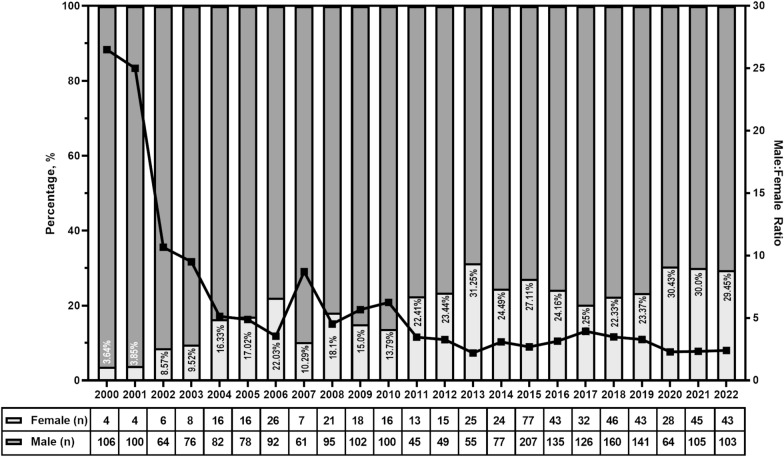
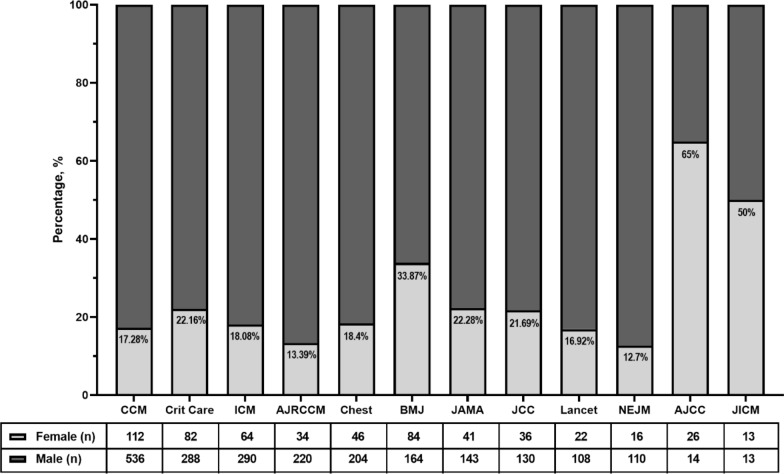
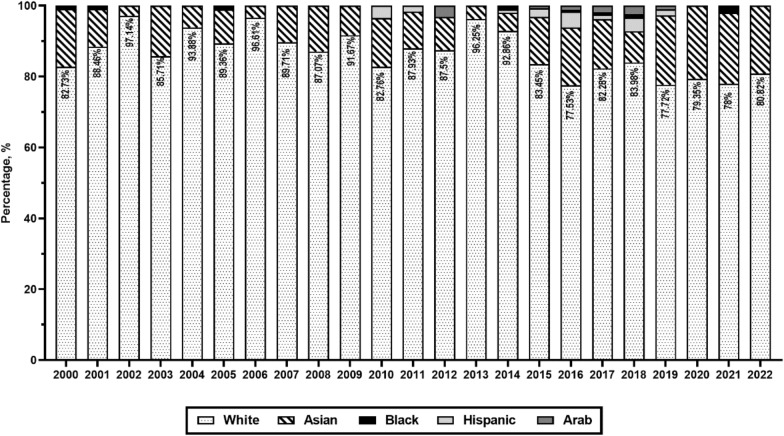
Results: In the 1398 randomized controlled trials included in this study, only 24.61% of the first authors and 16.6% of the senior authors were female. Although female authorship increased during the study period, authorship was significantly higher for males throughout (Chi-square for trend, p < 0.0001). The educational attainment [χ2(4) = 99.2, p < 0.0001] and the country of the author's affiliated institution [χ2(42) = 70.3, p = 0.0029] were significantly associated with gender. Male authorship was significantly more prevalent in 10 out of 12 journals analyzed in this study [χ2(11) = 110.1, p < 0.0001]. The most common race/ethnic group in our study population was White (85.1% women, 85.4% males), followed by Asians (14.3% females, 14.3% males). Although there was a significant increase in the number of non-White authors between 2000 and 2022 [χ2(22) = 77.3, p < 0.0001], the trend was driven by an increase in non-White male and not non-White female authors. Race/ethnicity was significantly associated with the country of the author's affiliated institution [χ2(41) = 1107, p < 0.0001] but not with gender or educational attainment.
Conclusions: Persistent gender and racial disparities in high-impact medical and critical care journals underscore the need to revise policies and strategies to encourage greater diversity in critical care research.
Keywords: Authorship; Critical care; Ethnic disparities; Gender disparities; RTCs; Racial disparities.
© 2023. The Author(s).
Conflict of interest statement
The authors declare that they have no competing interests.
Figures
References
-
- Hanson B, Wooden P, Lerback J. Age, gender, and international author networks in the earth and space sciences: implications for addressing implicit bias. Earth Space Sci. 2020;7(5):e2019EA000930. doi: 10.1029/2019EA000930. - DOI
LinkOut - more resources
Full Text Sources
