


Estimates and trends of zero vegetable or fruit consumption among children aged 6-23 months in 64 countries
- PMID: 37368873
- PMCID: PMC10298791
- DOI: 10.1371/journal.pgph.0001662
Estimates and trends of zero vegetable or fruit consumption among children aged 6-23 months in 64 countries
Abstract
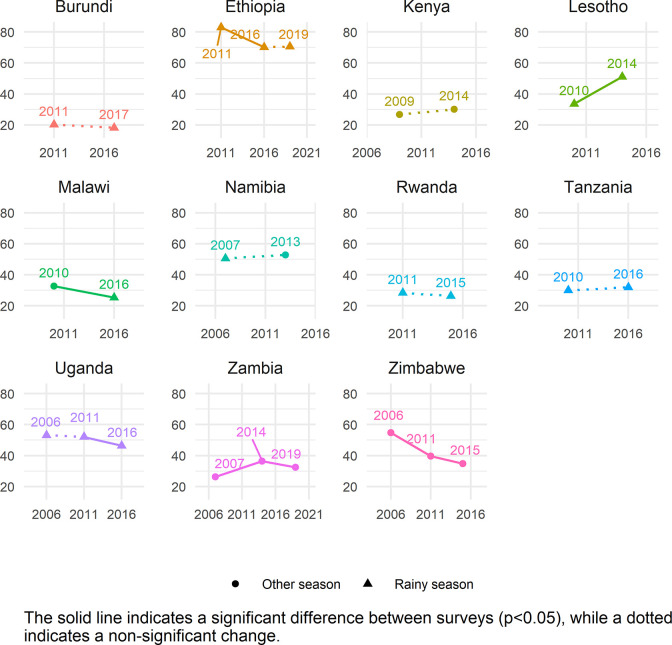
Children require a diverse diet, that includes vegetables and fruits, to support growth and development and prevent non-communicable diseases. The WHO-UNICEF established a new infant and young child feeding (IYCF) indicator: zero vegetable or fruit (ZVF) consumption among children aged 6-23 months. We estimated the prevalence, trends, and factors associated with ZVF consumption using nationally representative, cross-sectional data on child health and nutrition in low-and-middle-income countries. We examined 125 Demographic and Health Surveys in 64 countries conducted between 2006-2020 with data on whether a child ate vegetables or fruits the previous day. Prevalence of ZVF consumption was calculated by country, region, and globally. Country trends were estimated and tested for statistical significance (p<0.05). Logistic regression analysis was used to examine the relationship between ZVF and child, mother, household, and survey cluster characteristics by world region and globally. Using a pooled estimate of the most recent survey available in each country, we estimate the global prevalence of ZVF consumption as 45.7%, with the highest prevalence in West and Central Africa (56.1%) and the lowest in Latin America and the Caribbean (34.5%). Recent trends in ZVF consumption varied by country (16 decreasing, eight increasing, 14 no change). Country trends in ZVF consumption represented diverse patterns of food consumption over time and may be affected by the timing of surveys. Children from wealthier households and children of mothers who are employed, more educated, and have access to media were less likely to consume ZVF. We find the prevalence of children aged 6-23 months who do not consume any vegetables or fruits is high and is associated with wealth and characteristics of the mother. Areas for future research include generating evidence from low-and-middle-income countries on effective interventions and translating strategies from other contexts to improve vegetable and fruit consumption among young children.
Copyright: © 2023 Allen et al. This is an open access article distributed under the terms of the Creative Commons Attribution License, which permits unrestricted use, distribution, and reproduction in any medium, provided the original author and source are credited.
Conflict of interest statement
The authors have declared that no competing interests exist.
Figures



References
-
- WHO. Complementary feeding: report of the global consultation, and summary of guiding principles for complementary feeding of the breastfed child. Geneva, Switzerland; 2002.
LinkOut - more resources
Full Text Sources
Research Materials