


PAK1 copy number in breast cancer-Associations with proliferation and molecular subtypes
- PMID: 37368917
- PMCID: PMC10298784
- DOI: 10.1371/journal.pone.0287608
PAK1 copy number in breast cancer-Associations with proliferation and molecular subtypes
Abstract
Introduction: P21-activated kinase 1 (PAK1) is known to be overexpressed in several human tumour types, including breast cancer (BC). It is located on chromosome 11 (11q13.5-q14.1) and plays a significant role in proliferation in BC. In this study we aimed to assess PAK1 gene copy number (CN) in primary breast tumours and their corresponding lymph node metastases, and associations between PAK1 CN and proliferation status, molecular subtype, and prognosis. In addition, we aimed to study associations between CNs of PAK1 and CCND1. Both genes are located on the long arm of chromosome 11 (11q13).
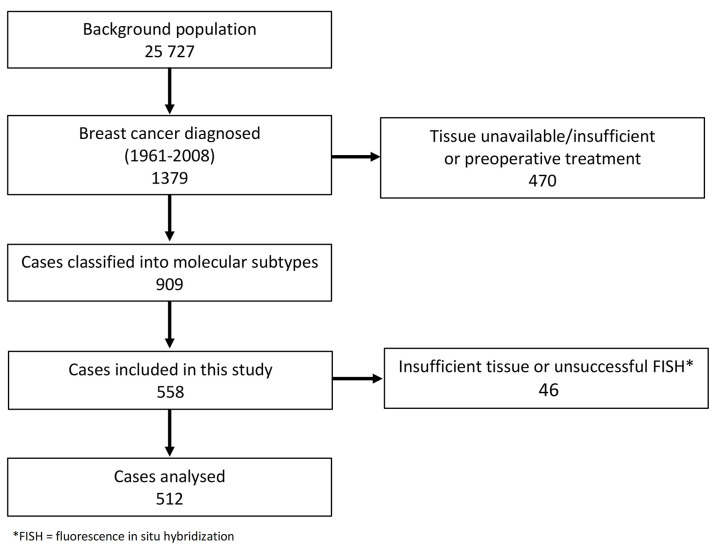
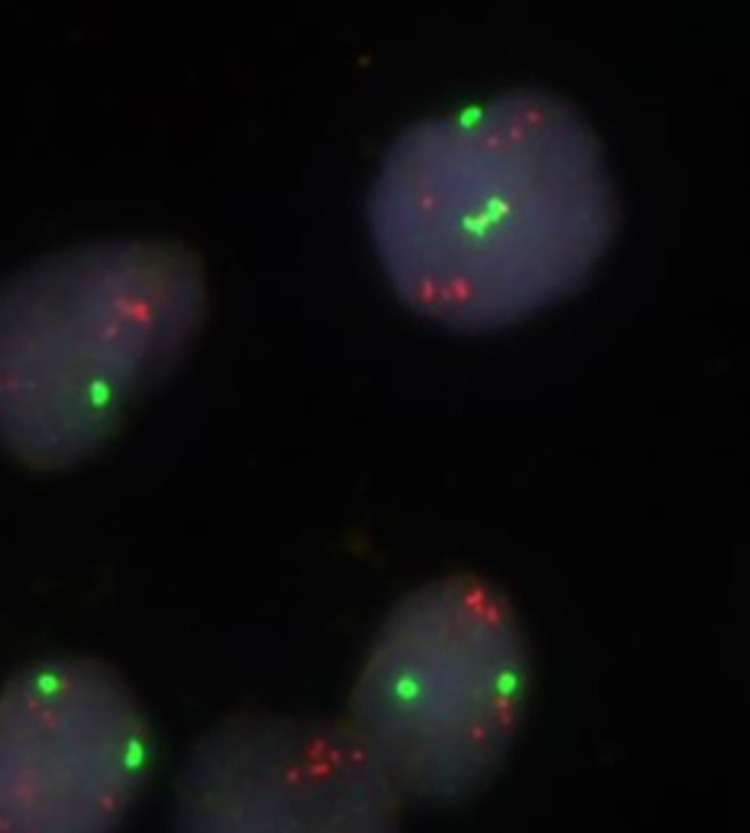
Methods: Fluorescence in situ hybridization for PAK1 and Chromosome enumeration probe (CEP)11 were used on tissue microarray sections from a series of 512 BC cases. Copy numbers were estimated by counting the number of fluorescent signals for PAK1 and CEP11 in 20 tumour cell nuclei. Pearson's x2 test was performed to assess associations between PAK1 CN and tumour features, and between PAK1 and CCND1 CNs. Cumulative risk of death from BC and hazard ratios were estimated in analysis of prognosis.
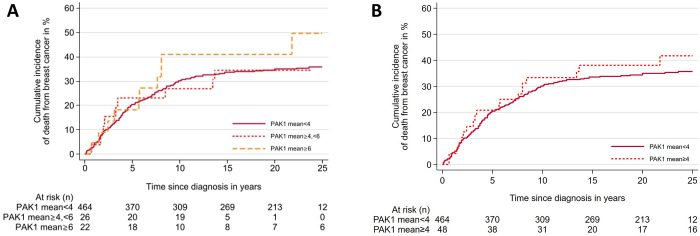
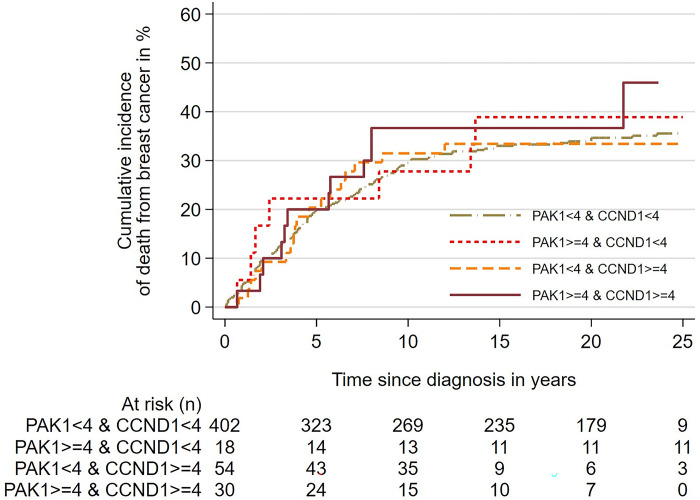
Results: We found mean PAK1 CN ≥4<6 in 26 (5.1%) tumours, and CN ≥ 6 in 22 (4.3%) tumours. The proportion of cases with copy number increase (mean CN ≥4) was highest among HER2 type and Luminal B (HER2-) tumours. We found an association between PAK1 CN increase, and high proliferation, and high histological grade, but not prognosis. Of cases with PAK1 CN ≥ 6, 30% also had CCND1 CN ≥ 6.
Conclusions: PAK1 copy number increase is associated with high proliferation and high histological grade, but not with prognosis. PAK1 CN increase was most frequent in the HER2 type and Luminal B (HER2-) subtype. PAK1 CN increase is associated with CN increase of CCND1.
Copyright: © 2023 Skjervold et al. This is an open access article distributed under the terms of the Creative Commons Attribution License, which permits unrestricted use, distribution, and reproduction in any medium, provided the original author and source are credited.
Conflict of interest statement
The authors have no conflicts of interest to declare that are relevant to the content of this article.
Figures
References
Publication types
MeSH terms
Substances
LinkOut - more resources
Full Text Sources
Medical
Research Materials
Miscellaneous
