


Bilirubin-Induced Transcriptomic Imprinting in Neonatal Hyperbilirubinemia
- PMID: 37372119
- PMCID: PMC10295065
- DOI: 10.3390/biology12060834
Bilirubin-Induced Transcriptomic Imprinting in Neonatal Hyperbilirubinemia
Abstract
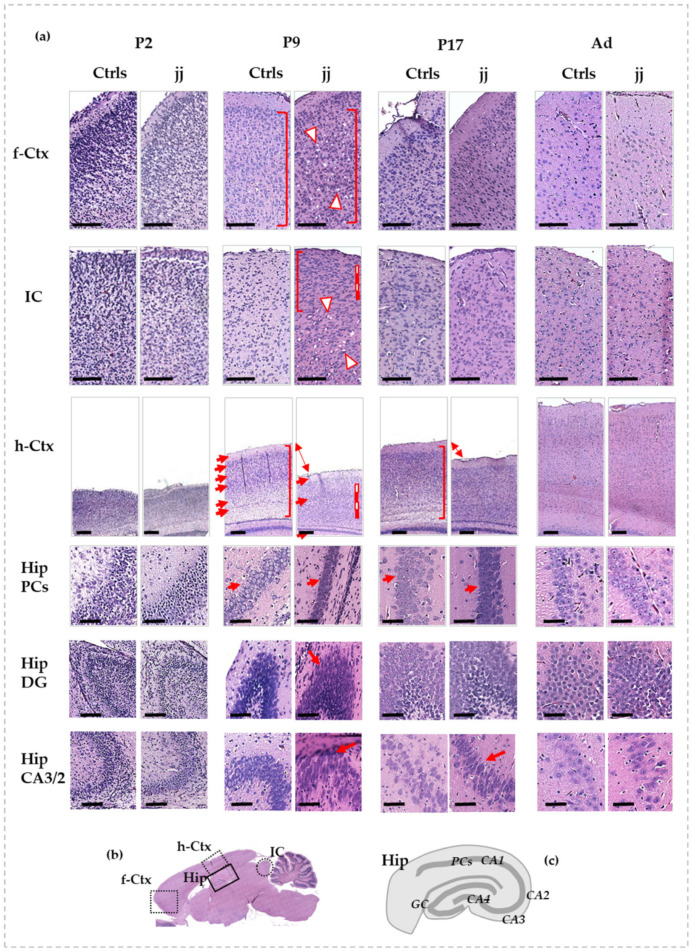
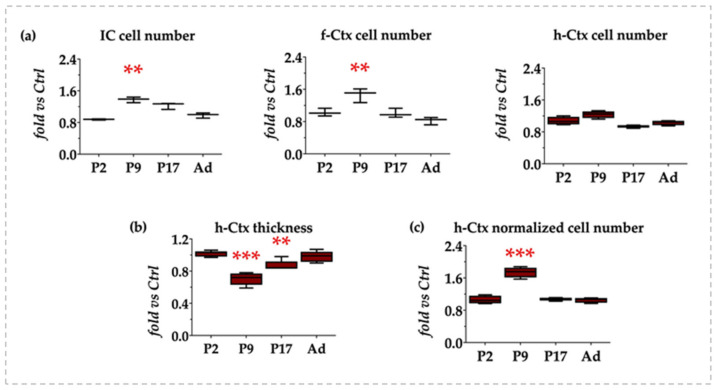
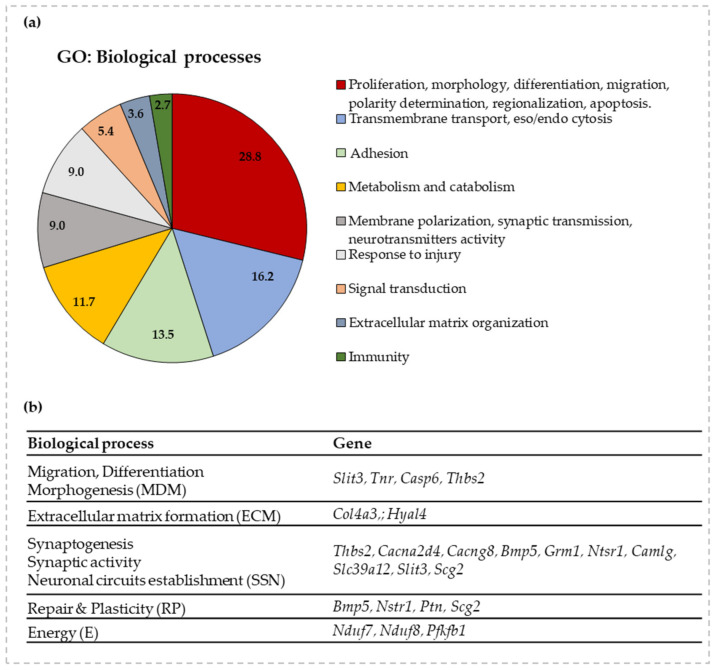
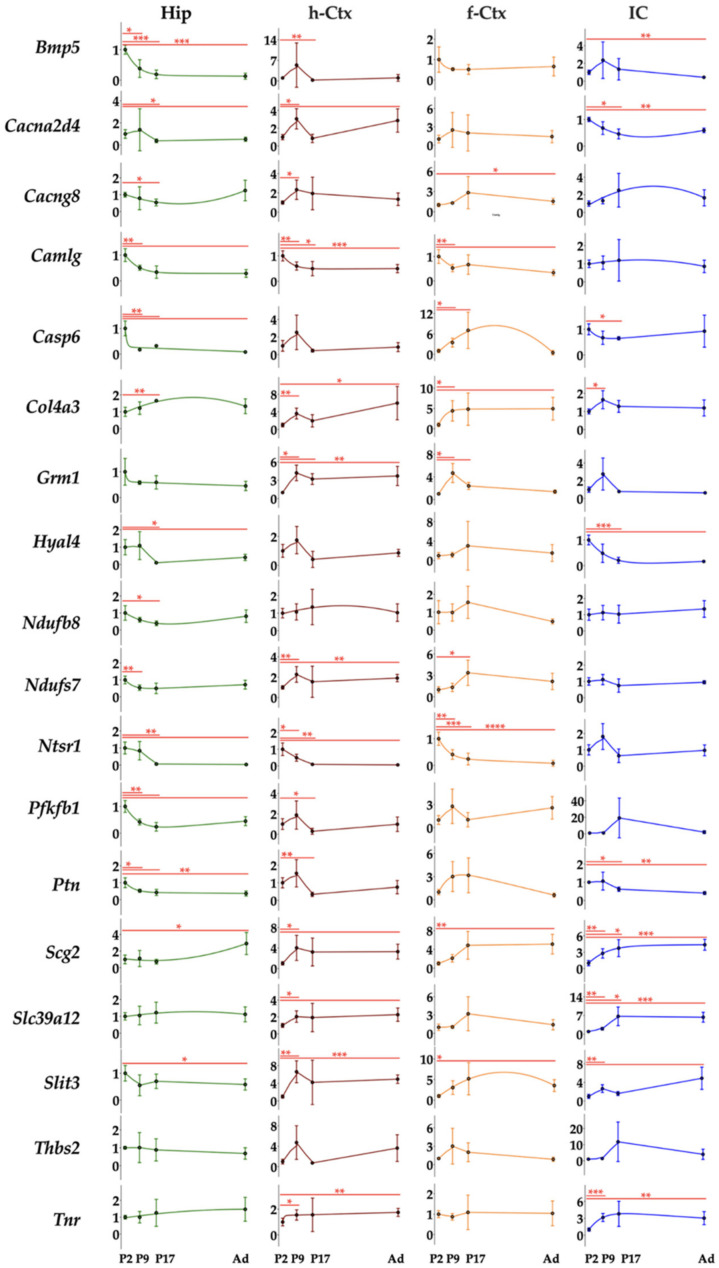
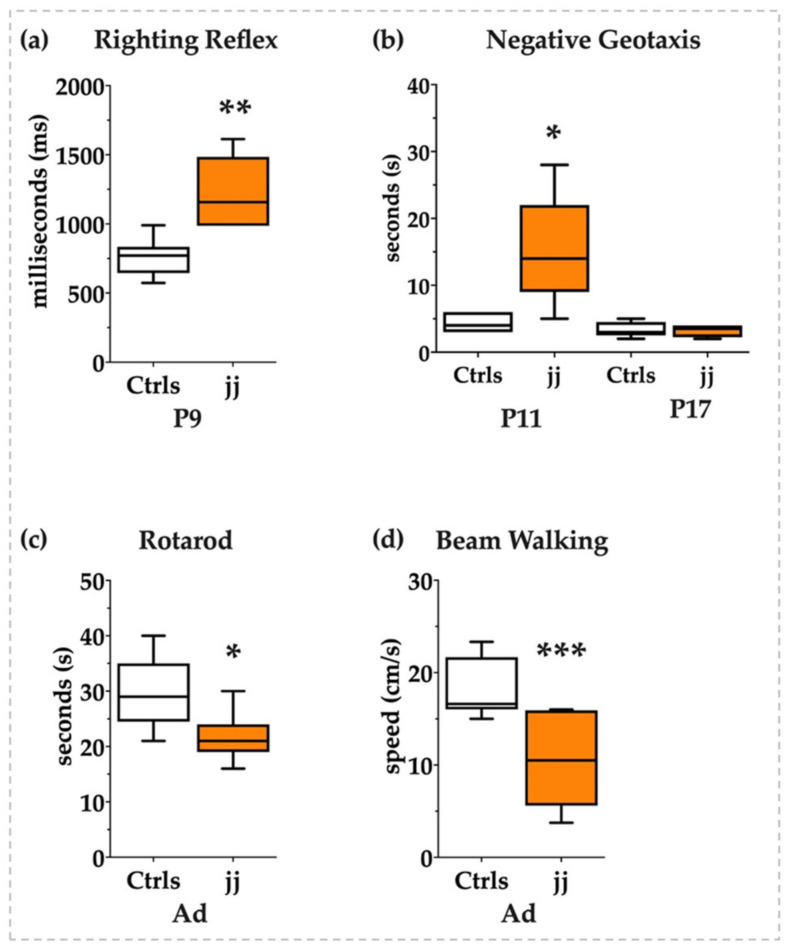
Recent findings indicated aberrant epigenetic control of the central nervous system (CNS) development in hyperbilirubinemic Gunn rats as an additional cause of cerebellar hypoplasia, the landmark of bilirubin neurotoxicity in rodents. Because the symptoms in severely hyperbilirubinemic human neonates suggest other regions as privileged targets of bilirubin neurotoxicity, we expanded the study of the potential impact of bilirubin on the control of postnatal brain development to regions correlating with human symptoms. Histology, transcriptomic, gene correlation, and behavioral studies were performed. The histology revealed widespread perturbation 9 days after birth, restoring in adulthood. At the genetic level, regional differences were noticed. Bilirubin affected synaptogenesis, repair, differentiation, energy, extracellular matrix development, etc., with transient alterations in the hippocampus (memory, learning, and cognition) and inferior colliculi (auditory functions) but permanent changes in the parietal cortex. Behavioral tests confirmed the presence of a permanent motor disability. The data correlate well both with the clinic description of neonatal bilirubin-induced neurotoxicity, as well as with the neurologic syndromes reported in adults that suffered neonatal hyperbilirubinemia. The results pave the way for better deciphering the neurotoxic features of bilirubin and evaluating deeply the efficacy of new therapeutic approaches against the acute and long-lasting sequels of bilirubin neurotoxicity.
Keywords: brain development; corplot; gene clustering; histone acetylation; kernicterus; motor disabilities; neurologic syndrome; opisthotonus; schizophrenia.
Conflict of interest statement
The authors declare no conflict of interest.
Figures
Similar articles
-
Curcumin Prevents Cerebellar Hypoplasia and Restores the Behavior in Hyperbilirubinemic Gunn Rat by a Pleiotropic Effect on the Molecular Effectors of Brain Damage.Int J Mol Sci. 2020 Dec 30;22(1):299. doi: 10.3390/ijms22010299. Int J Mol Sci. 2020. PMID: 33396688 Free PMC article.
-
Histone acetylation as a new mechanism for bilirubin-induced encephalopathy in the Gunn rat.Sci Rep. 2018 Sep 12;8(1):13690. doi: 10.1038/s41598-018-32106-w. Sci Rep. 2018. PMID: 30209300 Free PMC article.
-
Calculated free bilirubin levels and neurotoxicity.J Perinatol. 2009 Feb;29 Suppl 1:S14-9. doi: 10.1038/jp.2008.218. J Perinatol. 2009. PMID: 19177054
-
Neonatal hyperbilirubinemia and bilirubin neurotoxicity in hospitalized neonates: analysis of the US Database.Pediatr Res. 2022 Jun;91(7):1662-1668. doi: 10.1038/s41390-021-01692-3. Epub 2021 Aug 24. Pediatr Res. 2022. PMID: 34429513 Review.
-
The Neurological Sequelae of Neonatal Hyperbilirubinemia: Definitions, Diagnosis and Treatment of the Kernicterus Spectrum Disorders (KSDs).Curr Pediatr Rev. 2017;13(3):199-209. doi: 10.2174/1573396313666170815100214. Curr Pediatr Rev. 2017. PMID: 28814249 Review.
Cited by
-
The impact of brominated flame retardants exposure on serum total bilirubin: A cross-sectional analysis.PLoS One. 2025 Mar 28;20(3):e0320523. doi: 10.1371/journal.pone.0320523. eCollection 2025. PLoS One. 2025. PMID: 40153337 Free PMC article.
-
Bilirubin and Redox Stress in Age-Related Brain Diseases.Antioxidants (Basel). 2023 Jul 29;12(8):1525. doi: 10.3390/antiox12081525. Antioxidants (Basel). 2023. PMID: 37627520 Free PMC article. Review.
-
Transcriptomic and Proteomic Changes in the Brain Along with Increasing Phenotypic Severity in a Rat Model of Neonatal Hyperbilirubinemia.Int J Mol Sci. 2025 Jun 28;26(13):6262. doi: 10.3390/ijms26136262. Int J Mol Sci. 2025. PMID: 40650037 Free PMC article.
-
Inflammation, Dopaminergic Brain and Bilirubin.Int J Mol Sci. 2023 Jul 14;24(14):11478. doi: 10.3390/ijms241411478. Int J Mol Sci. 2023. PMID: 37511235 Free PMC article. Review.
-
Molecular events in brain bilirubin toxicity revisited.Pediatr Res. 2024 Jun;95(7):1734-1740. doi: 10.1038/s41390-024-03084-9. Epub 2024 Feb 20. Pediatr Res. 2024. PMID: 38378754 Review.
References
-
- Jayanti S., Ghersi-Egea J.-F. Severe Neonatal Hyperbilirubinemia and the Brain: The Old but Still Evolving Story. Pediatr. Med. 2021;4:37. doi: 10.21037/pm-21-5. - DOI
LinkOut - more resources
Full Text Sources
