Review
. 2023 Jun 19;24(12):10322.
doi: 10.3390/ijms241210322.

The Crosstalk between Gut Microbiota and Nervous System: A Bidirectional Interaction between Microorganisms and Metabolome

Affiliations
Review

The Crosstalk between Gut Microbiota and Nervous System: A Bidirectional Interaction between Microorganisms and Metabolome

Monica Montagnani et al. Int J Mol Sci. .

Abstract

Several studies have shown that the gut microbiota influences behavior and, in turn, changes in the immune system associated with symptoms of depression or anxiety disorder may be mirrored by corresponding changes in the gut microbiota. Although the composition/function of the intestinal microbiota appears to affect the central nervous system (CNS) activities through multiple mechanisms, accurate epidemiological evidence that clearly explains the connection between the CNS pathology and the intestinal dysbiosis is not yet available. The enteric nervous system (ENS) is a separate branch of the autonomic nervous system (ANS) and the largest part of the peripheral nervous system (PNS). It is composed of a vast and complex network of neurons which communicate via several neuromodulators and neurotransmitters, like those found in the CNS. Interestingly, despite its tight connections to both the PNS and ANS, the ENS is also capable of some independent activities. This concept, together with the suggested role played by intestinal microorganisms and the metabolome in the onset and progression of CNS neurological (neurodegenerative, autoimmune) and psychopathological (depression, anxiety disorders, autism) diseases, explains the large number of investigations exploring the functional role and the physiopathological implications of the gut microbiota/brain axis.

Keywords: Enteric Nervous System (ENS); biochemistry; dysbiosis; gut/brain axis; human microbiota; immunity; metabolome; neurotransmitters; probiotics; psychobiotics.


Conflict of interest statement

The authors declare no conflict of interest.

Figures
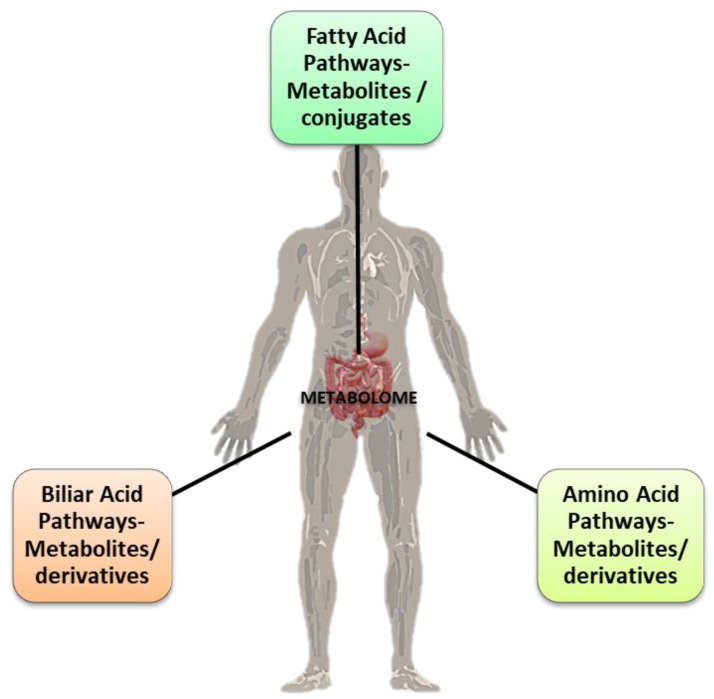
Figure 1
Figure 1
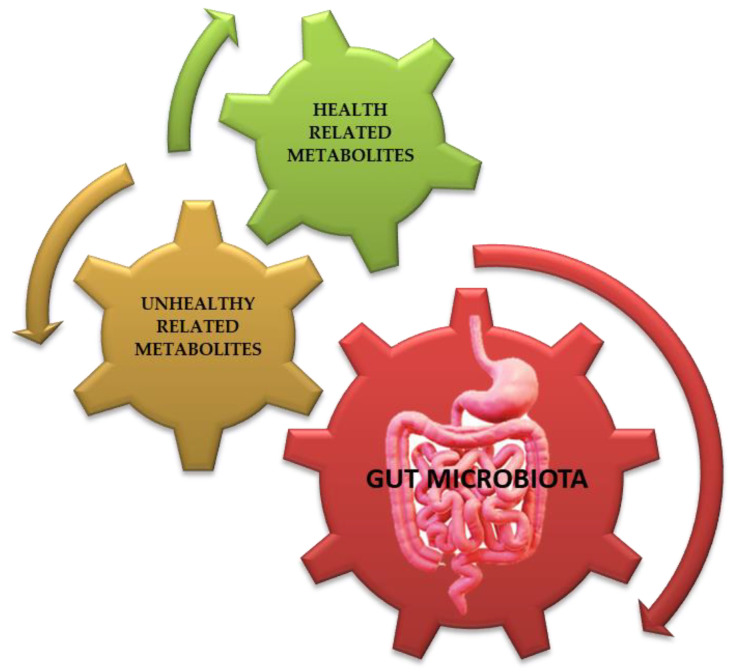
The three main pathways of metabolites’ (conjugates and derivates) formation in the gut via the microbiota. Some of them are correlated with the gut microbiota eubiosis (interspecies healthy balance) and the “good” balance for the normal physiological homeostasis functions of the host’s organism. Credits: Original figure by I.A. Charitos.
Figure 2
Figure 2
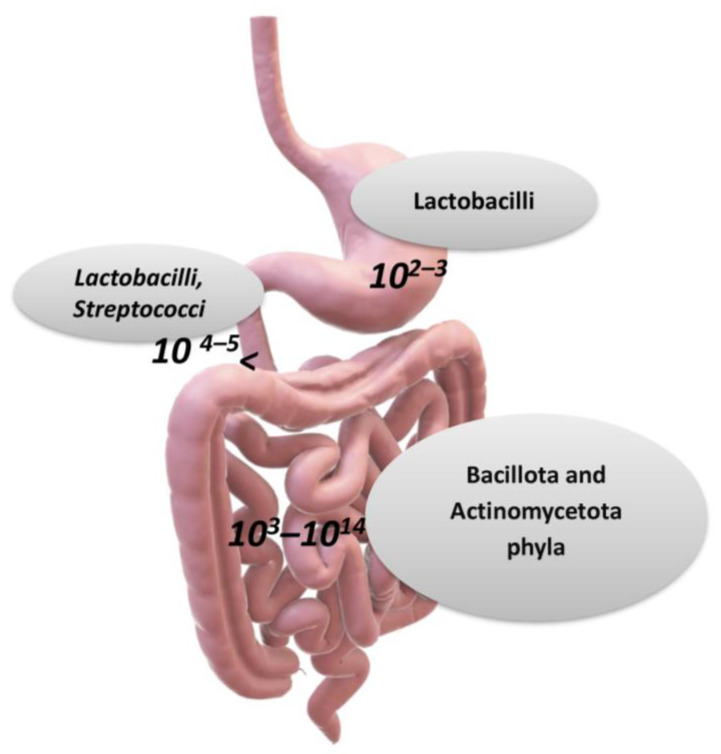
The main taxa of bacteria in the gastro-intestinal tract (over genera 500, and 1012–1014 microorganisms). The stomach carries about 102–103 bacteria, the duodenum 104–105, the ileum 108–109, and the bacteria and colon 1013–1014 (per gram of tissue or feces). Larger numbers of bacterial cells have been found in the large intestine, with 1012 bacteria (per gram of intestinal tissue), and the variety of bacteria is greater than that in the small intestine [1,6]. According to a hypothesis for the prevalence of genera in the human microbiota, there can be three main enterotypes, which are Bacteroides (enterotype 1), Prevotella (enterotype 2), and Ruminococcus (enterotype 3) Credits: Original figure by I.A. Charitos.
Figure 3
Figure 3
Gut microbiota’s (see red arrow) metabolites (derivates/conjugates) may be correlated with host’s health (see green arrow, such as 1,9-Nonanedicarboxylic Acid, methyl carboxylate, glycyl-L-valine, S-Carboxymethyl-L-cysteine, (Z)-3-hydroxyoctadec-11-enoic acid, 3 alpha 7 alpha-dihydroxy-5 beta-cholanic acid, and others) or those correlated with certain pathologies (see brown arrow, such as adrenic acid, arachidonic acid, cucurbit acid, carnosine, chenodeoxycholic acid-3-β-d-glucuronide, N-alfa-L-Acetyl-Arginine, N-propionyl-d-glutamine, α-Muricholic acid, and others) [53]. Credits: Original figure by I.A. Charitos.
Figure 4
Figure 4
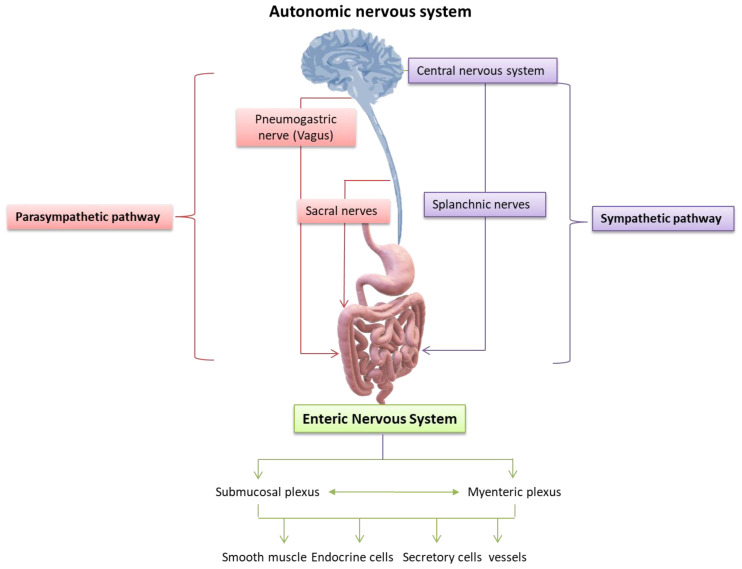
Nervous control of the gastrointestinal tract: the neural control of the gastrointestinal tract depends on the extrinsic nerves of the autonomic nervous system and the intrinsic neural networks, also known as the Enteric Nervous System (ENS). The extrinsic nerves are nerve fibers that originate outside the gastrointestinal tract and innervate its organs under the control of the autonomic (sympathetic and parasympathetic) nervous system, while regulating the activities of the neurons of the ENS. However, the ENS also functions autonomously, independently assisting the motor and secretory activities of the gastrointestinal tract. It is characteristic that even if the intestinal nerves of the autonomic system are injured or sectioned, many secretory and motor functions of the intestine are kept under the control of the ENS. Previously, the prevailing theory was that the ENS was an extension of the parasympathetic autonomic nervous system, whereas, today, there is the understanding that it constitutes an autonomic neural plexus involved in reflex and other activities of the gastrointestinal tract independently of exogenous nerve stimuli [74]. Credits: Original figure by I.A. Charitos.
Figure 5
Figure 5
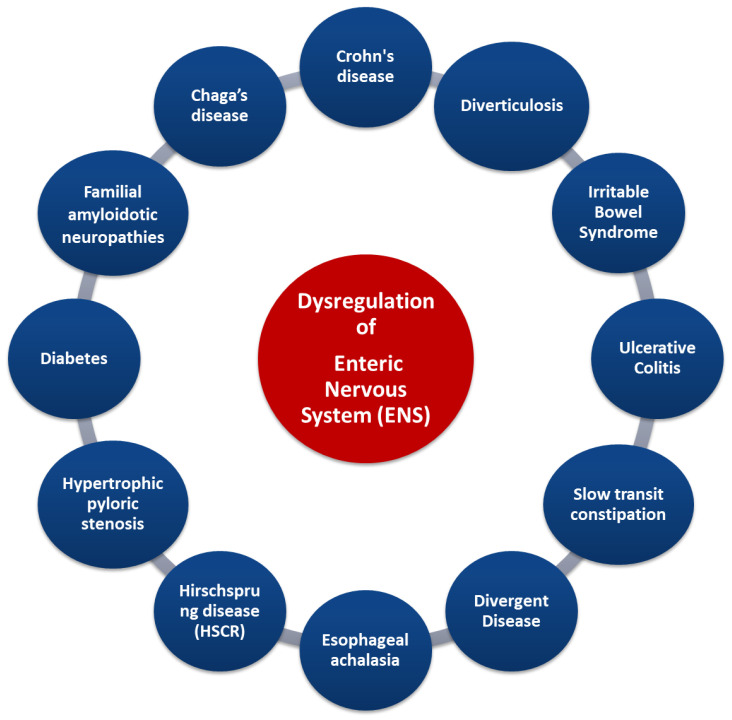
Gastrointestinal diseases associated with dysregulation of ENS. Credits: Original figure by I.A. Charitos.
Figure 6
Figure 6
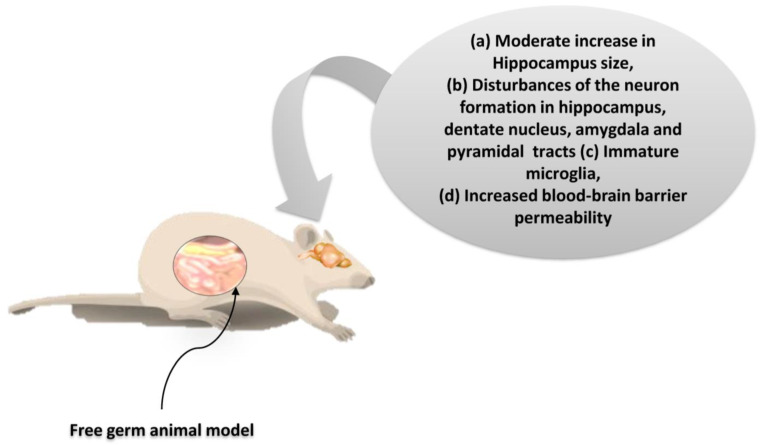
The neurogenesis effects on free germ murine animal model. The restoration of the microbiota in these mice after weaning did not alter neural cell growth. Thus, during the brain developmental periods, gut microbiota regulates the neurogenesis permanently [104,105]. Credits: Original figure by I.A. Charitos.
Figure 7
Figure 7
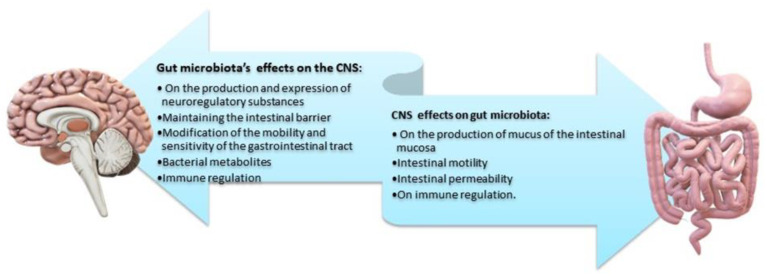
Main effects of the bidirectional interaction between gut microbiota/brain. Microbial metabolites reach the brain and inhibit myelin formation in the prefrontal cortex, preventing the differentiation of Sox10 or MYRF precursor oligodendrocytes. An increased production of metabolites inhibits myelin formation. Decreased myelin is associated with anxiety, depression, and reduced sociability [5,125,126]. Credits: Original figure by I.A. Charitos.
Figure 8
Figure 8
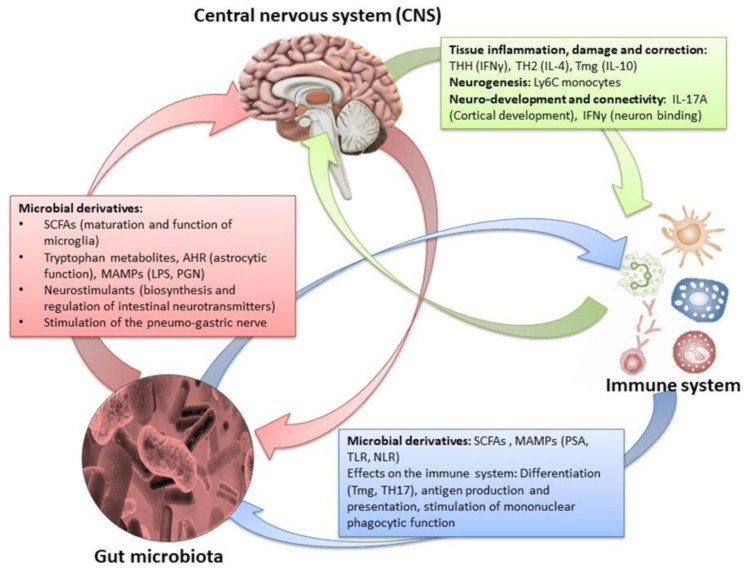
The effects of the amphidromic connection between gut microbiota/brain in relation to the peripheral immune system and metabolome [1,5,43,127,128,129,130,131,132]. Credits: Original figure by I.A. Charitos.
Figure 9
Figure 9
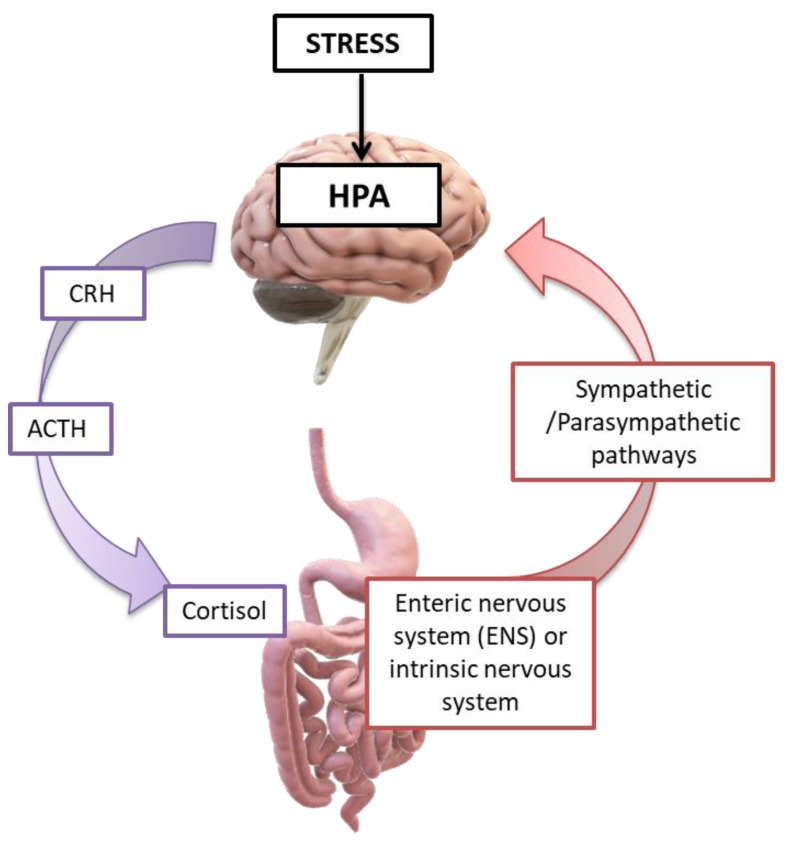
Intestine/brain axis in stressful environmental conditions: stress activates the hypothalamic–pituitary–adrenal axis (HPA axis), leading to the hypothalamus secretion of the corticotropin releasing hormone (CRH) and, subsequently, the secretion of the adrenocorticotropic hormone (ACTH) from the pituitary gland. This, in turn, leads to the secretion of cortisol by the adrenal glands. Cortisol acts in the CNS communication pathways, hormonal and neural, which, interacting, influence the activities of the cells: intestinal effector, smooth muscle, epithelial, enterochromaffin, interstitial Cajal’s cells, enteric neurons, and immune cells. Thus, stress conditions cause the variation in microbiome, immune function, mucus, intestinal motility, and permeability [1,5,203]. Credits: Original figure by I.A. Charitos.

References

    1. Wegierska A.E., Charitos I.A., Topi S., Potenza M.A., Montagnani M., Santacroce L. The Connection Between Physical Exercise and Gut Microbiota: Implications for Competitive Sports Athletes. Sports Med. 2022;52:2355–2369. doi: 10.1007/s40279-022-01696-x. - DOI - PMC - PubMed
    1. Bottalico L., Castellaneta F., Charitos I.A. From Hydrotherapy to the Discovery of The Gut Microbiota: The Historical Gastrointestinal Health Concept. Pharmacophore. 2020;11:82–90.
    1. Santacroce L., Topi S., Haxhirexha K., Hidri S., Charitos I.A., Bottalico L. Medicine and Healing in the Pre-Socratic Thought—A Brief Analysis of Magic and Rationalism in Ancient Herbal Therapy. Endocr. Metab. Immune Disord. Drug Targets. 2021;21:282–287. doi: 10.2174/1871530320666200508113728. - DOI - PubMed
    1. 74Ballini A., Charitos I.A., Cantore S., Topi S., Bottalico L., Santacroce L. About Functional Foods: The Probiotics and Prebiotics State of Art. Antibiotics. 2023;12:635. doi: 10.3390/antibiotics12040635. - DOI - PMC - PubMed
    1. Santacroce L., Man A., Charitos I.A., Haxhirexha K., Topi S. Current knowledge about the connection between health status and gut microbiota from birth to elderly. A narrative review. Front. Biosci. 2021;26:135–148. doi: 10.52586/4930. - DOI - PubMed

LinkOut - more resources