


Retromode Scanning Laser Ophthalmoscopy for Choroidal Nevi: A Preliminary Study
- PMID: 37374036
- PMCID: PMC10301522
- DOI: 10.3390/life13061253
Retromode Scanning Laser Ophthalmoscopy for Choroidal Nevi: A Preliminary Study
Abstract
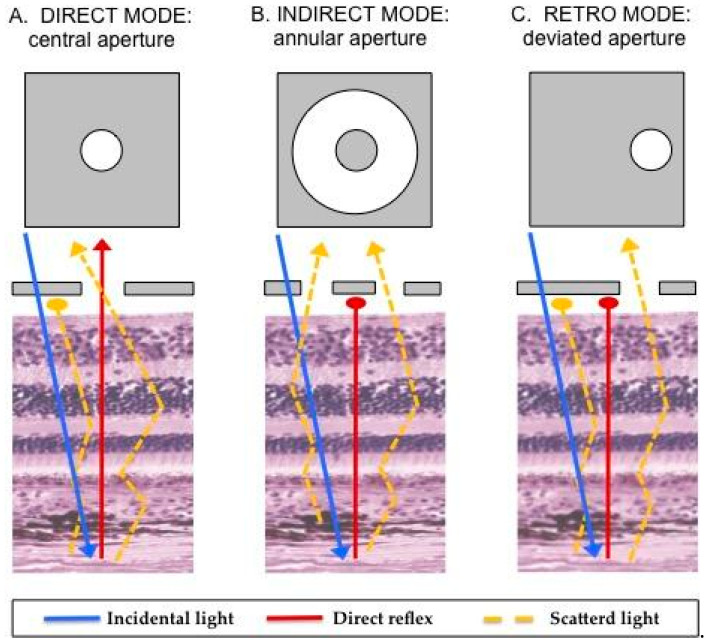
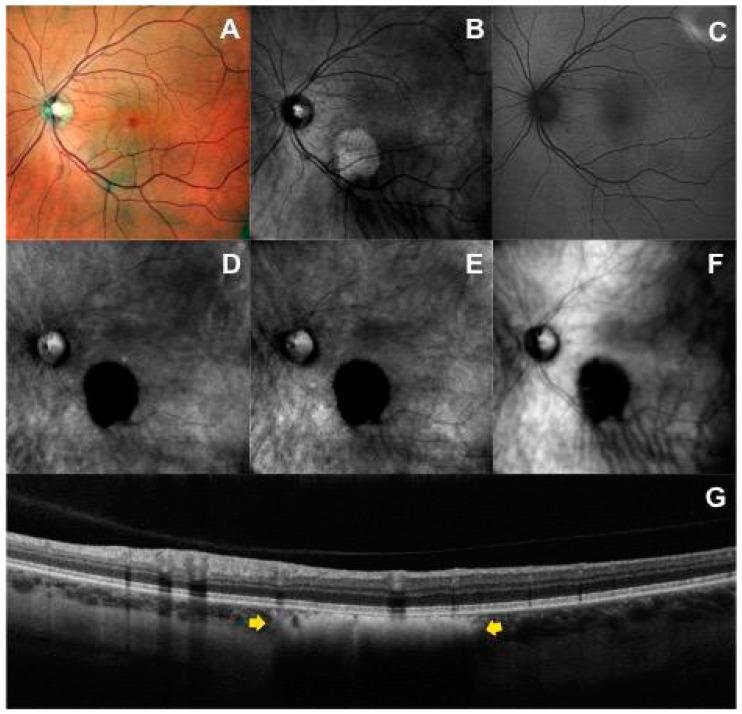
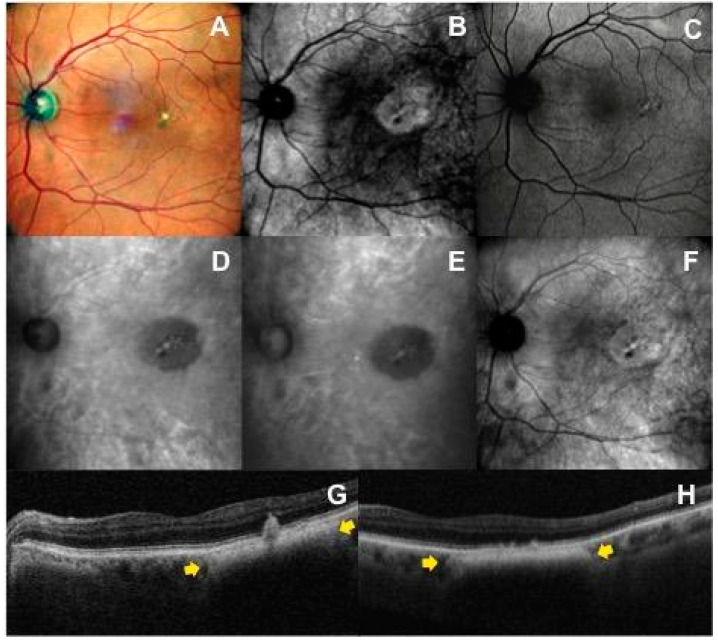
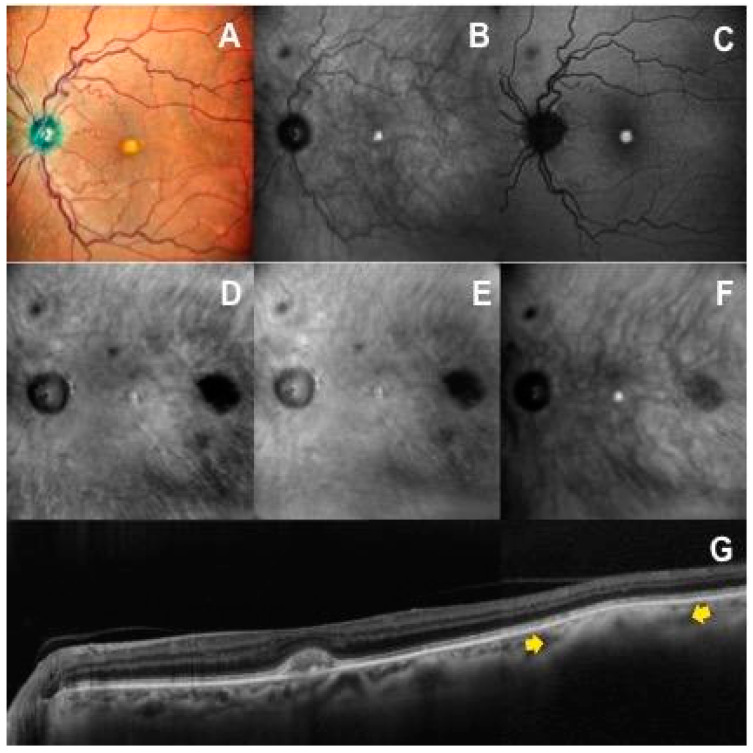
The purpose of the present study was to document pathological findings on retromode imaging in choroidal nevi and evaluate its diagnostic validity, using the confocal scanning laser ophthalmoscope Nidek Mirante (cSLO). A total of 41 choroidal nevi from 41 patients were included. All patients underwent multicolor fundus (mCF), infrared reflectance (IR), green fundus autofluorescence (FAF), dark-field (DF) and retromode (RM) imaging and optical coherence tomography (OCT) scans. We investigated retromode images to evaluate choroidal nevus features by comparing the results with those of mCF, IR, FAF, DF and OCT. In 100% of available images, retromode scanning laser ophthalmoscopy was able to detect choroidal nevi with a characteristic "hypo-retro-reflective" pattern, even the cases not visible on mCF, IR and FAF images. It also made it possible to delineate the margins of lesions with the highest rate of sharpness and accuracy among the imaging modalities examined. These findings seem to demonstrate how RM-SLO is an innovative diagnostic tool to detect and follow up choroidal nevi in a fast, reliable and non-invasive way.
Keywords: choroidal nevus; multimodal imaging; retromode; scanning laser ophthalmoscopy.
Conflict of interest statement
The authors have no conflict of interest to report. This manuscript has not previously been submitted for publication. None of the authors have any financial disclosures to declare.
Figures
References
LinkOut - more resources
Full Text Sources
Miscellaneous
