


Detection of SARS-CoV-2 RNA by In Situ Hybridization in Lung-Cancer Cells Metastatic to Brain and in Adjacent Brain Parenchyma
- PMID: 37375462
- PMCID: PMC10302960
- DOI: 10.3390/pathogens12060772
Detection of SARS-CoV-2 RNA by In Situ Hybridization in Lung-Cancer Cells Metastatic to Brain and in Adjacent Brain Parenchyma
Abstract
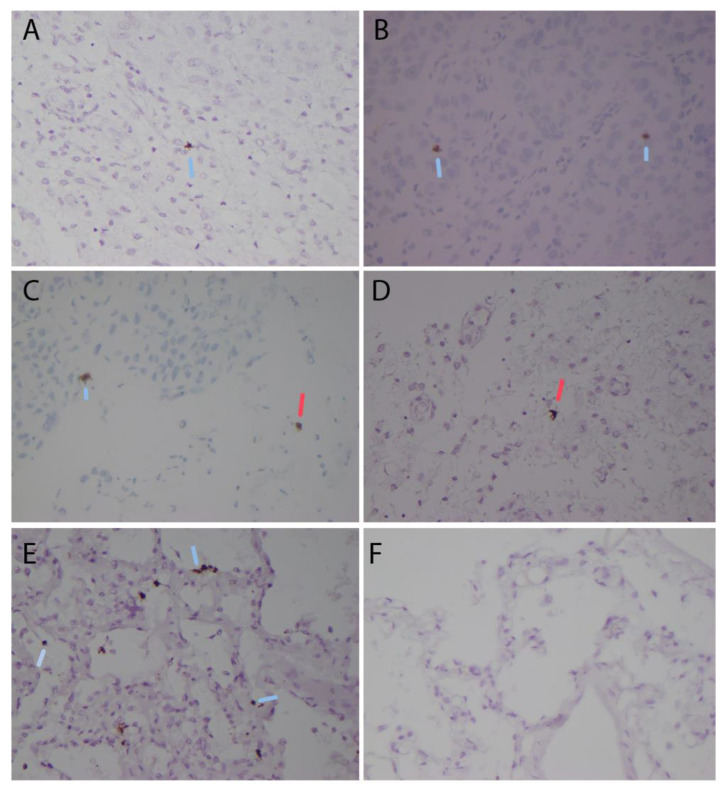
The mechanisms by which severe acute respiratory syndrome coronavirus 2 (SARS-CoV-2) may spread to the human brain are poorly understood, and the infection of cancer cells in the brain by SARS-CoV-2 in Coronavirus disease 2019 (COVID-19) patients has been the subject of only one previous case report. Here, we report the detection of SARS-CoV-2 RNA by in situ hybridization in lung-cancer cells metastatic to the brain and adjacent brain parenchyma in a 63-year-old male patient with COVID-19. These findings suggest that metastatic tumors may transport the virus from other parts of the body to the brain or may break down the blood-brain barrier to allow for the virus to spread to the brain. These findings confirm and extend previous observations that cancer cells in the brain can become infected by SARS-CoV-2 in patients with COVID-19 and raise the possibility that SARS-CoV-2 can have a direct effect on cancer growth and outcome.
Keywords: SARS-CoV-2; brain; cancer; clinical case/report; in situ hybridization; metastatic carcinoma.
Conflict of interest statement
The authors declare no conflict of interest.
Figures


References
-
- Chan J.F., Yuan S., Kok K.H., To K.K., Chu H., Yang J., Xing F., Liu J., Yip C.C., Poon R.W., et al. A familial cluster of pneumonia associated with the 2019 novel coronavirus indicating person-to-person transmission: A study of a family cluster. Lancet. 2020;395:514–523. doi: 10.1016/S0140-6736(20)30154-9. - DOI - PMC - PubMed
Publication types
LinkOut - more resources
Full Text Sources
Miscellaneous
