


An Insight into Citrus medica Linn.: A Systematic Review on Phytochemical Profile and Biological Activities
- PMID: 37375892
- PMCID: PMC10301705
- DOI: 10.3390/plants12122267
An Insight into Citrus medica Linn.: A Systematic Review on Phytochemical Profile and Biological Activities
Abstract
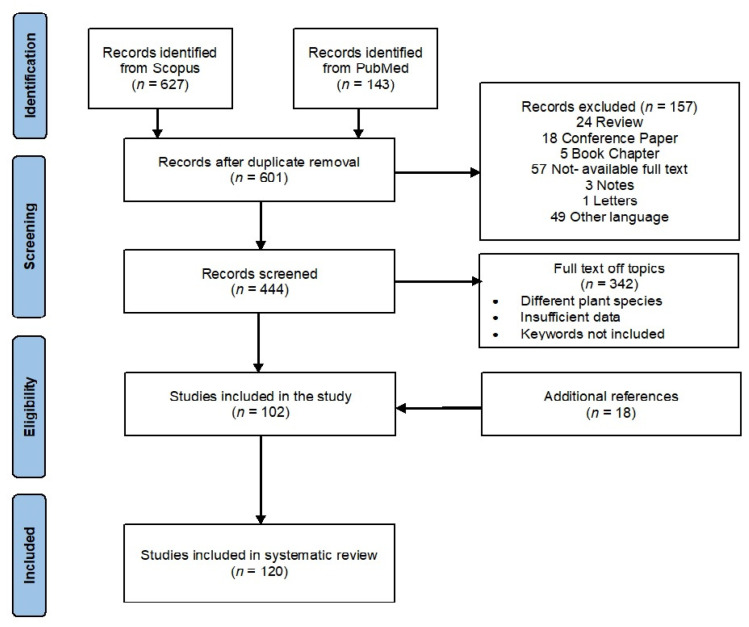
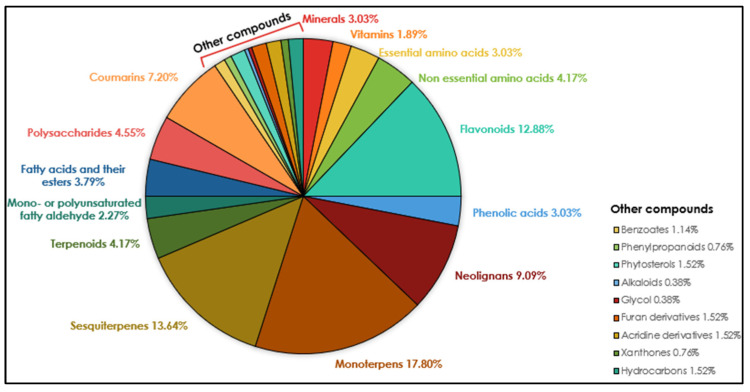
Plant species are a reservoir of natural compounds that can potentially be used to treat different diseases. Citrus medica Linn. belonging to the Rutaceae family, has been used for centuries in medicine for its antioxidant, anti-inflammatory, antimicrobial, antiviral, and antihyperglycemic properties. These activities are ascribable not only to the presence of health-promoting macronutrients and micronutrients, such as carbohydrates, minerals, amino acids, and vitamins, but also to specialized metabolites, such as flavonoids (apigenin, hesperetin, hesperidin, naringin, naringenin, rutin, quercetin, and diosmin), coumarins (citropten, scoparone, and bergapten), terpenes (limonene, γ-terpinene, limonin, and nomilin), and phenolic acids (p-coumaric acid, trans-ferulic acid, and chlorogenic acid). In recent years, particular attention has been focused on the antioxidant, anti-inflammatory, antimicrobial activity, antidiabetic, anticancer, and neuroprotective activity of C. medica. However, although many studies have reported this species' chemical and biological properties, the literature has never been analyzed via a systematic approach. For this reason, using PubMed and Scopus as databases, we performed a systematic review of C. medica's chemical composition and biological properties to inspire new research approaches and increase its curative application.
Keywords: Citrus medica Linn.; biologic effects; phytochemical composition; systematic review.
Conflict of interest statement
The authors declare no conflict of interest. All authors have read and agreed to the published version of the manuscript.
Figures
References
-
- Ramadugu C., Keremane M.L., Hu X., Karp D., Federici C.T., Kahn T., Roose M.L., Lee R.F. Genetic analysis of citron (Citrus medica L.) using simple sequence repeats and single nucleotide polymorphisms. Sci. Hortic. 2015;195:124–137. doi: 10.1016/j.scienta.2015.09.004. - DOI
-
- Hayat K. Citrus molecular phylogeny antioxidant properties and medicinal uses. Nova. Sci. 2014;3:235.
-
- Dey P., Hoque M., Islam M., Monalisa K. Kinetics of antioxidants degradation and quality changes of citron (Citrus medica) fruit juice concentrate during storage. J. Microbiol. Biotechnol. Food Sci. 2021;2021:230–234.
-
- Secundus C.P. Naturalis Historiae, Libri XXXVII. Vol. 6 Nabu Press; Charleston, SC, USA: 1865. Lipsiae, in Aedibus B. G. Teubneri.
Publication types
Grants and funding
LinkOut - more resources
Full Text Sources
