Review
. 2023 Jun 4;11(6):1060.
doi: 10.3390/vaccines11061060.

Human Papillomavirus Epidemiology and Prevention: Is There Still a Gender Gap?

Affiliations
Review

Human Papillomavirus Epidemiology and Prevention: Is There Still a Gender Gap?

Giovanna Milano et al. Vaccines (Basel). .

Abstract

Human papillomavirus (HPV) is sexually transmitted, one of the three most common sexually transmitted infections (STIs) in both males and females, and the most common viral STI. A crucial public health strategy to protect people against HPV is vaccination, which has shown its effectiveness in preventing HPV-related diseases. Presently, three types of vaccines are available (bivalent, quadrivalent, and nonvalent), and they all target the two most oncogenic virus genotypes (HPV 16 and 18). In recent years, the need to implement vaccination programmes that include all genders has been discussed in order to achieve herd immunity against HPV. To date, only a few countries have included young males in their vaccination programmes. Thus, our objective with this review is to provide an overview of the epidemiology of HPV and HPV prevention strategies and report the latest findings from the scientific literature.

Keywords: cervical cancer; epidemiology; gender gap; human papillomavirus; prevention strategies; screening; vaccination.


Conflict of interest statement

The authors declare no conflict of interest.

Figures
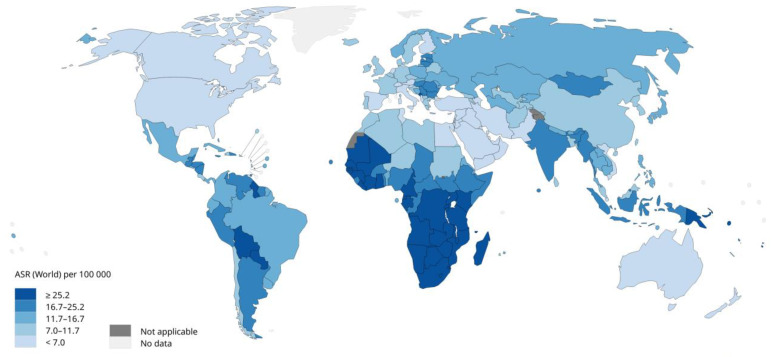
Figure 1
Figure 1
Age-standardized incidence rates of cervical cancer in the world (2020) (Source: International Agency Research on Cancer, WHO 2020). Licence: CC BY-NC-SA 3.0 IGO.
Figure 2
Figure 2
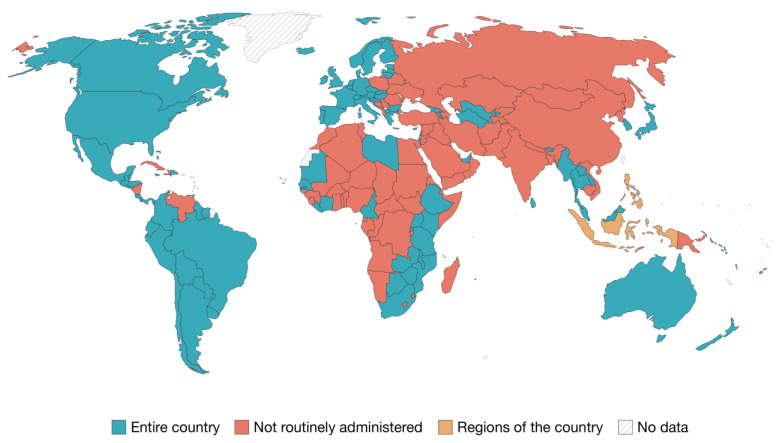
Countries which provide and recommend HPV vaccines through routine services (2021). Source: OurWorldInData.org/vaccination. Licence: CC-BY.
Figure 3
Figure 3
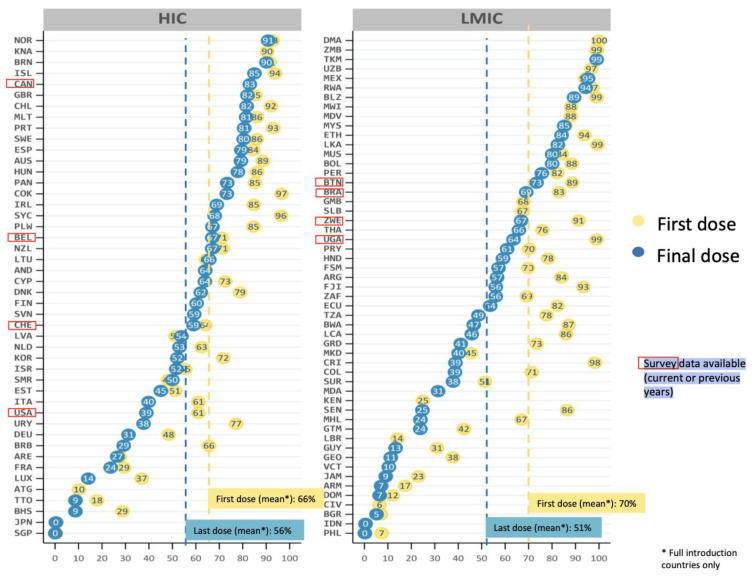
Percentages of HPV vaccine coverage globally, stratified by high and low-middle income countries. Source: Progress and Challenges with Achieving Universal Immunization Coverage—2019 WHO/UNICEF Estimates of National Immunization Coverage, World Health Organization 2020). Licence: CC BY-NC-SA 3.0 IGO.

References

    1. Nøhr B., Kjaer S.K., Soylu L., Jensen A. High-risk human papillomavirus infection in female and subsequent risk of infertility: A population-based cohort study. Fertil. Steril. 2019;111:1236–1242. doi: 10.1016/j.fertnstert.2019.02.001. - DOI - PubMed
    1. Meites E., Szilagyi P.G., Chesson H.W., Unger E.R., Romero J.R., Markowitz L.E. Human Papillomavirus Vaccination for Adults: Updated Recommendations of the Advisory Committee on Immunization Practices. MMWR Morb. Mortal. Wkly. Rep. 2019;68:698–702. doi: 10.15585/mmwr.mm6832a3. - DOI - PMC - PubMed
    1. Rosalik K., Tarney C., Han J. Human Papilloma Virus Vaccination. Viruses. 2021;13:1091. doi: 10.3390/v13061091. - DOI - PMC - PubMed
    1. Harden M.E., Munger K. Human papillomavirus molecular biology. Mutat. Res. Rev. Mutat. Res. 2017;772:3–12. doi: 10.1016/j.mrrev.2016.07.002. - DOI - PMC - PubMed
    1. Soheili M., Keyvani H., Soheili M., Nasseri S. Human papilloma virus: A review study of epidemiology, carcinogenesis, diagnostic methods, and treatment of all HPV-related cancers. Med. J. Islam. Repub. Iran. 2021;35:65. doi: 10.47176/mjiri.35.65. - DOI - PMC - PubMed

LinkOut - more resources