


Drug Overdose Deaths Among Non-Hispanic Black Men in the U.S.: Age-Specific Projections Through 2025
- PMID: 37377540
- PMCID: PMC10299749
- DOI: 10.1016/j.focus.2022.100063
Drug Overdose Deaths Among Non-Hispanic Black Men in the U.S.: Age-Specific Projections Through 2025
Abstract
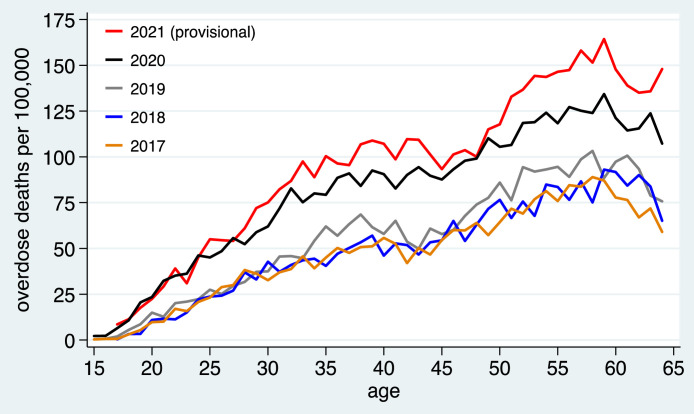
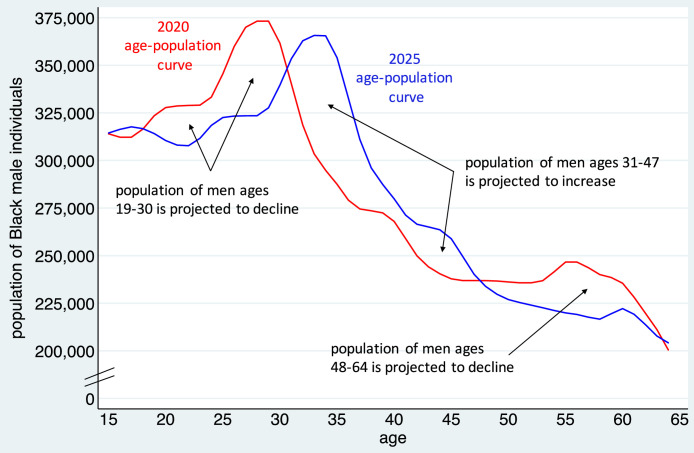
Introduction: Fatal drug overdoses have risen sharply in the U.S. since 2015, reaching their highest levels during the pandemic. Non-Hispanic Black men have been disproportionately harmed by this latest surge; overdose mortality per 100,000 has increased fourfold since 2015. Whether the mortality rate will continue to climb is unknown. In this study, we addressed the narrower question of which age groups are likely to experience a significant increase or decrease in the burden of drug overdose deaths through 2025, based on foreseeable changes in the age structure of the Black male population.
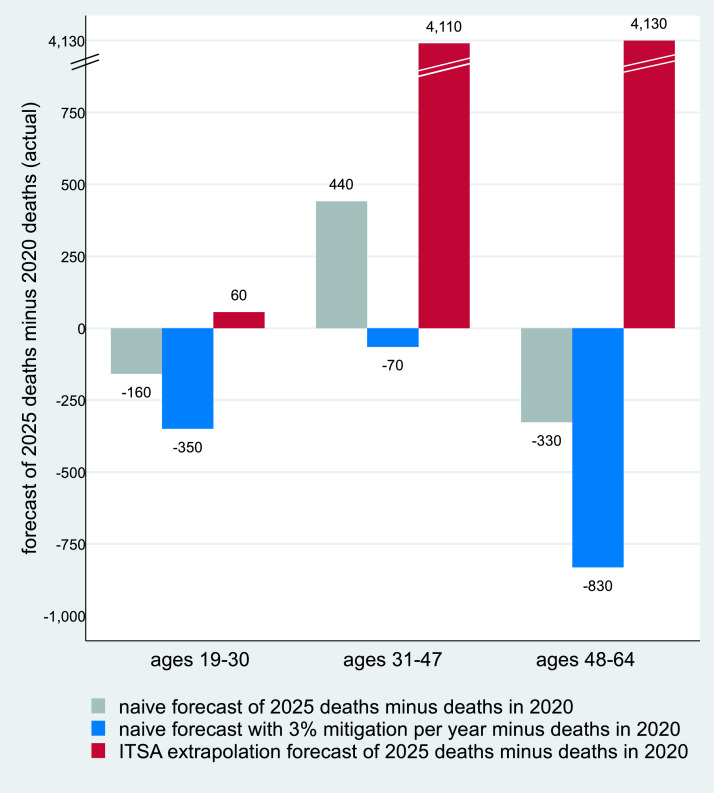
Methods: We used the 2020 and provisional 2021 age-specific mortality rates from the Centers for Disease Control WONDER (Wide-Ranging Online Data for Epidemiologic Research) database and the standard population balancing equation to project overdose deaths in 2025. Overdose deaths were identified by ICD-10 codes. We bracketed the projections between 2 plausible alternatives: a pessimistic forecast based on time series extrapolations and an optimistic forecast that assumes success nationally in lowering overdose deaths through prevention, treatment, and harm reduction initiatives.
Results: Among Black men aged 31-47 years, overdose deaths in 2025 are expected to increase by 440 or 11% (95% CI=8%, 14%) relative to 2020. By contrast, overdose deaths among younger Black men aged 19-30 years are expected to decline by 160 or -9% (95% CI= -15%, -5%). Among older Black men aged 48-64 years, overdose deaths are also expected to decline by 330 or -7% (95% CI= -10%, -4%). Similar results were found using 2021 provisional mortality rates.
Conclusions: Overdose deaths are predicted to increase significantly over current levels among Black men in their 30s and 40s. Local policy makers should direct harm reduction resources, such as naloxone kits, syringes, and fentanyl test strips, to places frequented by Black men in this age group. Outreach messaging should be tailored to resonate with men of middle age. Equally urgent is the scaling up of nonstigmatizing, evidence-based drug treatment and recovery support services in Black neighborhoods.
Conflict of interest statement
Declarations of interest: none.
Figures
References
-
- Substance Abuse and Mental Health Services Administration. The opioid crisis and the Black/African American population: an urgent issue. Rockville, MD: Office of Behavioral Health Equity. Substance Abuse and Mental Health Services Administration.https://store.samhsa.gov/sites/default/files/SAMHSA_Digital_Download/PEP.... Published 2020. Accessed June 10, 2022.
-
- National Vital Statistics System, CDC WONDER online database. Data are from the multiple cause of death files; 1999–2020, and from the provisional data files for 2021. As compiled from data provided by the 57 vital statistics jurisdictions through the vital statistics cooperative program. Centers for Disease Control and Prevention, National Center for Health Statistics. http://wonder.cdc.gov. Accessed June 10, 2022.
Grants and funding
LinkOut - more resources
Full Text Sources
