


Considerations for reproducible omics in aging research
- PMID: 37386258
- PMCID: PMC10527412
- DOI: 10.1038/s43587-023-00448-4
Considerations for reproducible omics in aging research
Abstract
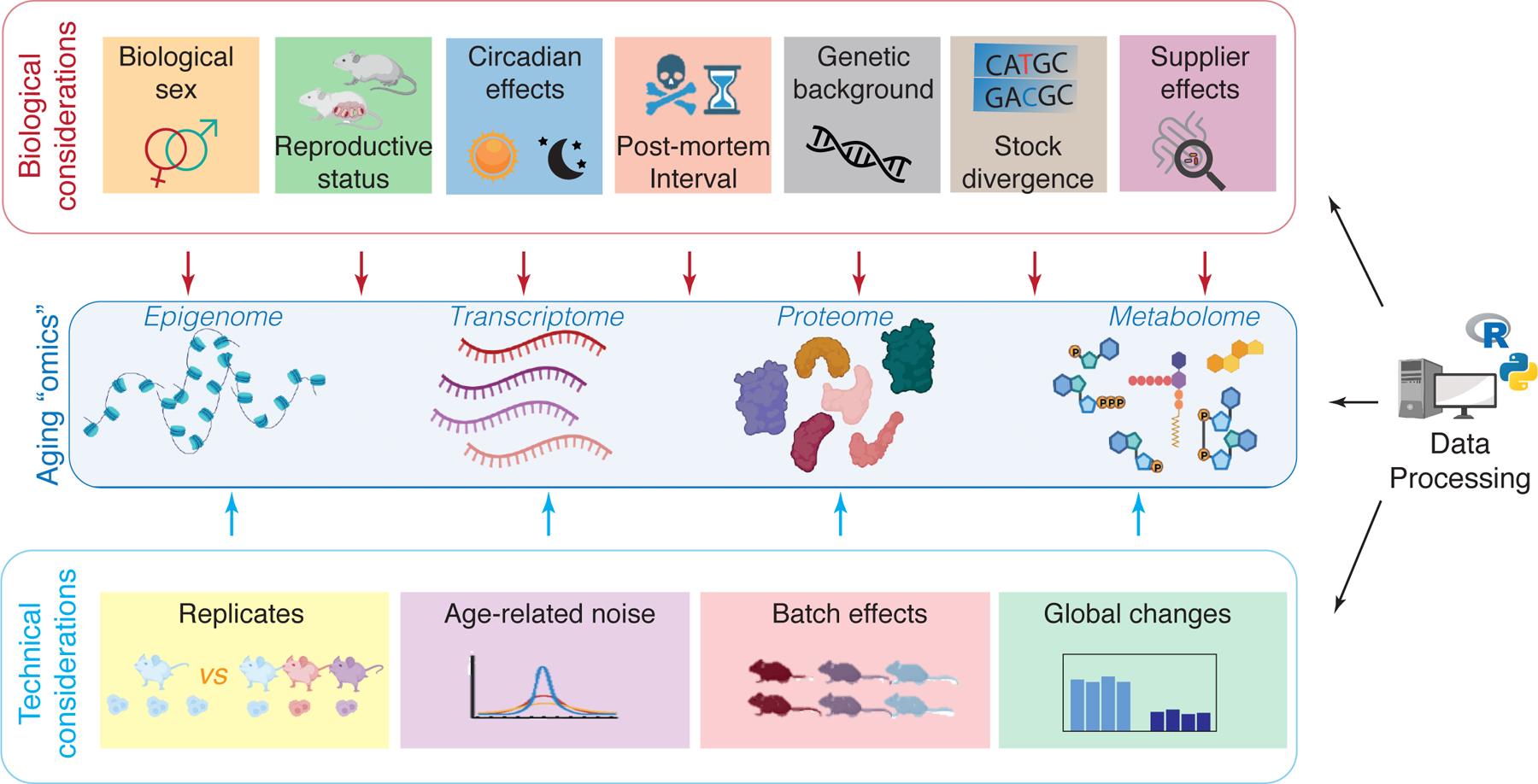
Technical advancements over the past two decades have enabled the measurement of the panoply of molecules of cells and tissues including transcriptomes, epigenomes, metabolomes and proteomes at unprecedented resolution. Unbiased profiling of these molecular landscapes in the context of aging can reveal important details about mechanisms underlying age-related functional decline and age-related diseases. However, the high-throughput nature of these experiments creates unique analytical and design demands for robustness and reproducibility. In addition, 'omic' experiments are generally onerous, making it crucial to effectively design them to eliminate as many spurious sources of variation as possible as well as account for any biological or technical parameter that may influence such measures. In this Perspective, we provide general guidelines on best practices in the design and analysis of omic experiments in aging research from experimental design to data analysis and considerations for long-term reproducibility and validation of such studies.
© 2023. Springer Nature America, Inc.
Conflict of interest statement
Competing interests
The authors declare no competing interests.
Figures
References
Publication types
MeSH terms
Substances
Grants and funding
LinkOut - more resources
Full Text Sources
Miscellaneous
