Modeling development using hydrogels
- PMID: 37387575
- PMCID: PMC10323241
- DOI: 10.1242/dev.201527
Modeling development using hydrogels
Abstract
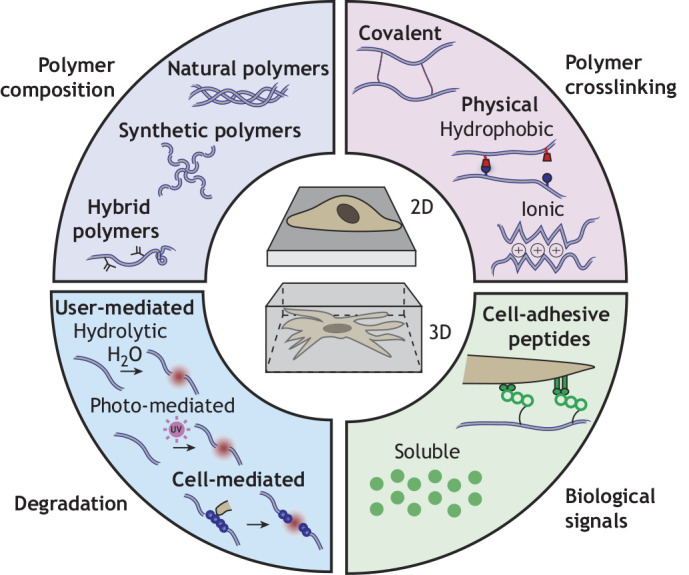
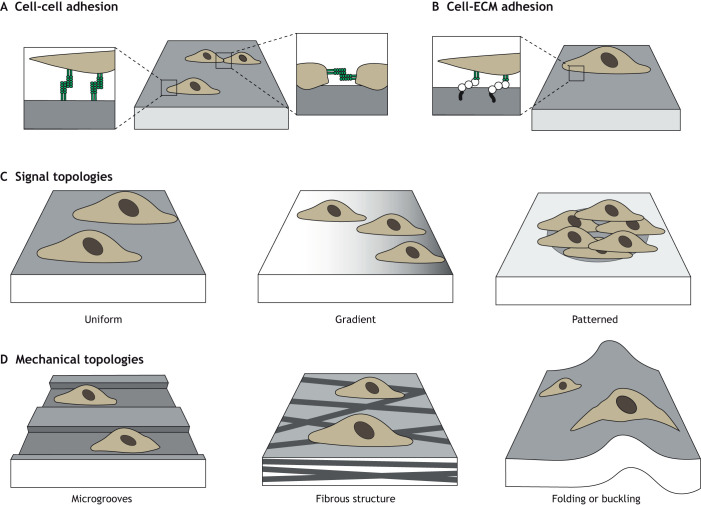
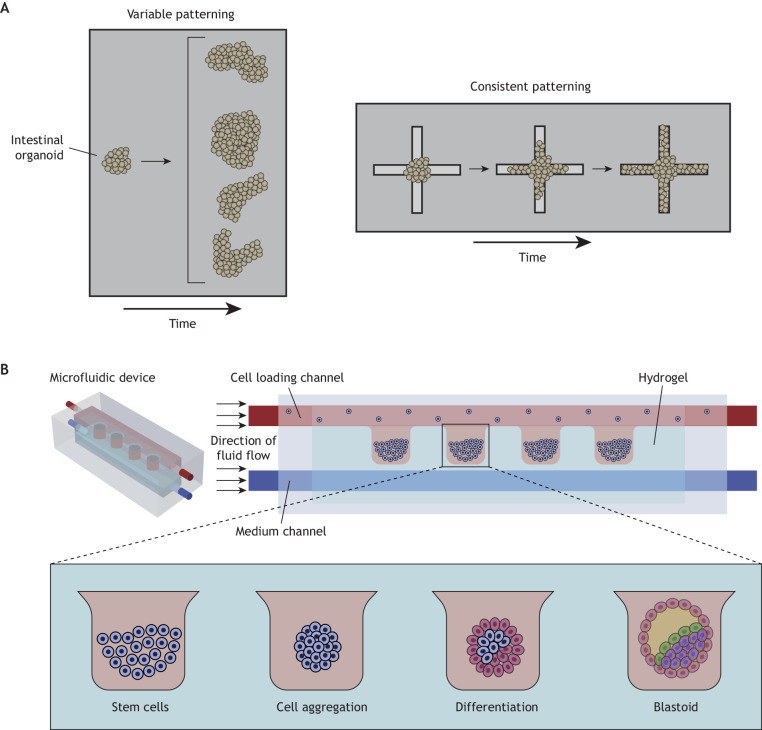
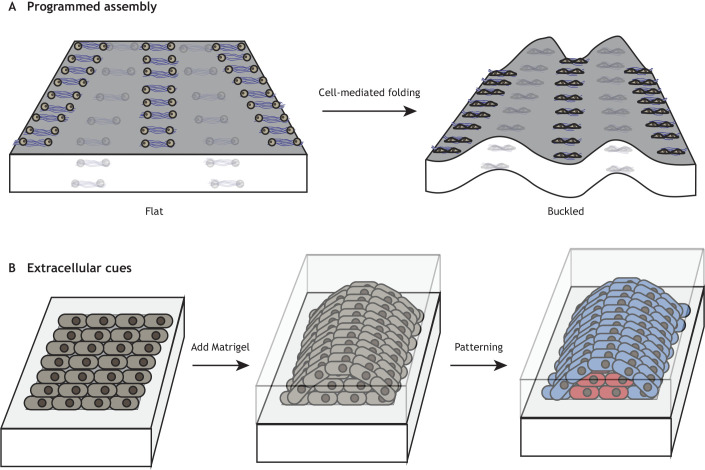
The development of multicellular complex organisms relies on coordinated signaling from the microenvironment, including both biochemical and mechanical interactions. To better understand developmental biology, increasingly sophisticated in vitro systems are needed to mimic these complex extracellular features. In this Primer, we explore how engineered hydrogels can serve as in vitro culture platforms to present such signals in a controlled manner and include examples of how they have been used to advance our understanding of developmental biology.
Keywords: In vitro culture; Extracellular matrix; Hydrogels; Mechanobiology.
© 2023. Published by The Company of Biologists Ltd.
Conflict of interest statement
Competing interests The authors declare no competing or financial interests.
Figures
References
-
- Abagnale, G., Steger, M., Nguyen, V. H., Hersch, N., Sechi, A., Joussen, S., Denecke, B., Merkel, R., Hoffmann, B., Dreser, A.et al. (2015). Surface topography enhances differentiation of mesenchymal stem cells towards osteogenic and adipogenic lineages. Biomaterials 61, 316-326. 10.1016/j.biomaterials.2015.05.030 - DOI - PubMed
-
- Akieda, Y., Ogamino, S., Furuie, H., Ishitani, S., Akiyoshi, R., Nogami, J., Masuda, T., Shimizu, N., Ohkawa, Y. and Ishitani, T. (2019). Cell competition corrects noisy Wnt morphogen gradients to achieve robust patterning in the zebrafish embryo. Nat. Commun. 10, 4710. 10.1038/s41467-019-12609-4 - DOI - PMC - PubMed
Publication types
MeSH terms
Substances
Grants and funding
LinkOut - more resources
Full Text Sources