Exploring the Relationship Between Resilience and the Adverse Impact of Stuttering in Children
- PMID: 37390495
- PMCID: PMC10468119
- DOI: 10.1044/2023_JSLHR-23-00012
Exploring the Relationship Between Resilience and the Adverse Impact of Stuttering in Children
Abstract
Purpose: People who stutter often experience significant adverse impact related to stuttering. However, it is unclear how adverse impact develops in children who stutter (CWS) and whether there are protective factors that may mitigate its development. This study examined the relationship between resilience, a potentially protective factor, and stuttering's adverse impact in CWS. Resilience comprises external factors, such as family support and access to resources as well as personal attributes, making it a comprehensive protective factor to explore.
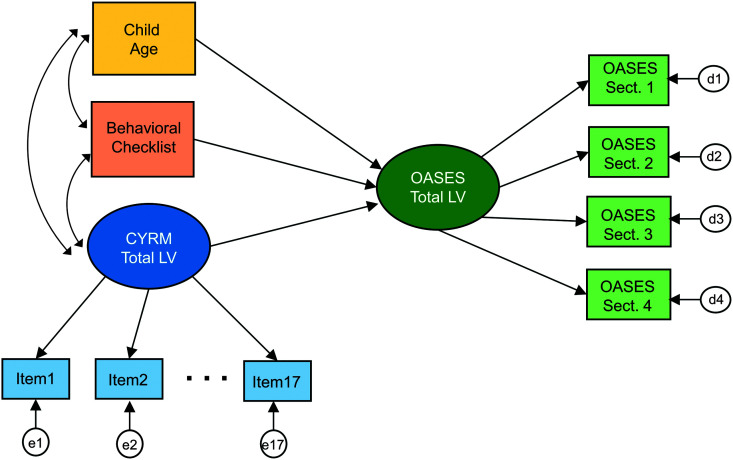
Method: One hundred forty-eight CWS aged 5-18 years completed the age-appropriate version of the Child and Youth Resilience Measure (CYRM) and the Overall Assessment of the Speaker's Experience of Stuttering. Parents completed a caregiver version of the CYRM and a behavioral checklist for their child. The adverse impact of stuttering was modeled as a function of resilience (external, personal, and total), controlling for child age and behavioral checklist score. We also estimated correlations between child-report and parent-report CYRM measures to assess rater agreement.
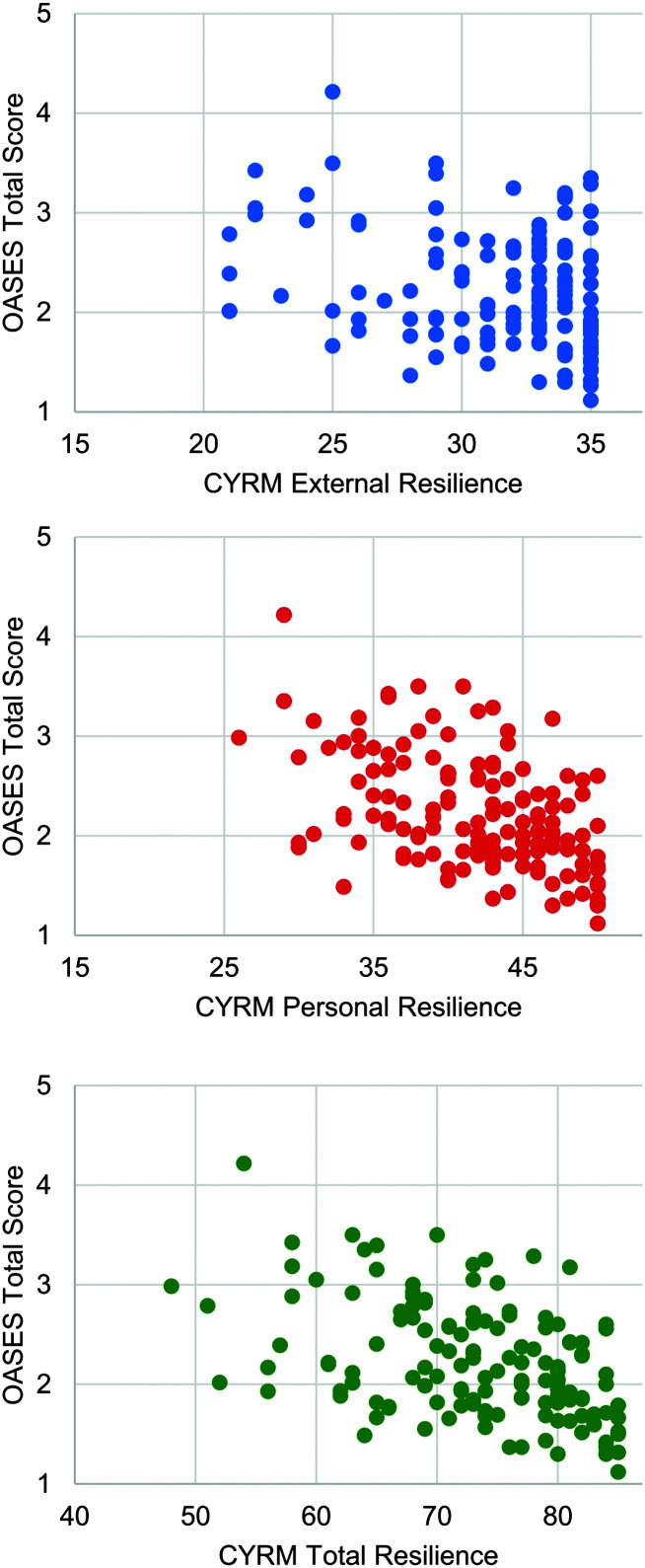
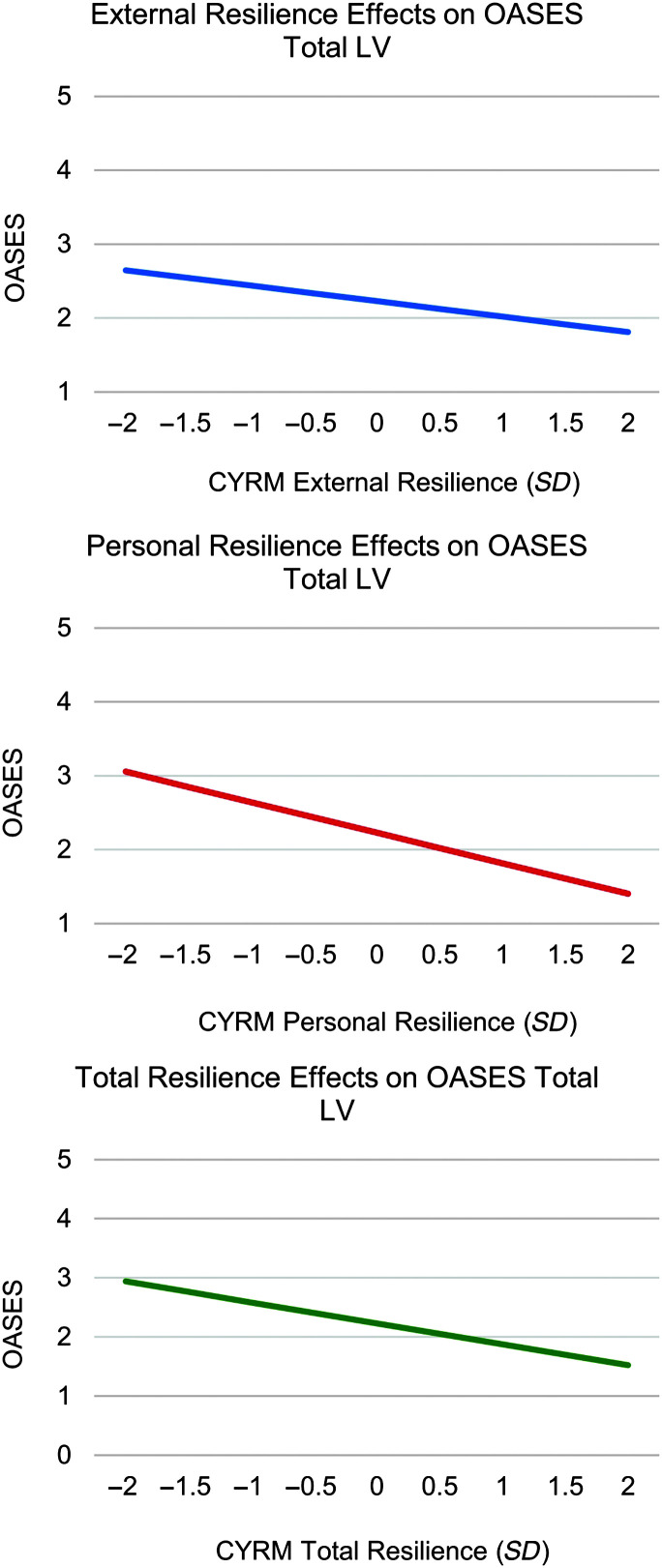
Results: Children reporting greater external, personal, or total resilience were more likely to experience lower degrees of adverse impact related to their stuttering. We documented stronger correlations between younger child and parent ratings of resilience and weaker correlations between older child and parent ratings.
Conclusions: These results yield valuable insight into the variability of adverse impact experienced by CWS and offer empirical support for strength-based speech therapy approaches. We discuss the factors that contribute to a child's resilience and provide practical suggestions for how clinicians can incorporate resilience-building strategies into intervention for children experiencing significant adverse impact from their stuttering.
Supplemental material: https://doi.org/10.23641/asha.23582172.
Figures
References
-
- Alvord, M. K., & Grados, J. J. (2005). Enhancing resilience in children: A proactive approach. Professional Psychology: Research and Practice, 36(3), 238–245. https://doi.org/10.1037/0735-7028.36.3.238
-
- Ambrose, N. G., & Yairi, E. (1994). The development of awareness of stuttering in preschool children. Journal of Fluency Disorders, 19(4), 229–245. https://doi.org/10.1016/0094-730X(94)90002-7
-
- Anderson, J. D., Pellowski, M. W., Conture, E. G., & Kelly, E. M. (2003). Temperamental characteristics of young children who stutter. Journal of Speech, Language, and Hearing Research, 46(5), 1221–1233. https://doi.org/10.1044/1092-4388(2003/095) - PMC - PubMed
-
- Beilby, J. M., Byrnes, M. L., & Yaruss, J. S. (2012). The impact of a stuttering disorder on western Australian children and adolescents. SIG 4 Perspectives on Fluency and Fluency Disorders, 22(2), 51–62. https://doi.org/10.1044/ffd22.2.51
-
- Benzies, K., & Mychasiuk, R. (2009). Fostering family resiliency: A review of the key protective factors. Child & Family Social Work, 14(1), 103–114. https://doi.org/10.1111/j.1365-2206.2008.00586.x
Publication types
MeSH terms
Grants and funding
LinkOut - more resources
Full Text Sources
Medical