


Indications for zygomatic implants: a systematic review
- PMID: 37391575
- PMCID: PMC10313639
- DOI: 10.1186/s40729-023-00480-4
Indications for zygomatic implants: a systematic review
Abstract
Purpose: The purpose of this systematic review was to assess the evidence regarding the indications for placement of zygomatic implants to rehabilitate edentulous maxillae.
Material and methods: A focused question using the PIO format was developed, questioning "in patients in need of an implant-supported rehabilitation of the edentulous maxillae, what are the indications for the use of zygomatic implants''. The primary information analyzed and collected was a clear description of the indication for the use of zygomatic implants.
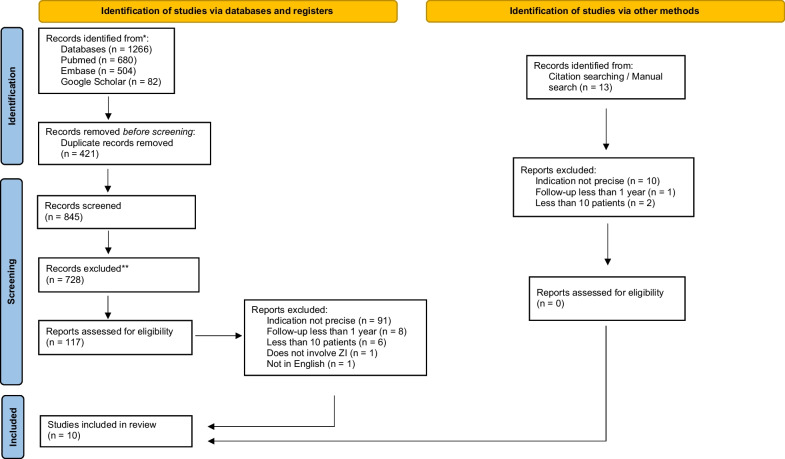
Results: A total of 1266 records were identified through database searching. The full-text review was conducted for 117 papers, and 10 were selected to be included in this review. Zygomatic implant indications were extreme bone atrophy or deficiency secondary to different factors. The quad zygoma concept (two zygomatic implants bilaterally placed and splinted) was applied to 107 patients, the classic zygoma concept (one zygomatic implant bilaterally placed and splinted to standard anterior implants) was used in 88 patients, and the unilateral concept (one zygomatic implant on one side, splinted with one or more conventional implants) was employed in 14 patients.
Conclusions: The main indication for the use of zygomatic implants was considered extreme maxillary bone atrophy, resulting from many factors. The clear definition of what was considered "extreme bone atrophy" is not uniquely defined in each paper. Further studies are needed to develop clear indications for zygomatic implants.
Keywords: Atrophic maxillae; Zygoma; Zygoma implants; Zygomatic implants.
© 2023. The Author(s).
Conflict of interest statement
Dr. Polido has no disclosures to report related to this submitted work. Dr. Machado-Fernandez has no disclosures to report related to this submitted work. Dr. Lin has no disclosures to report related to this submitted work. Dr. Aghaloo reports being an Associate Editor for the
Figures
References
-
- World Health Organization. 2022. https://www.who.int/news-room/fact-sheets/detail/oral-health. Accessed 9 Nov 2022.
-
- Tuminelli F, Balshi T. Zygomatic implants: position statement of the American College of Prosthodontics; 2016.
-
- Branemark PI, Gröndahl K, Worthington P. The challenge of the severely resorbed maxilla. In: Darle C, editor. Osseointegration and autogenous onlay bone grafts: reconstruction of the edentulous atrophic maxilla. 2001. p. 2–6.
-
- Davó R. Zygomatic implants placed with a two-stage procedure: a 5-year retrospective study. Eur J Oral Implantol. 2009;2(2):115–124. - PubMed
Publication types
MeSH terms
Substances
LinkOut - more resources
Full Text Sources
