[Preprint]. 2023 May 24:2023.05.22.541509.
doi: 10.1101/2023.05.22.541509.

A genome catalog of the early-life human skin microbiome

Affiliations

A genome catalog of the early-life human skin microbiome

Zeyang Shen et al. bioRxiv. .

Update in

  • A genome catalog of the early-life human skin microbiome.
    Shen Z, Robert L, Stolpman M, Che Y, Allen KJ, Saffery R, Walsh A, Young A, Eckert J, Deming C, Chen Q, Conlan S, Laky K, Li JM, Chatman L, Kashaf SS; NISC Comparative Sequencing Program; VITALITY team; Kong HH, Frischmeyer-Guerrerio PA, Perrett KP, Segre JA. Shen Z, et al. Genome Biol. 2023 Nov 10;24(1):252. doi: 10.1186/s13059-023-03090-w. Genome Biol. 2023. PMID: 37946302 Free PMC article.

Abstract

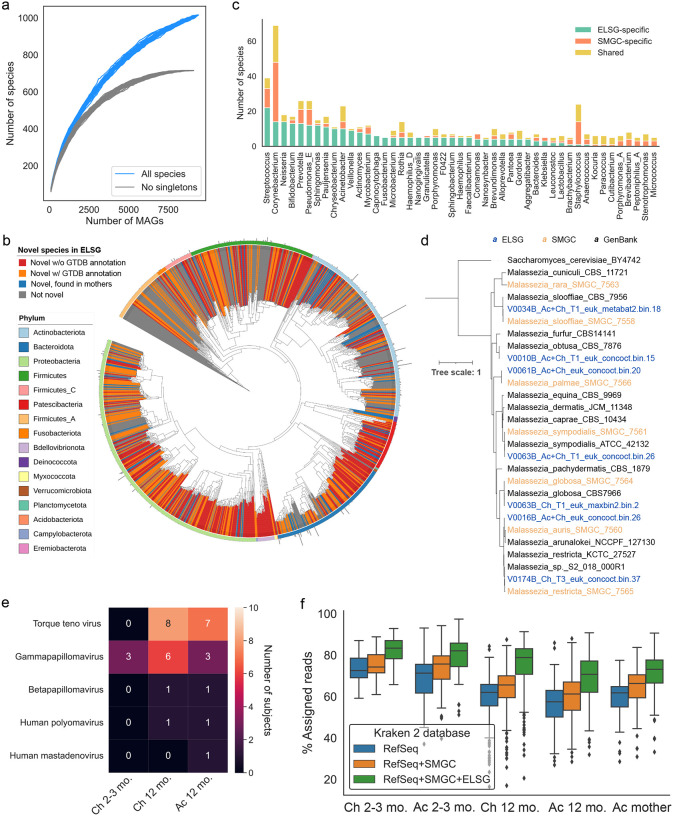
Metagenome-assembled genomes have greatly expanded the reference genomes for skin microbiome. However, the current reference genomes are largely based on samples from adults in North America and lack representation from infants and individuals from other continents. Here we used ultra-deep shotgun metagenomic sequencing to profile the skin microbiota of 215 infants at age 2-3 months and 12 months who were part of the VITALITY trial in Australia as well as 67 maternally-matched samples. Based on the infant samples, we present the Early-Life Skin Genomes (ELSG) catalog, comprising 9,194 bacterial genomes from 1,029 species, 206 fungal genomes from 13 species, and 39 eukaryotic viral sequences. This genome catalog substantially expands the diversity of species previously known to comprise human skin microbiome and improves the classification rate of sequenced data by 25%. The protein catalog derived from these genomes provides insights into the functional elements such as defense mechanisms that distinguish early-life skin microbiome. We also found evidence for vertical transmission at the microbial community, individual skin bacterial species and strain levels between mothers and infants. Overall, the ELSG catalog uncovers the skin microbiome of a previously underrepresented age group and population and provides a comprehensive view of human skin microbiome diversity, function, and transmission in early life.


Figures
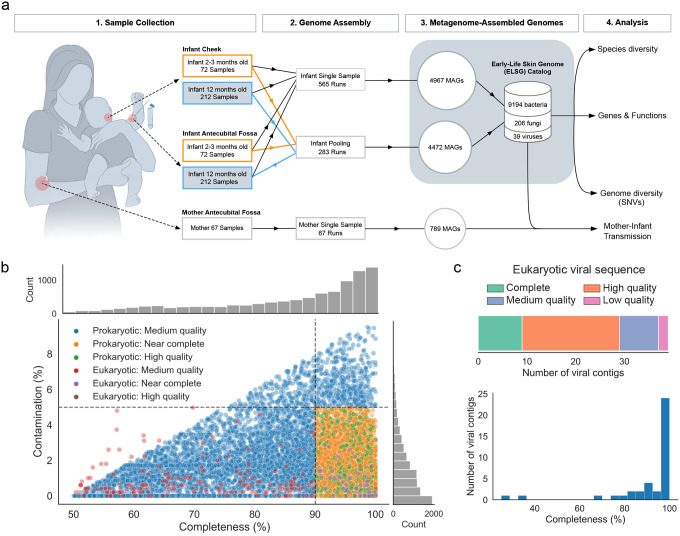
Figure 1.
Figure 1.. The genome catalog assembled from the early-life skin samples.
a. Schematic of study design from sampling to analysis. MAGs were constructed from single samples and pooled samples based on the two body sites of the same infant at each time point. MAGs from infant samples comprise the ELSG catalog. MAGs from mother samples were used for comparative analysis. b. Completeness and contamination for each of nonredundant prokaryotic and eukaryotic MAGs included in the ELSG catalog, colored by the quality level. c. Quality and completeness distribution for eukaryotic viral sequences included in the ELSG catalog.
Figure 2.
Figure 2.. Expansion of species diversity in skin microbiome.
a. Rarefaction analysis of the number of species as a function of the number of nonredundant genomes. Curves are depicted both for all the ELSG species and after excluding singleton species (represented by only one genome). b. Phylogenetic tree of the 1,029 representative bacterial MAGs in the ELSG catalog. Clades are colored by GTDB phylum annotation (outer ring) and whether these are novel species (inner shades). Bar graphs in the outermost layer indicate the number of nonredundant genomes within each species-level cluster. c. Comparison of species diversity between the ELSG catalog and the SMGC. Species-level clusters were binned into the genus level in the bar graphs, ordered by a decreasing number of ELSG-specific species. d. Phylogenetic tree of the Malassezia genomes from the ELSG and the SMGC together with GenBank reference genomes with Saccharomyces cerevisiae as the outgroup. e. Number of infant samples harboring eukaryotic viruses included in the ELSG catalog. f. Proportion of metagenomic reads from skin samples classified with Kraken 2 databases based upon RefSeq, augmented by the SMGC and the ELSG. The boxes represent the interquartile range, and the whiskers indicate the lowest and highest values within 1.5 times the interquartile range.
Figure 3.
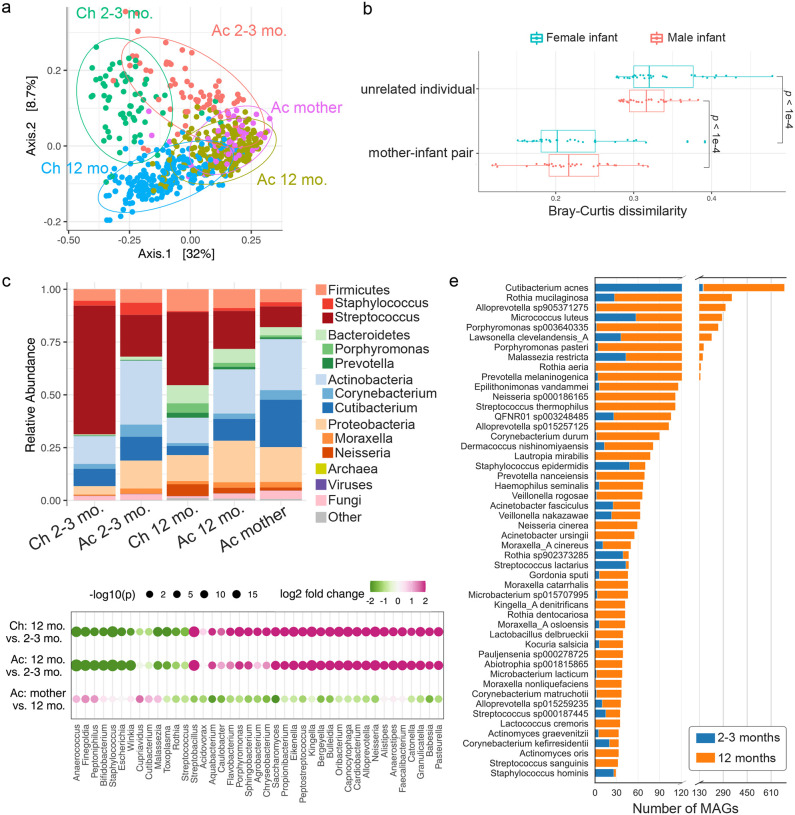
Figure 3.. Early-life skin microbial community structure.
a. Principal coordinate analysis (PCoA) on Bray-Curtis dissimilarity between the microbial profiles. Each point represents a single sample and is colored by body site and age group. Ellipses represent a 95% confidence interval around the centroid of each sample group. b. The Bray-Curtis dissimilarity of mother-infant pairs comparing related versus unrelated dyads. Median value of each infant and all unrelated mothers was used. Statistical difference was tested by two-sided Wilcoxon rank sum test. c. Relative abundance of skin microbiome averaged for each sample group. Two of the most abundant genera within each bacterial phylum were shown. d. Differential taxa at the genus level between infants of different ages and between infants at 12 months and mothers. The size of the dots represents the log-transformed adjusted p-value from DESeq2, and the color indicates fold changes. The top differentially abundant genera for each comparison were shown. e. Number of species-level MAGs recovered from infants at 2–3 months and 12 months, sorted by the total number of MAGs.
Figure 4.
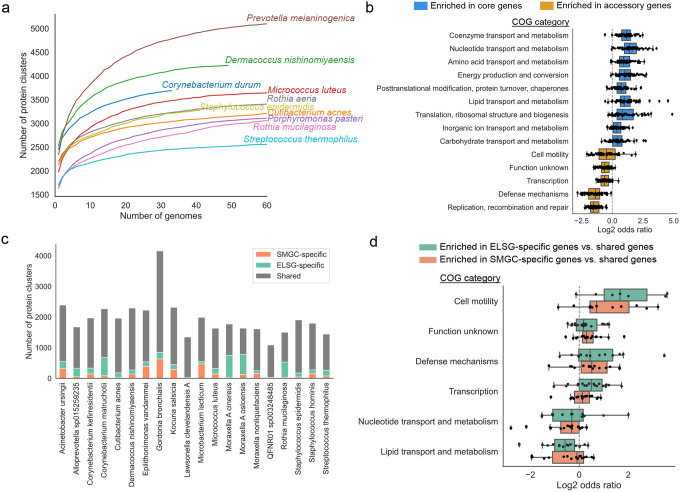
Figure 4.. Proteins and functions of early-life skin microbiome.
a. Rarefaction curves of the number of protein clusters obtained as a function of the number of species-level genomes. Each curve represents one species. The curves for species with more than 60 genomes are truncated for visualization purpose. b. Comparison of the functional categories assigned to the core and accessory genes for species with at least 10 near-complete or high-quality genomes (>90% completeness, <5% contamination). Each dot represents one species. Odds ratio was calculated from the contingency table with core and accessory genes on one axis and the tested and the other functional categories on the other axis. Only significantly enriched functional categories are shown. Significance was calculated with a two-tailed t-test on log-transformed odds ratios and further adjusted for multiple comparisons using the Bonferroni correction. c. Comparison of the protein clusters between the ELSG and the SMGC for species with at least 5 near-complete or high-quality genomes in each catalog. d. Functional categories enriched in ELSG-specific and SMGC-specific genes compared to shared genes. Each dot represents a species. Only statistically significant categories are shown.
Figure 5.
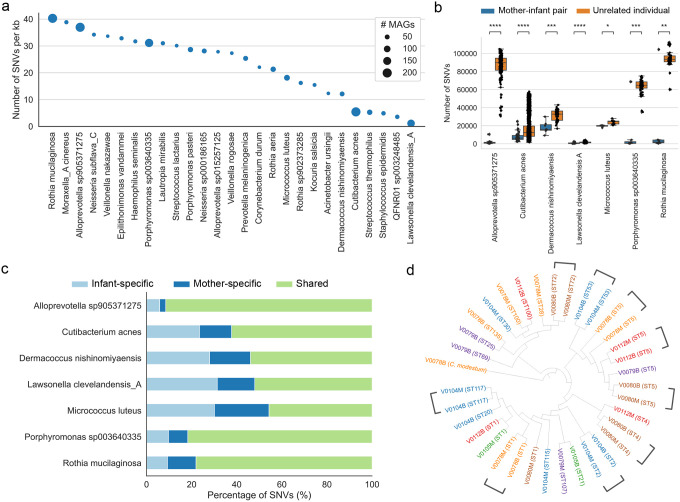
Figure 5.. Single-nucleotide variation indicates vertical transmission of skin microbiome.
a. Top species with the largest intraspecies SNV density. The size of dots indicates the number of MAGs corresponding to each species. b. Number of SNVs in pairwise comparisons between mother-infant pairs and between infants and unrelated mothers. Only species with genomes from at least 4 mother-infant pairs were considered for analysis. Statistical significance was tested by two-tailed Wilcoxon rank sum test. **P<0.01, ***P<0.001, ****P<0.0001. c. Proportion of SNVs that were found in genomes from infants only or mothers only or both. SNVs were called based on the species-level representative MAG as the reference genome. d. Phylogenetic tree of representative C. acnes cultured isolates with C. modestum as the outgroup. Source of individual is indicated in the label name and label color. Sequence type is displayed in parentheses.

References

    1. Oh J. et al. Biogeography and individuality shape function in the human skin metagenome. Nature 514, 59–64 (2014). - PMC - PubMed
    1. Harris-Tryon T. A. & Grice E. A. Microbiota and maintenance of skin barrier function. Science (1979) 376, 940–945 (2022). - PubMed
    1. Park J. et al. Shifts in the Skin Bacterial and Fungal Communities of Healthy Children Transitioning through Puberty. Journal of Investigative Dermatology 142, 212–219 (2022). - PMC - PubMed
    1. Casterline B. W. & Paller A. S. Early development of the skin microbiome: therapeutic opportunities. Pediatr Res 90, 731–737 (2021). - PMC - PubMed
    1. Stamatas G. N., Nikolovski J., Mack M. C. & Kollias N. Infant skin physiology and development during the first years of life: a review of recent findings based on in vivo studies. Int J Cosmet Sci 33, 17–24 (2011). - PubMed

Publication types