


A panoramic view of technological landscape for bioethanol production from various generations of feedstocks
- PMID: 37401849
- PMCID: PMC10321172
- DOI: 10.1080/21655979.2022.2095702
A panoramic view of technological landscape for bioethanol production from various generations of feedstocks
Abstract
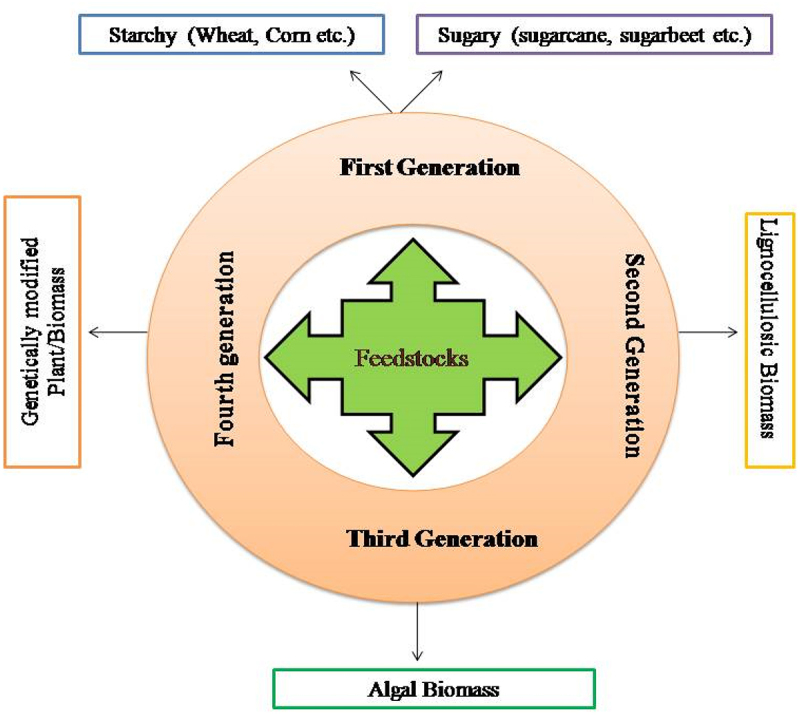
Bioethanol is an appropriate alternate energy option due to its renewable, nontoxic, environmentally friendly, and carbon-neutral nature. Depending upon various feedstocks, bioethanol is classified in different various generations. First-generation ethanol created a food vs fuel problem, which was overcome by second-generation, third-generation and fourth-generation ethanol. The considerable availability of lignocellulosic biomass makes it a suitable feedstock, however, its recalcitrant nature is the main hurdle in converting it to bioethanol. The present study gives a comprehensive assessment of global biofuel policies and the current status of ethanol production. Feedstocks for first-generation (sugar and starch-based), second-generation (lignocellulosic biomass and energy crops), third-generation (algal-based) and fourth-generation (genetically modified algal biomass or crops) are discussed in detail. The study also assessed the process for ethanol production from various feedstocks, besides giving a holestic background knowledge on the bioconversion process, factors affecting bioethanol production, and various microorganisms involved in the fermentation process. Biotechnological tools also play a pivotal role in enhancing process efficiency and product yield. In adddition, most significant development in the field of genetic engineering and adaptive evolution are also highlighted.
Keywords: Feedstock; bioethanol; biomass; conversion; generations.
Plain language summary
Global biofuels policies on bioethanol production were presentedTechnological integrations of 1G, 2G, 3G and 4G bioethanol were discussedVarious factors affecting bioethanol production were mentionedTechno-economic analysis and LCA of bioethanol production are discussed.
Conflict of interest statement
No potential conflict of interest was reported by the authors.
Figures


References
-
- Devi A, Singh A, Bajar S, et al. Ethanol from lignocellulosic biomass: an in-depth analysis of pre-treatment methods, fermentation approaches and detoxification processes. J Environ Chem Eng. 2021;9(5):105798. DOI: 10.1016/j.jece.2021.105798 - DOI
-
- Abnisa F, Arami-Niya A, Daud WMAW, et al. Characterization of Bio-oil and Bio-char from Pyrolysis of Palm Oil Wastes. BioEnergy Res. 2013;6(2):830–840. DOI: 10.1007/s12155-013-9313-8 - DOI
-
- Kundu A, Sahu JN, Redzwan G, et al. An overview of cathode material and catalysts suitable for generating hydrogen in microbial electrolysis cell. Int J Hydrogen Energy. 2013;38(4):1745–1757. DOI: 10.1016/j.ijhydene.2012.11.031 - DOI
-
- Vanhala P, Bergström I, Haaspuro T, et al. Boreal forests can have a remarkable role in reducing greenhouse gas emissions locally: land use-related and anthropogenic greenhouse gas emissions and sinks at the municipal level. Sci Total Environ. 2016;557:51–57. - PubMed
Publication types
MeSH terms
Substances
LinkOut - more resources
Full Text Sources
Research Materials
