


Incidence and Persistence of Psychotic Experiences in the General Population: Systematic Review and Meta-Analysis
- PMID: 37402250
- PMCID: PMC10318880
- DOI: 10.1093/schbul/sbad056
Incidence and Persistence of Psychotic Experiences in the General Population: Systematic Review and Meta-Analysis
Abstract
Background and hypothesis: Psychotic experiences (PEs) are associated with increased risk for mental disorders, in particular persistent PEs. PEs therefore might be useful within intervention research. We sought to systematically determine the incidence and persistence of PEs in the general population.
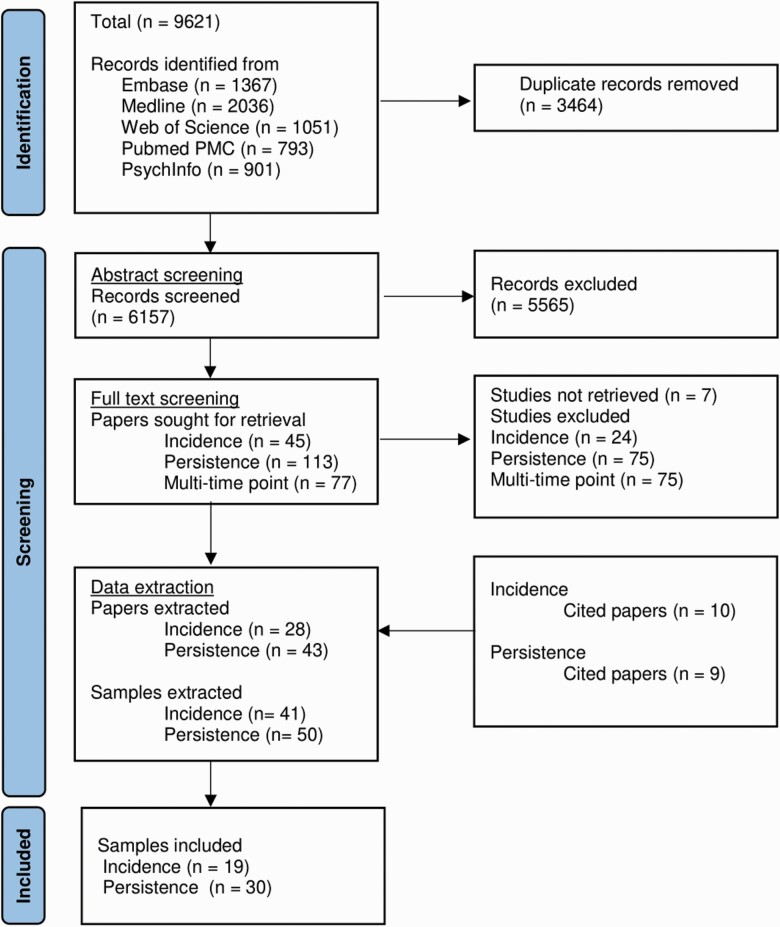
Study design: A double-blind search of databases (Embase, Pubmed PMC, Psychinfo, Medline, and Web of Science) from inception to January 2023 and data extraction, were conducted. Study quality was assessed using the NIH assessment tool. Random effects models were conducted to calculate pooled incidence rate per person-year and proportion of persistent PEs per year. Age and study design were all examined using subgroup analyses. Demographic, risk factors, and outcomes for incidence and persistence of PEs were reported in a narrative synthesis.
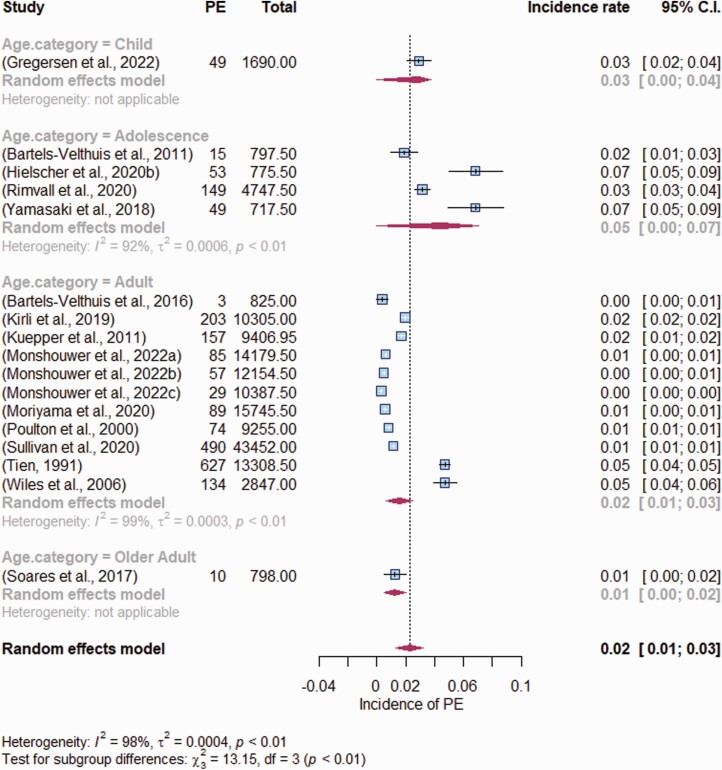
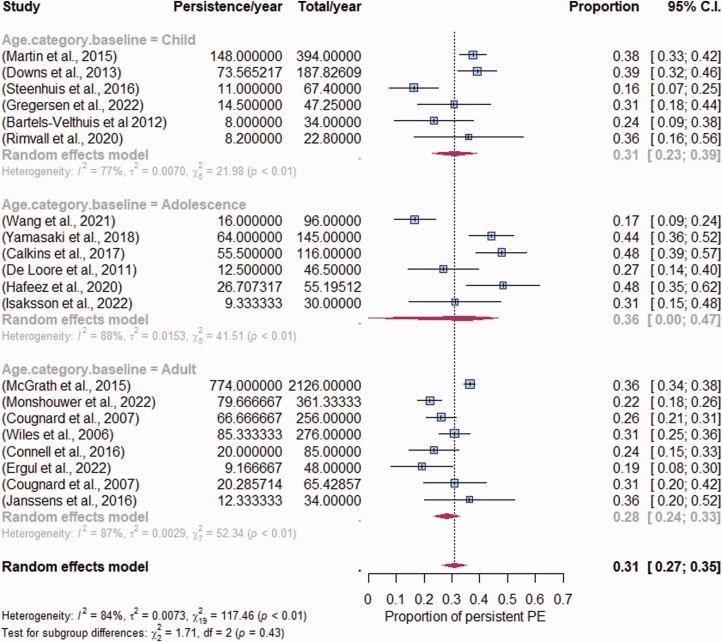
Study results: Using a double-blind screening method for abstract (k = 5763) and full text (k = 250) were screened. In total 91 samples from 71 studies were included, of which 39 were included in a meta-analysis (incidence: k = 17, n = 56 089; persistence: k = 22, n = 81 847). Incidence rate was 0.023 per person-year (95% CI [0.0129;0.0322]). That is, for every 100 people, 2 reported first onset PEs in a year. This was highest in adolescence at 5 per 100(13-17 years). The pooled persistence rate for PEs was 31.0% (95% CI [26.65,35.35]) This was highest in adolescence at 35.8%. Cannabis was particularly associated with incidence of PEs, and persistence of PEs were associated with multiple mental disorders.
Conclusions: Each year incidence of PEs is 2 of every 100 people, and persists each year in 31% of cases, this risk is highest in adolescents.
© The Author(s) 2023. Published by Oxford University Press on behalf of the Maryland Psychiatric Research Center.
Figures
References
-
- Staines L, Healy C, Corcoran P, et al. Investigating the effectiveness of three school based interventions for preventing psychotic experiences over a year period – a secondary data analysis study of a randomized control trial. BMC Public Health. 2023;23(1):219. doi: 10.1186/s12889-023-15107-x - DOI - PMC - PubMed
Publication types
MeSH terms
Grants and funding
LinkOut - more resources
Full Text Sources
Medical
