


Matcha green tea beverage moderates fatigue and supports resistance training-induced adaptation
- PMID: 37403052
- PMCID: PMC10320999
- DOI: 10.1186/s12937-023-00859-4
Matcha green tea beverage moderates fatigue and supports resistance training-induced adaptation
Abstract
Background: Resistance training adaptively increases muscle strength and mass, contributing to athletic performance and health promotion. Dietary intervention with natural foods provides nutrients that help accelerate muscle adaptation to training. Matcha green tea contains several bioactive factors such as antioxidants, amino acids, and dietary fibers; however, its effect on muscle adaptation is unclear. In this study, we aimed to investigate the effects of matcha beverage intake on muscle adaptation to resistance training.
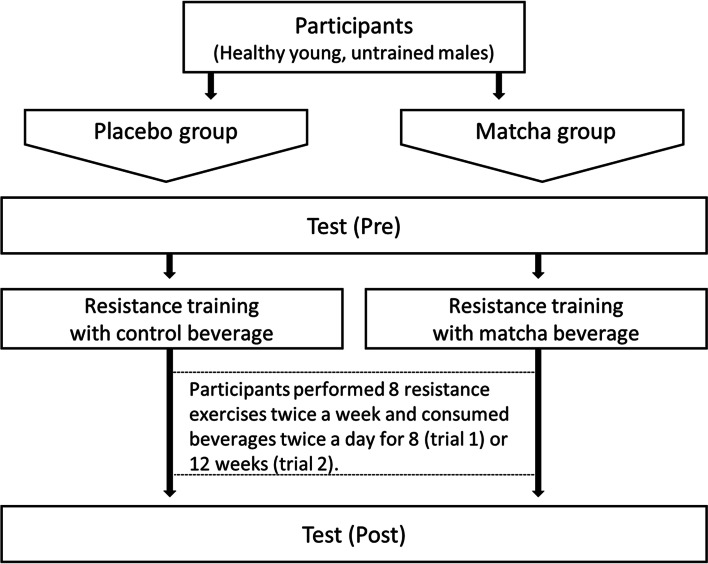
Methods: Healthy, untrained men were randomized into placebo and matcha groups. Participants consumed either a matcha beverage containing 1.5 g of matcha green tea powder or a placebo beverage twice a day and engaged in resistance training programs for 8 (trial 1) or 12 weeks (trial 2).
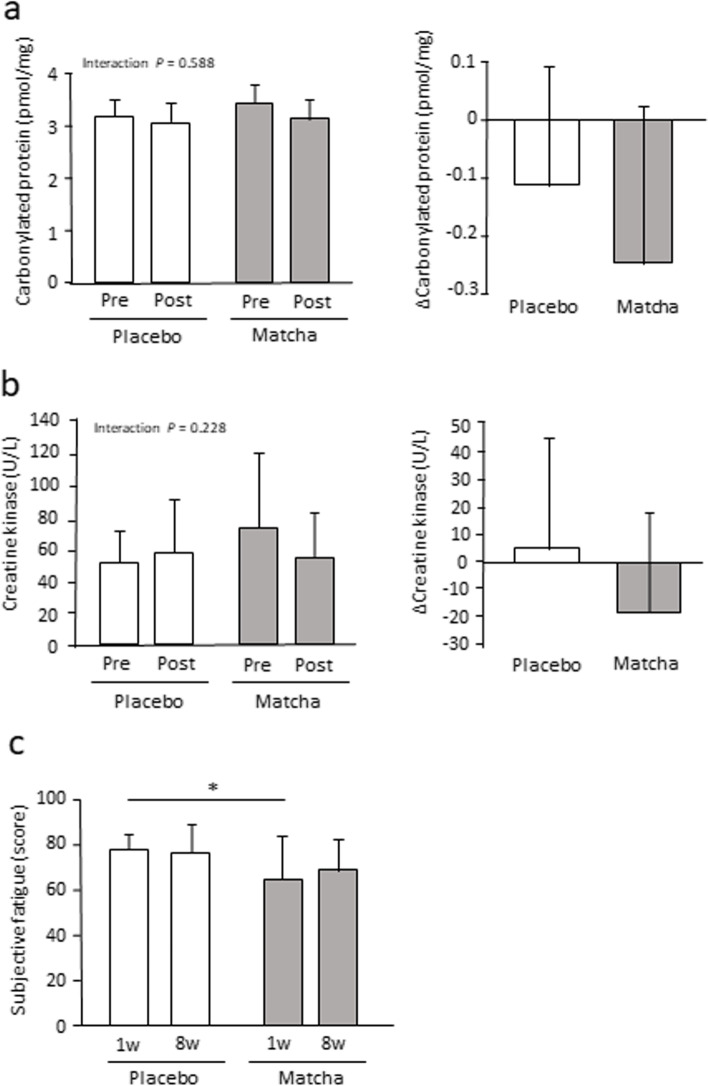
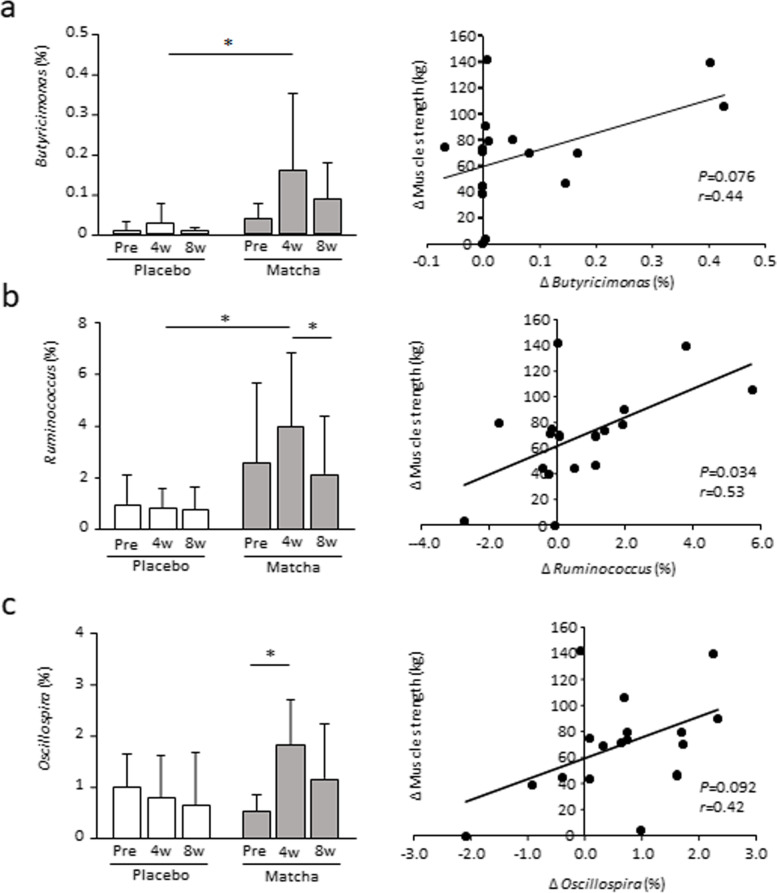
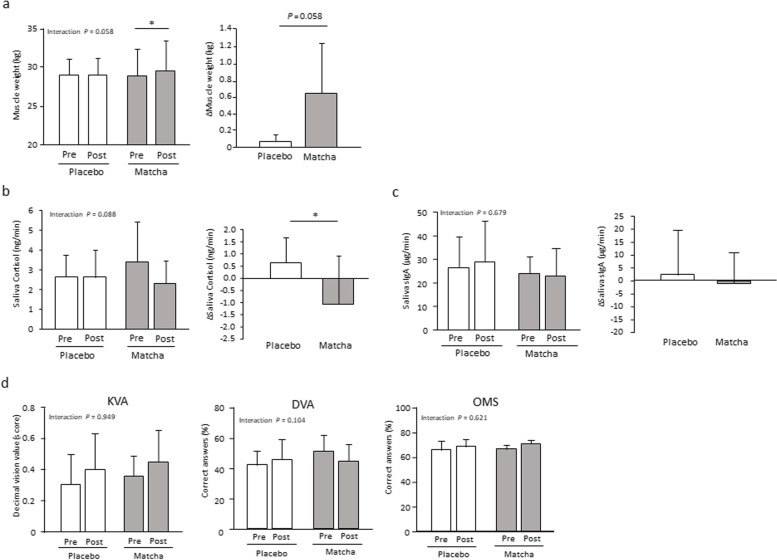
Results: In trial 1, maximum leg strength after training tended to increase more in the matcha group than that in the placebo group. In the matcha group, subjective fatigue after exercise at 1 week of training was lower than that in the placebo group. Gut microbe analysis showed that the abundance of five genera changed after matcha intake. The change in Ruminococcus, Butyricimonas, and Oscillospira compositions positively correlated with the change in maximum strength. In trial 2, the change in skeletal muscle mass in response to training was larger in the matcha group. In addition, the salivary cortisol level was lower in the matcha group than that in the placebo group.
Conclusion: Daily intake of matcha green tea beverages may help in muscle adaptation to training, with modulations in stress and fatigue responses and microbiota composition.
Keywords: Fatigue; Gut microbiota; Matcha green tea; Muscle adaptation; Resistance training.
© 2023. The Author(s).
Conflict of interest statement
Although the Matcha and Health Research Group was not involved in conducting experiments or data analysis, test samples were supplied from Nestlé Japan Ltd., a constituent organization of the Matcha and Health Research Group.
Figures
References
-
- Cogan KE, Evans M, Iuliano E, Melvin A, Susta D, Neff K, et al. Co-ingestion of protein or a protein hydrolysate with carbohydrate enhances anabolic signaling, but not glycogen resynthesis, following recovery from prolonged aerobic exercise in trained cyclists. Eur J Appl Physiol. 2018;118:349–359. doi: 10.1007/s00421-017-3775-x. - DOI - PubMed
Publication types
MeSH terms
Substances
LinkOut - more resources
Full Text Sources
Medical
