Addressing sociodemographic disparities in COVID-19 vaccine uptake among youth in Zimbabwe
- PMID: 37407229
- PMCID: PMC10335587
- DOI: 10.1136/bmjgh-2023-012268
Addressing sociodemographic disparities in COVID-19 vaccine uptake among youth in Zimbabwe
Abstract
Introduction: COVID-19 vaccine acceptance research has mostly originated from high-income countries and reasons why youth may not get vaccinated may differ in low-income settings. Understanding vaccination coverage across different population groups and the sociocultural influences in healthcare delivery is important to inform targeted vaccination campaigns.
Methods: A population-based survey was conducted in 24 communities across three provinces (Harare, Bulawayo and Mashonaland East) in Zimbabwe between October 2021 and June 2022. Youth aged 18-24 years were randomly selected using multistage sampling. Sociodemographic characteristics, COVID-19 vaccination uptake and reasons for non-uptake were collected, and odds of vaccination was investigated using logistic regression.
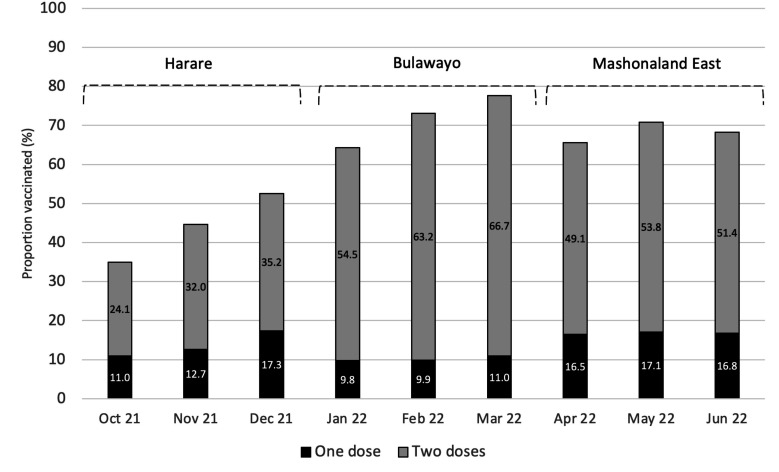
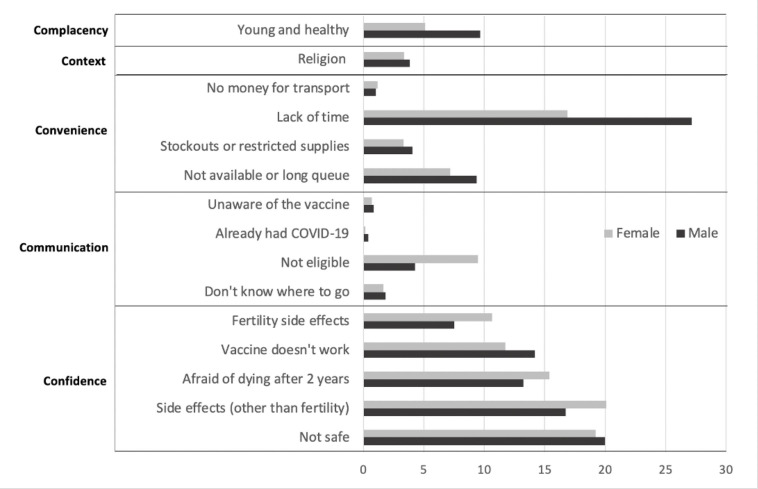
Results: 17 682 youth were recruited in the survey (n=10 742, 60.8% female). The median age of participants was 20 (IQR: 19-22) years. Almost two thirds (n=10 652, 60.2%) reported receiving at least one dose of COVID-19 vaccine. A higher proportion of men than women had been vaccinated (68.9% vs 54.7%), and vaccination prevalence increased with age (<19 years: 57.5%, 20-22: 61.5%, >23: 62.2%). Lack of time to get vaccinated, belief that the vaccine was unsafe and anxiety about side effects (particularly infertility) were the main reasons for not getting vaccinated. Factors associated with vaccination were male sex (OR=1.69, 95% CI 1.58 to 1.80), increasing age (>22 years: OR=1.12, 95% CI 1.04 to 1.21), education level (postsecondary: OR=4.34, 95% CI 3.27 to 5.76) and socioeconomic status (least poor: OR=1.32, 95% CI 1.20 to 1.47).
Conclusion: This study found vaccine inequity across age, sex, educational attainment and socioeconomic status among youth. Strategies should address these inequities by understanding concerns and tailoring vaccine campaigns to specific groups.
Keywords: COVID-19; epidemiology; health services research; public health; vaccines.
© Author(s) (or their employer(s)) 2023. Re-use permitted under CC BY. Published by BMJ.
Conflict of interest statement
Competing interests: None declared.
Figures
References
-
- World Health Organization (WHO) . WHO Coronavirus (COVID-19) dashboard 2023. 2023. Available: https://covid19.who.int/
-
- Statista . Zimbabwe: age structure from 2011 to 2021. 2023. Available: https://www.statista.com/statistics/455307/age-structure-in-zimbabwe/
-
- World Health Organization . Strategy to achieve global COVID-19 vaccination by mid-2022. 2021.
Publication types
MeSH terms
Substances
Grants and funding
LinkOut - more resources
Full Text Sources
Medical