


Productivity gains in vegetables from rice husk biochar application in nutrient-poor soils in Timor-Leste
- PMID: 37407609
- PMCID: PMC10322997
- DOI: 10.1038/s41598-023-38072-2
Productivity gains in vegetables from rice husk biochar application in nutrient-poor soils in Timor-Leste
Abstract
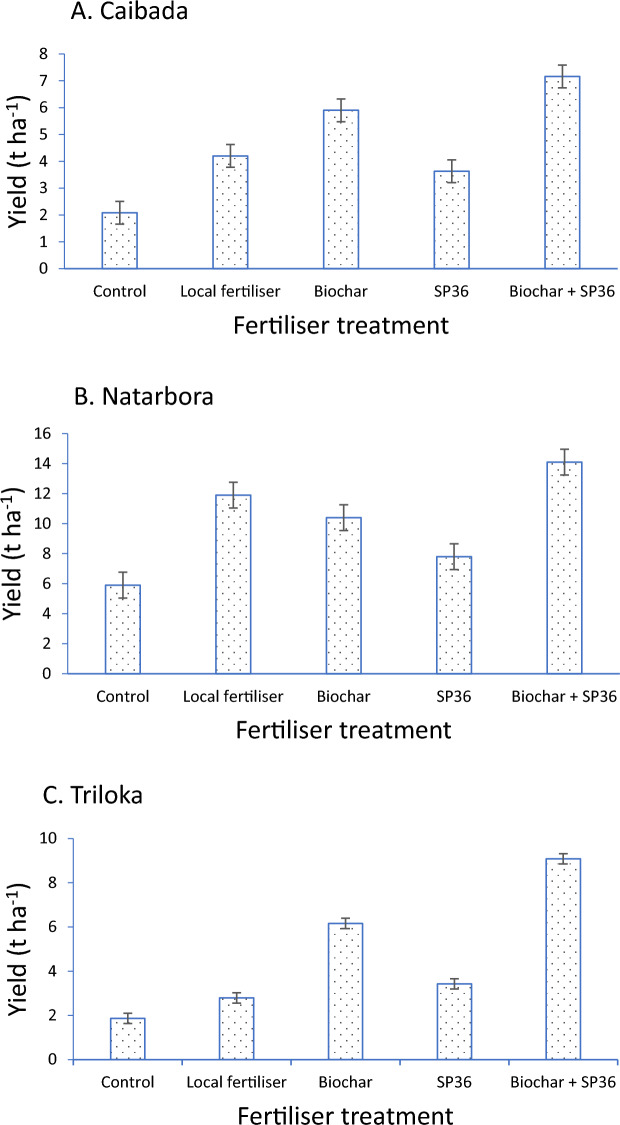
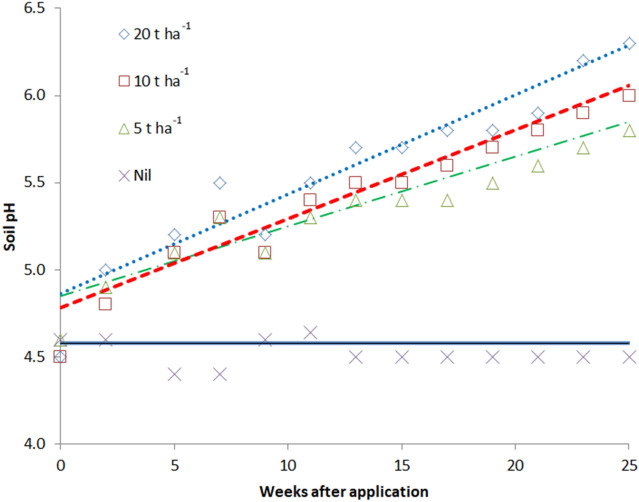
Response to fertilisation with biochar is greatest in field crops on acidic tropical soils, but limited information is available for vegetable crops. As a case-study using vegetable production in Timor-Leste, we assessed if biochar alleviates nutritional constraints to vegetables in low-nutrient soils. Field trials on vegetable crops were conducted with fertiliser combinations of rice husk biochar, phosphate and local fertiliser at three sites. A pot soil incubation trial of biochar was undertaken with soil from the acid site, where rice husk biochar had a larger effect on productivity than the other fertilisers in chili pepper, tomato and soybean with an average yield increase with biochar of 230% over control. Combining phosphate with biochar augmented the yield over biochar alone in chili pepper, tomato and soybean. At neutral and alkaline sites, fertilisation with biochar lifted mean yield over the control. Soil constraints alleviated by fertiliser were primarily from P and Zn deficiencies. Marked increases in vegetable yields, among the highest globally, were achieved with fertilisation with biochar individually and in combination with phosphate in low nutrient soil in Timor-Leste. Clearly, rice husk biochar is a promising avenue to fertilise the soil with P and Zn and increase crop productivity in Timor-Leste.
© 2023. The Author(s).
Conflict of interest statement
The authors declare no competing interests.
Figures

References
-
- El-Naggar A, Lee SS, Rinklebed J, Farooq M, Songe H, Sarmah AK, Zimmermani AR, Ahmadj M, Shaheend SM, Ok YS. Biochar application to low fertility soils: A review of status and future prospects. Geoderma. 2019;337:536–554. doi: 10.1016/j.geoderma.2018.09.034. - DOI
-
- Hussain M, Farooq M, Nawaz A, Al-Sadi AM, Solaiman ZM, Alghamdi SS, Ammara U, Ok YS, Siddique KHM. Biochar for crop production: Potential benefits and risks. J. Soil Sediments. 2017;17:685–716. doi: 10.1007/s11368-016-1360-2. - DOI
-
- Jeffrey S, Abalos D, Prodana M, Bastos AC, van Groenigen JW, Hungate BA, Verheijen F. Biochar boosts tropical but not temperate yields. Environ. Res. Lett. 2017;12:053001. doi: 10.1088/1748-9326/aa67bd. - DOI
-
- Al-Wabel MI, Hussain Q, Usman ARA, Ahmad M, Abduljabbar A, Sallam AS, Ok YS. Impact of biochar properties on soil conditions and agricultural sustainability: A review. Land Degrad. Dev. 2018;29:2124–2161. doi: 10.1002/ldr.2829. - DOI
Publication types
MeSH terms
Substances
LinkOut - more resources
Full Text Sources
Research Materials
