The Existing Drug Nifuroxazide as an Antischistosomal Agent: In Vitro, In Vivo, and In Silico Studies of Macromolecular Targets
- PMID: 37409934
- PMCID: PMC10434008
- DOI: 10.1128/spectrum.01393-23
The Existing Drug Nifuroxazide as an Antischistosomal Agent: In Vitro, In Vivo, and In Silico Studies of Macromolecular Targets
Abstract
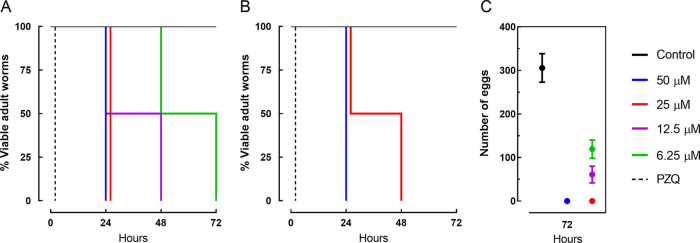
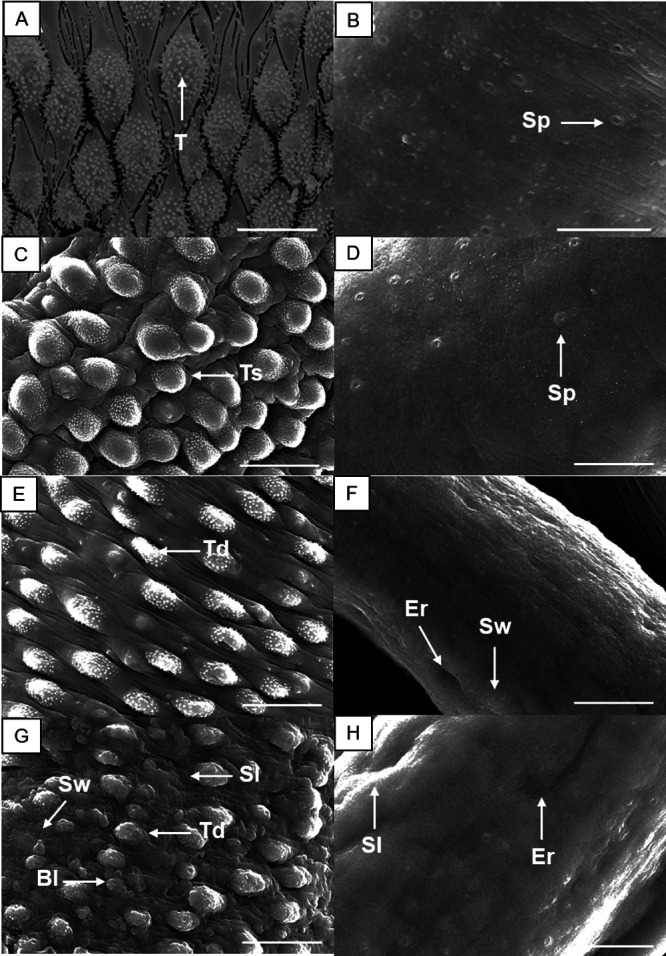
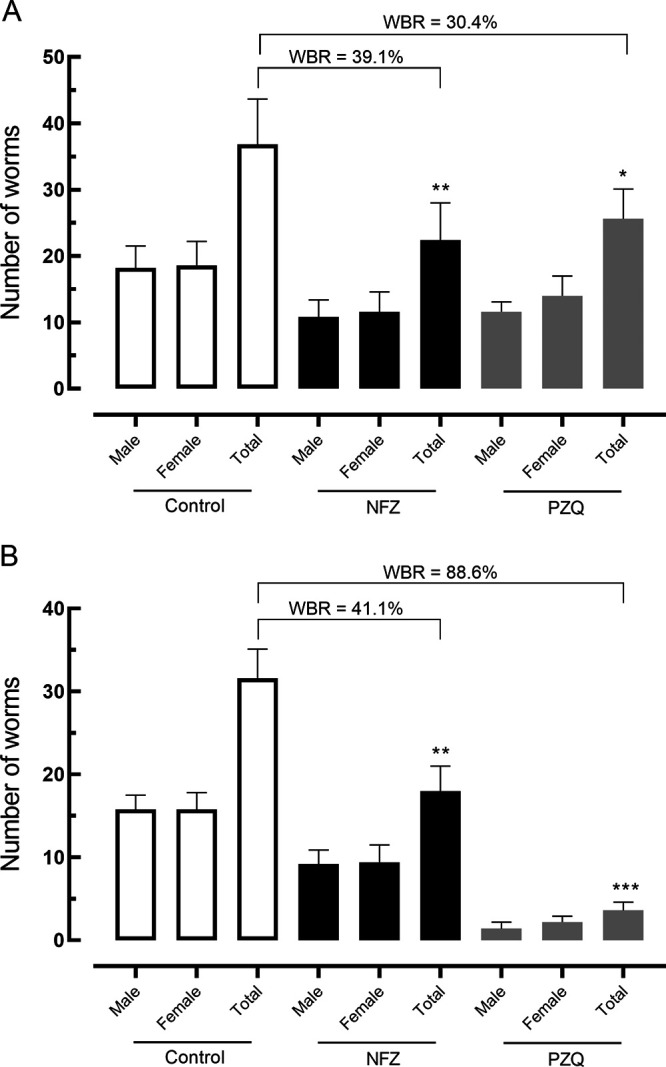
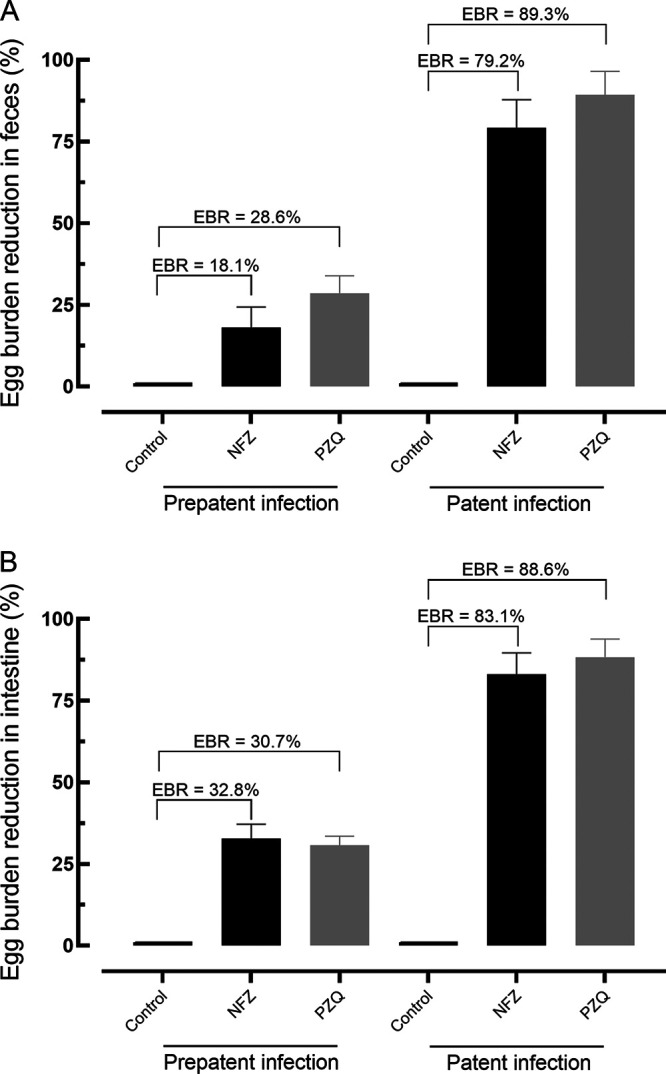
Schistosomiasis is a parasitic disease that afflicts approximately 250 million people worldwide. There is an urgent demand for new antiparasitic agents because praziquantel, the only drug available for the treatment of schistosomiasis, is not universally effective and may derail current progress toward the WHO goal of eliminating this disease as a public health problem by 2030. Nifuroxazide (NFZ), an oral nitrofuran antibiotic, has recently been explored to be repurposed for parasitic diseases. Here, in vitro, in vivo, and in silico studies were conducted to evaluate the activity of NFZ on Schistosoma mansoni. The in vitro study showed significant antiparasitic activity, with 50% effective concentration (EC50) and 90% effective concentration (EC90) values of 8.2 to 10.8 and 13.7 to 19.3 μM, respectively. NFZ also affected worm pairing and egg production and induced severe damage to the tegument of schistosomes. In vivo, a single oral dose of NFZ (400 mg/kg of body weight) to mice harboring either prepatent or patent S. mansoni infection significantly reduced the total worm burden (~40%). In patent infection, NFZ achieved a high reduction in the number of eggs (~80%), but the drug caused a low reduction in the egg burden of animals with prepatent infection. Finally, results from in silico target fishing methods predicted that serine/threonine kinases could be one of the potential targets for NFZ in S. mansoni. Overall, the present study revealed that NFZ possesses antischistosomal properties, mainly in terms of egg burden reduction in animals with patent S. mansoni infection. IMPORTANCE The increasing recognition of the burden imposed by helminthiasis, associated with the limited therapeutic arsenal, has led to initiatives and strategies to research and develop new drugs for the treatment of schistosomiasis. One of these strategies is drug repurposing, which considers low-risk compounds with potentially reduced costs and shorter time for development. In this study, nifuroxazide (NFZ) was evaluated for its anti-Schistosoma mansoni potential through in vitro, in vivo, and in silico studies. In vitro, NFZ affected worm pairing and egg production and induced severe damage to the tegument of schistosomes. In vivo, a single oral dose of NFZ (400 mg/kg) to mice harboring either prepatent or patent S. mansoni infection significantly reduced the total worm burden and egg production. In silico investigations have identified serine/threonine kinases as a molecular target for NFZ. Collectively, these results implied that NFZ might be a potential therapeutic candidate for the treatment of schistosomiasis.
Keywords: anthelmintic agent; antibiotic; drug discovery; drug repurposing; medicinal chemistry; parasitic diseases; schistosomiasis.
Conflict of interest statement
The authors declare no conflict of interest.
Figures
References
-
- World Health Organization. 2022. Schistosomiasis. https://www.who.int/news-room/fact-sheets/detail/schistosomiasis
-
- Webster BL, Diaw OT, Seye MM, Faye DS, Stothard JR, Sousa-Figueiredo JC, Rollinson D. 2013. Praziquantel treatment of school children from single and mixed infection foci of intestinal and urogenital schistosomiasis along the Senegal River Basin: monitoring treatment success and re-infection patterns. Acta Trop 128:292–302. doi: 10.1016/j.actatropica.2012.09.010. - DOI - PubMed
-
- Wiegand RE, Mwinzi PNM, Montgomery SP, Chan YL, Andiego K, Omedo M, Muchiri G, Ogutu MO, Rawago F, Odiere MR, Karanja DMS, Secor WE. 2017. A persistent hotspot of Schistosoma mansoni infection in a five-year randomized trial of praziquantel preventative chemotherapy strategies. J Infect Dis 216:1425–1433. doi: 10.1093/infdis/jix496. - DOI - PMC - PubMed
Publication types
MeSH terms
Substances
LinkOut - more resources
Full Text Sources
Miscellaneous