


To eat or not to eat mitochondria? How do host cells cope with mitophagy upon bacterial infection?
- PMID: 37410705
- PMCID: PMC10325083
- DOI: 10.1371/journal.ppat.1011471
To eat or not to eat mitochondria? How do host cells cope with mitophagy upon bacterial infection?
Abstract
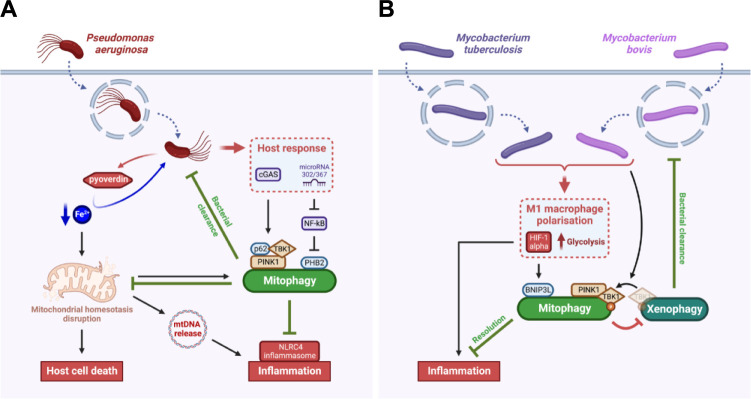
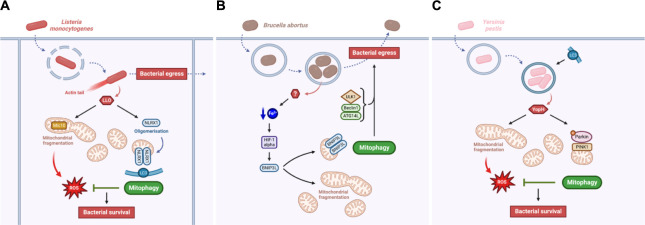
Mitochondria fulfil a plethora of cellular functions ranging from energy production to regulation of inflammation and cell death control. The fundamental role of mitochondria makes them a target of choice for invading pathogens, with either an intracellular or extracellular lifestyle. Indeed, the modulation of mitochondrial functions by several bacterial pathogens has been shown to be beneficial for bacterial survival inside their host. However, so far, relatively little is known about the importance of mitochondrial recycling and degradation pathways through mitophagy in the outcome (success or failure) of bacterial infection. On the one hand, mitophagy could be considered as a defensive response triggered by the host upon infection to maintain mitochondrial homeostasis. However, on the other hand, the pathogen itself may initiate the host mitophagy to escape from mitochondrial-mediated inflammation or antibacterial oxidative stress. In this review, we will discuss the diversity of various mechanisms of mitophagy in a general context, as well as what is currently known about the different bacterial pathogens that have developed strategies to manipulate the host mitophagy.
Copyright: © 2023 Verbeke et al. This is an open access article distributed under the terms of the Creative Commons Attribution License, which permits unrestricted use, distribution, and reproduction in any medium, provided the original author and source are credited.
Conflict of interest statement
The authors have declared that no competing interests exist.
Figures



References
Publication types
MeSH terms
LinkOut - more resources
Full Text Sources
Medical
