


The forearm vascular response to sympathetic activation is attenuated in female, but not male, participants following acute intermittent hypoxia
- PMID: 37410902
- PMCID: PMC10396222
- DOI: 10.1152/japplphysiol.00760.2022
The forearm vascular response to sympathetic activation is attenuated in female, but not male, participants following acute intermittent hypoxia
Abstract
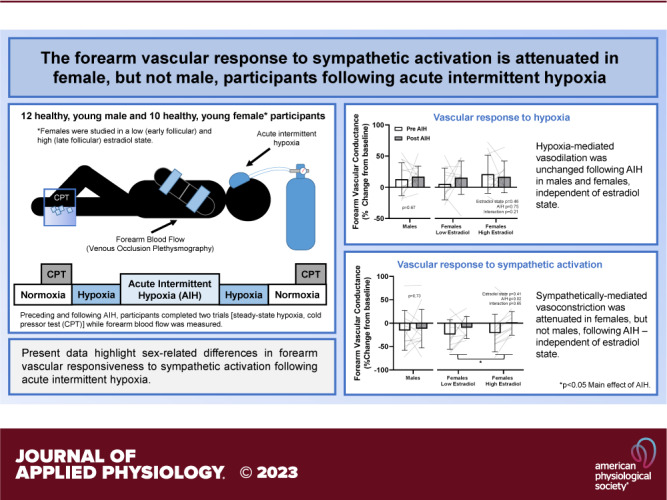
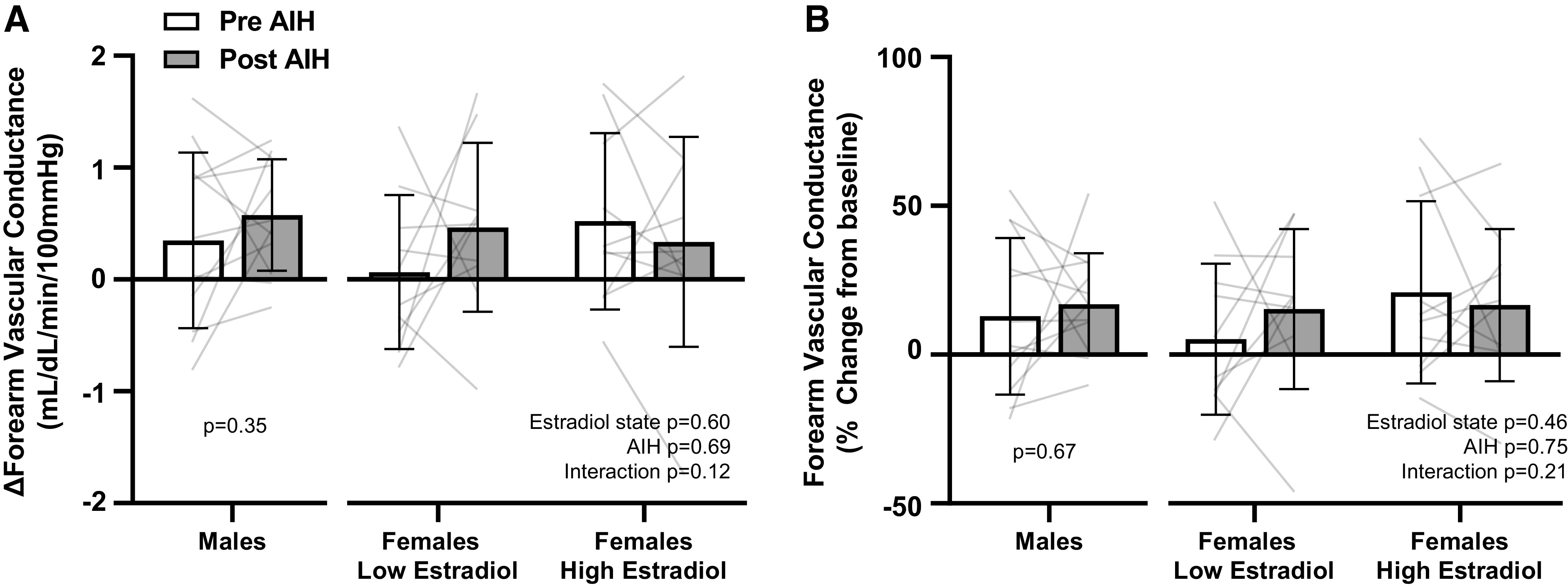
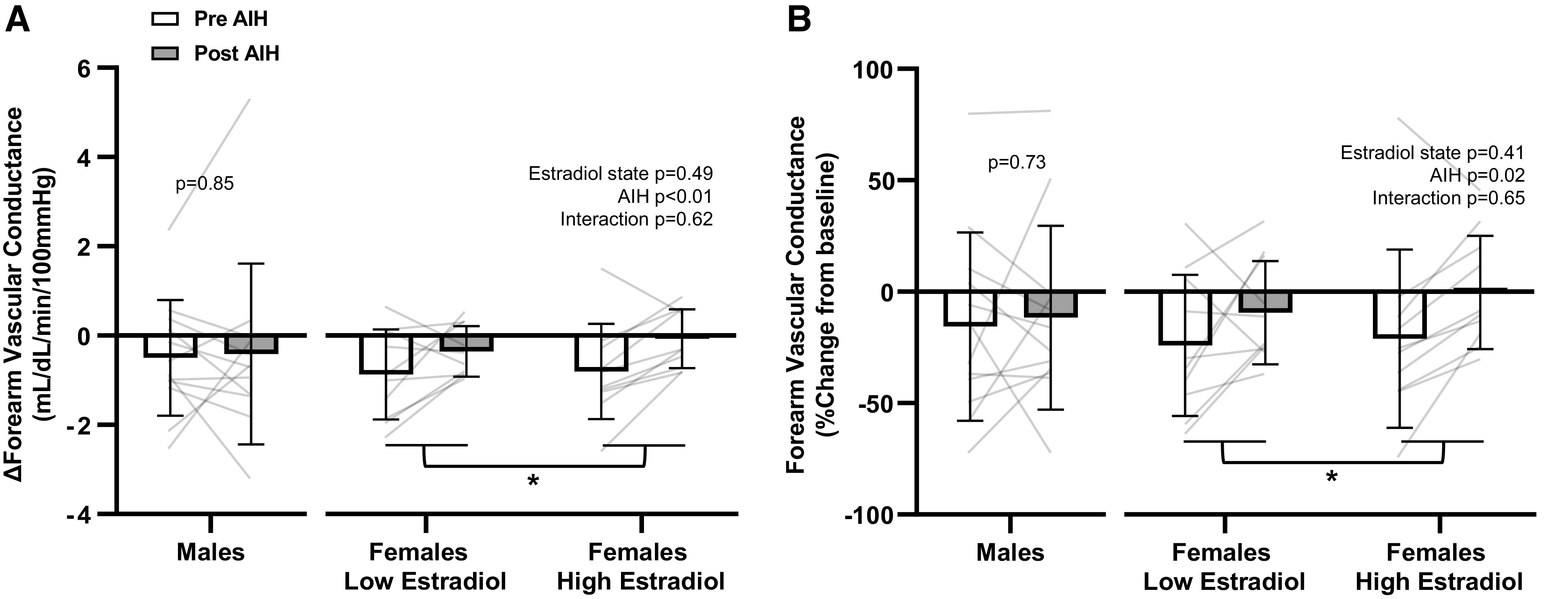
Acute exposure to hypoxia promotes both an increase in sympathetic nervous system activity (SNA) and local vasodilation. In rodents, intermittent hypoxia (IH)-mediated increases in SNA are associated with an increase in blood pressure in males but not females; notably, the protective effect of female sex is lost following ovariectomy. These data suggest the vascular response to hypoxia and/or SNA following IH may be sex- and/or hormone specific-although mechanisms are unclear. We hypothesized that hypoxia-mediated vasodilation and SNA-mediated vasoconstriction would be unchanged following acute IH in male adults. We further hypothesized that hypoxic vasodilation would be augmented and SNA-mediated vasoconstriction would be attenuated in female adults following acute IH, with the greatest effect when endogenous estradiol was high. Twelve male (25 ± 1 yr) and 10 female (25 ± 1 yr) participants underwent 30 min of IH. Females were studied in a low (early follicular) and high (late follicular) estradiol state. Preceding and following IH, participants completed two trials [steady-state hypoxia and cold pressor test (CPT)], where forearm blood flow and blood pressure were measured and used to determine forearm vascular conductance (FVC). The FVC response to hypoxia (P = 0.67) and sympathetic activation (P = 0.73) were unchanged following IH in males. There was no effect of IH on hypoxic vasodilation in females, regardless of estradiol state (P = 0.75). In contrast, the vascular response to sympathetic activation was attenuated in females following IH (P = 0.02), independent of estradiol state (P = 0.65). Present data highlight sex-related differences in neurovascular responsiveness following acute IH.NEW & NOTEWORTHY We examined the effects of acute intermittent hypoxia (AIH) on the vascular response to sympathetic activation and acute hypoxia. Present findings show, despite no effect of AIH on the vascular response to hypoxia, the forearm vasoconstrictor response to acute sympathetic activation is attenuated in females following AIH, independent of estradiol state. These data provide mechanistic understanding of potential benefits of AIH, as well as the impact of biological sex.
Keywords: blood flow; cold pressor test; low oxygen; sex differences.
Conflict of interest statement
No conflicts of interest, financial or otherwise, are declared by the authors.
Figures

References
-
- Maier LE, Matenchuk BA, Vucenovic A, Sivak A, Davenport MH, Steinback CD. Influence of obstructive sleep apnea severity on muscle sympathetic nerve activity and blood pressure: a systematic review and meta-analysis. Hypertension 79: 2091–2104, 2022. doi: 10.1161/HYPERTENSIONAHA.122.19288. - DOI - PubMed
Publication types
MeSH terms
Grants and funding
LinkOut - more resources
Full Text Sources
Research Materials
