


A mindful approach to controlling intrusive thoughts
- PMID: 37414828
- PMCID: PMC10326059
- DOI: 10.1038/s41598-023-37447-9
A mindful approach to controlling intrusive thoughts
Abstract
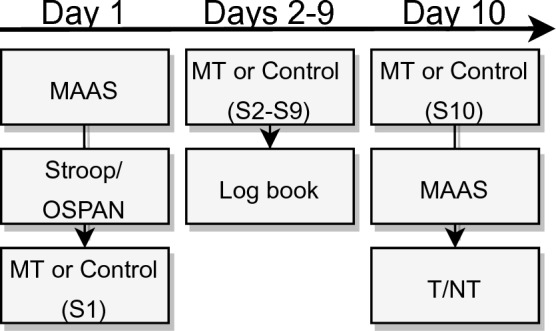
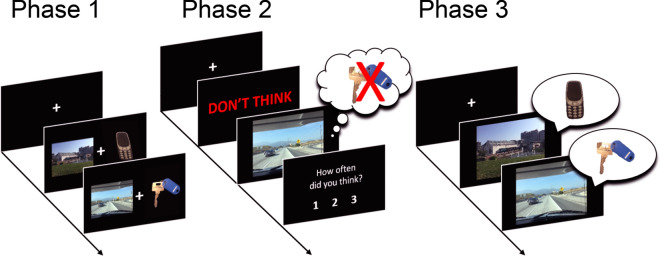
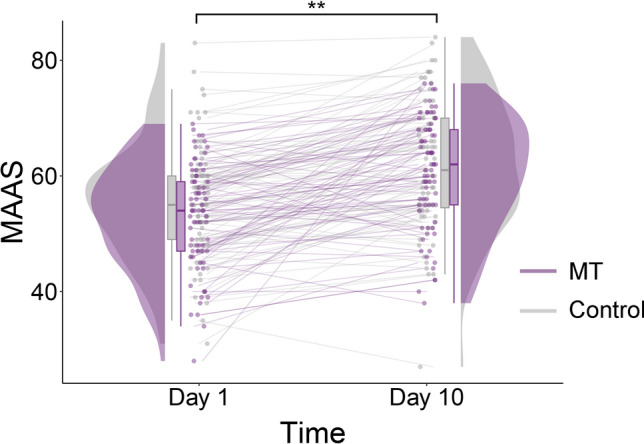
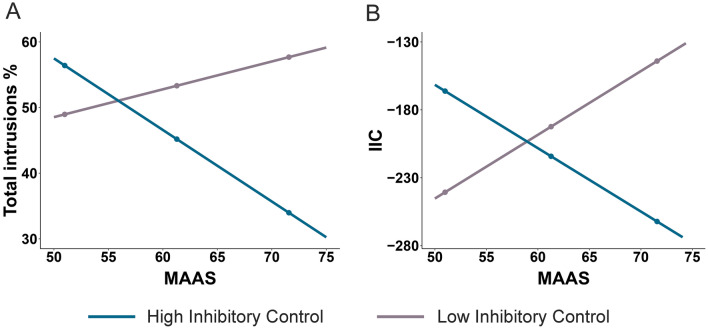
Intrusive thoughts of negative experiences can pose a threat to our well-being. To some extent, unwanted memories can be intentionally controlled via an executive control mechanism that downregulates the occurrence of intrusions. Mindfulness training can improve executive control. It is not known whether mindfulness training can be used as an intervention to improve intentional memory control and reduce intrusions. To this end, 148 healthy participants completed a 10-day app-based mindfulness training or an active control task. At baseline, inhibitory control and working memory were assessed as measures of executive functioning. Post-mindfulness training, intrusions were assessed via the Think/No-Think task. It was expected that mindfulness training would reduce intrusions. Furthermore, we hypothesised that this would be moderated by baseline executive functioning. Results revealed that, contrary to our hypothesis, both groups increased equally in dispositional mindfulness between baseline and post-test. As such, our exploratory analysis revealed that higher dispositional mindfulness across both groups resulted in fewer intrusions and enhanced the ability to downregulate intrusions over time. Furthermore, this effect was moderated by inhibitory control at baseline. These results provide insight into factors that can improve the ability to control unwanted memories, which could have considerable implications for treatments in psychopathologies characterized by the frequent occurrence of intrusive thoughts. PROTOCOL REGISTRATION: The stage 1 protocol for this Registered Report was accepted in principle on 11th March, 2022. The protocol, as accepted by the journal, can be found at: https://doi.org/10.17605/OSF.IO/U8SJN .
© 2023. The Author(s).
Conflict of interest statement
Headspace provided free access to the app for participants in the Mindfulness condition. Headspace had no role in the study design, data collection and analysis, decision to publish or preparation of the manuscript.
Figures
References
Publication types
MeSH terms
LinkOut - more resources
Full Text Sources
Medical
Research Materials
