


Extramammary Paget Disease: a Therapeutic Challenge, for a Rare Entity
- PMID: 37421583
- PMCID: PMC10556167
- DOI: 10.1007/s11912-023-01434-0
Extramammary Paget Disease: a Therapeutic Challenge, for a Rare Entity
Erratum in
-
Correction to: Extramammary Paget Disease: a Therapeutic Challenge, for a Rare Entity.Curr Oncol Rep. 2023 Oct;25(10):1095. doi: 10.1007/s11912-023-01456-8. Curr Oncol Rep. 2023. PMID: 37695399 Free PMC article. No abstract available.
Abstract
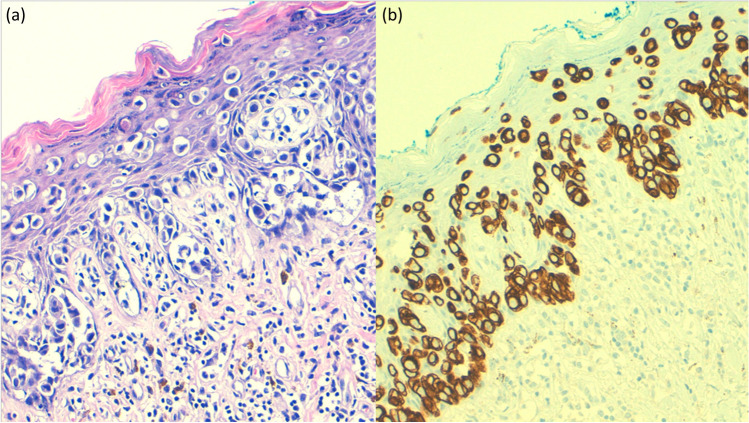
Purpose of review: Extramammary Paget disease (EMPD) is a rare entity which is more frequently localized at the vulva, though it only accounts for 1-2% of vulvar neoplasms. It is a primary cutaneous adenocarcinoma whose cell of origin is still a matter of controversy: it can either arise from apocrine/eccrine glands or from stem cells. The diagnosis demands a biopsy and entails a histopathological analysis by which cells show similar characteristics as breast Paget disease.
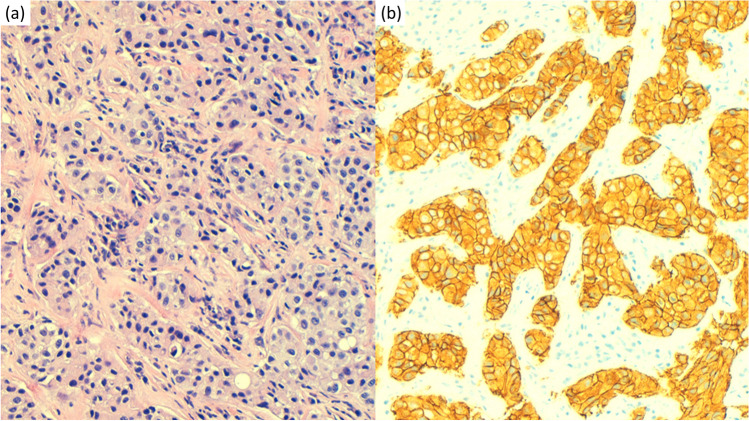
Recent findings: Treatment approach can entail surgery, radiotherapy, photodynamic therapy, systemic chemotherapy, and topical chemotherapy. For metastatic disease, many different chemotherapy regimens have been explored and even targeted therapy can play an important role in this disease. Since almost 30-40% of patients overexpress HER-2, trastuzumab and anti-HER-2 therapies can be employed in this setting. Due to its low incidence, there is almost no specific evidence on therapeutic interventions for this disease. Thus, there is a neat unmet need for molecular characterization of EMPD and diagnostic tools that allow clinicians to guide treatment both in the early and in the advanced disease settings. In this review, we aim to summarize available evidence about diagnosis and treatment of EMPD, both localized and metastatic, and to provide a comprehensive analysis that may help clinicians for therapeutic decisions.
Keywords: Chemotherapy; Extramammary Paget disease; HER-2; Imiquimod; Radiotherapy.
© 2023. The Author(s).
Conflict of interest statement
The authors declare no competing interests.
Figures
References
-
- Crocker HR. Paget’s disease affecting the scrotum and penis. Trans Pathol Soc London. 1889;40:187–191.
Publication types
LinkOut - more resources
Full Text Sources
Research Materials
Miscellaneous
