. 2023 Jul 25;42(7):112789.
doi: 10.1016/j.celrep.2023.112789. Epub 2023 Jul 8.

AgRP neurons are not indispensable for body weight maintenance in adult mice

Affiliations

AgRP neurons are not indispensable for body weight maintenance in adult mice

Jing Cai et al. Cell Rep. .

Abstract

In addition to their role in promoting feeding and obesity development, hypothalamic arcuate agouti-related protein/neuropeptide Y (AgRP/NPY) neurons are widely perceived to be indispensable for maintaining normal feeding and body weight in adults, and consistently, acute inhibition of AgRP neurons is known to reduce short-term food intake. Here, we adopted complementary methods to achieve nearly complete ablation of arcuate AgRP/NPY neurons in adult mice and report that lesioning arcuate AgRP/NPY neurons in adult mice causes no apparent alterations in ad libitum feeding or body weight. Consistent with previous studies, loss of AgRP/NPY neurons blunts fasting refeeding. Thus, our studies show that AgRP/NPY neurons are not required for maintaining ad libitum feeding or body weight homeostasis in adult mice.

Keywords: CP: Neuroscience.


Conflict of interest statement

Declaration of interests The authors declare no competing interests.

Figures
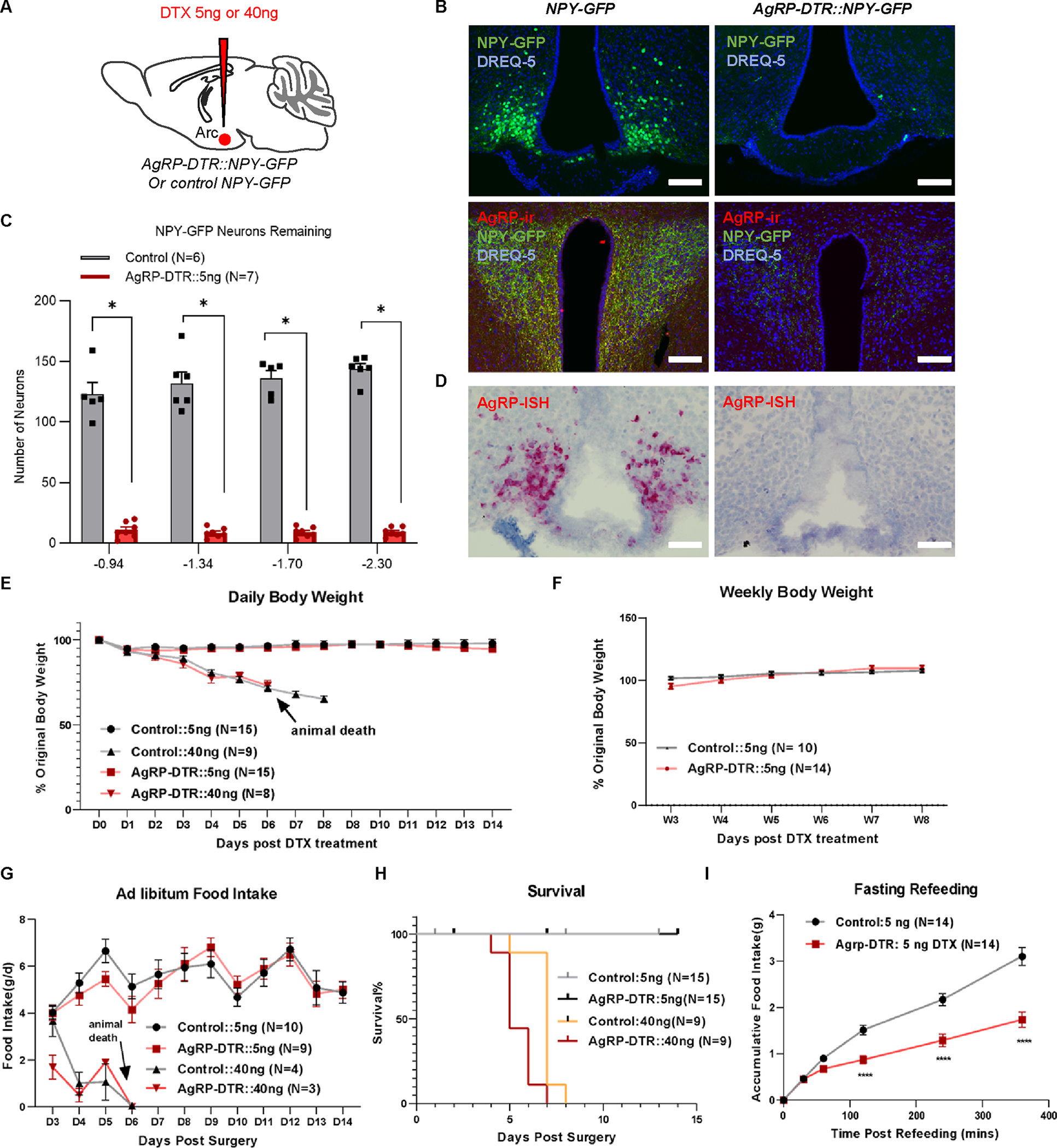
Figure 1.
Figure 1.. DTX-induced AgRP neuron lesions have no disruptions in energy balance.
A, Schematic of i.c.v. injections of DTX in mice with the indicated genotypes. B, Representative pictures showing NPY-GFP (green) and nuclear DREQ-5 nucleus signals (blue) in the ARC, and NPY-GFP, nuclear DREQ-5 and AgRP-immunoreactive (-ir) terminals in the PVN of control NPY-GFP (left panels) and AgRP-DTR::NPY-GFP mice (right panels) that received a single i.c.v. injections of 5 ng DTX. Scale bar = 100 μm. C, Quantification of remaining NPY-GFP-positive neurons in the ARC of different Bregma levels from control NPY-GFP and AgRP-DTR::NPY-GFP mice injected with 5 ng DTX at 8 weeks postinjection. Two-way repeated ANOVA followed by Bonferroni’s multiple comparisons; P < 0.0001 between control and AGRP-DTR mice at all Bregma levels. D, Representative pictures showing in situ hybridization (ISH) signals of AgRP in the ARC of control NPY-GFP (left panel) and AgRP-DTR::NPY-GFP mice (right panel). Scale bar = 100 μm. E, Daily percentage of original body weight of control and AgRP-DTR::NPY-GFP male mice with a single i.c.v. injection of 5 ng or 40 ng DTX during the 14 days after DTX injection. Two-way repeated ANOVA followed by Bonferroni’s multiple comparisons; p = 0.4267 between controls and AgRP-DTR mice injected with 5 ng DTX. F, Weekly percentage of original body weight of the control and 5 ng DTX groups 3~8 weeks post injection. Two-way repeated ANOVA followed by Bonferroni’s multiple comparisons; p = 0.6262 between controls and AgRP-DTR mice. G, Daily food intake in control and AgRP-DTR::NPY-GFP male mice with a single i.c.v. injection of 5 ng or 40 ng DTX. Two-way repeated ANOVA followed by Bonferroni’s multiple comparisons; p = 0.1402 between control and AgRP-DTR mice injected with 5 ng DTX. H, Survival curve in control and AgRP-DTR mice that received a single i.c.v. injections of either 5 ng or 40 ng DTX. p = 0.0544 between 5 ng and 40 ng DTX-injected control mice; p > 0.9999 between control and AgRP-DTR mice injected with 5 ng DTX. I, Fasting-refeeding curve. All the fasting-refeeding tests were conducted 2~4 weeks post injection. Two-way repeated ANOVA followed by Bonferroni’s multiple comparisons in control and AgRP-DTR::NPY-GFP mice that received a single i.c.v. injections of 5 ng DTX. Two-way repeated ANOVA followed by Bonferroni’s multiple comparisons; p < 0.0001 between control and AgRP-DTR mice injected with 5 ng DTX. ****p < 0.0001. All data represent the mean ± SEM. See also Figures S1–S4.
Figure 2.
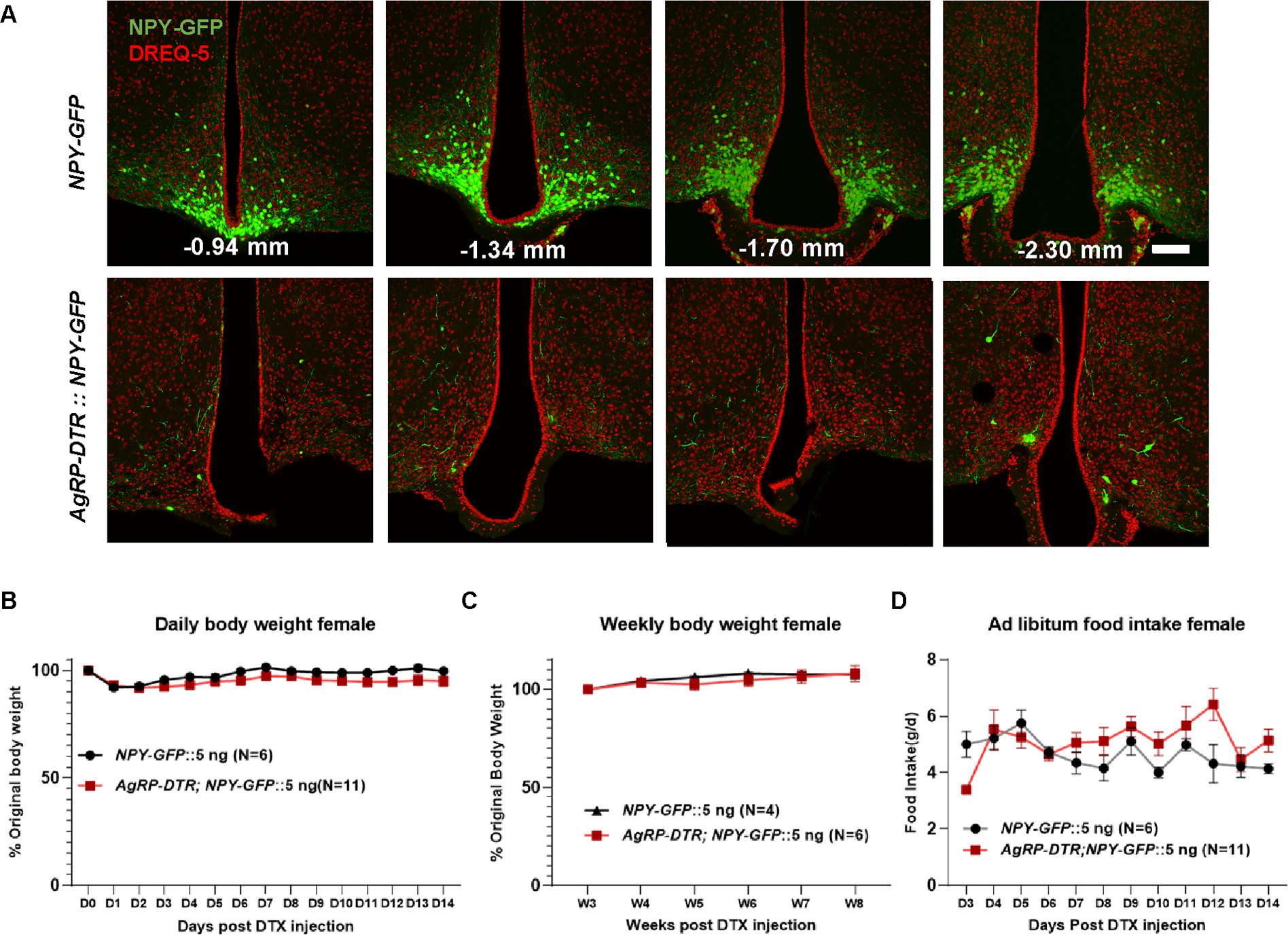
Figure 2.. DTX mediated lesion of AgRP neurons in female AgRP-DTR mice.
A, Representative pictures showing GFP (green) and DREQ-5 nucleus staining (red) in NPY-GFP and AgRP-DTR::NPY-GFP female mice with single i.c.v injection of 5 ng DTX injections at a series of sections with the indicated Bregma levels in mm. B-D, Comparison in female body weight during the first 14 days (B) and 8 weeks (C) after toxin injections; and daily food intake (D) at the indicated day after toxin injection. Scale bar = 100 μm. Two-way repeated ANOVA followed by Bonferroni’s multiple comparisons: p = 0.1160 (B); p = 0.6557 (C); p = 0.1171 (D). Data was presented as mean ± SEM.
Figure 3.
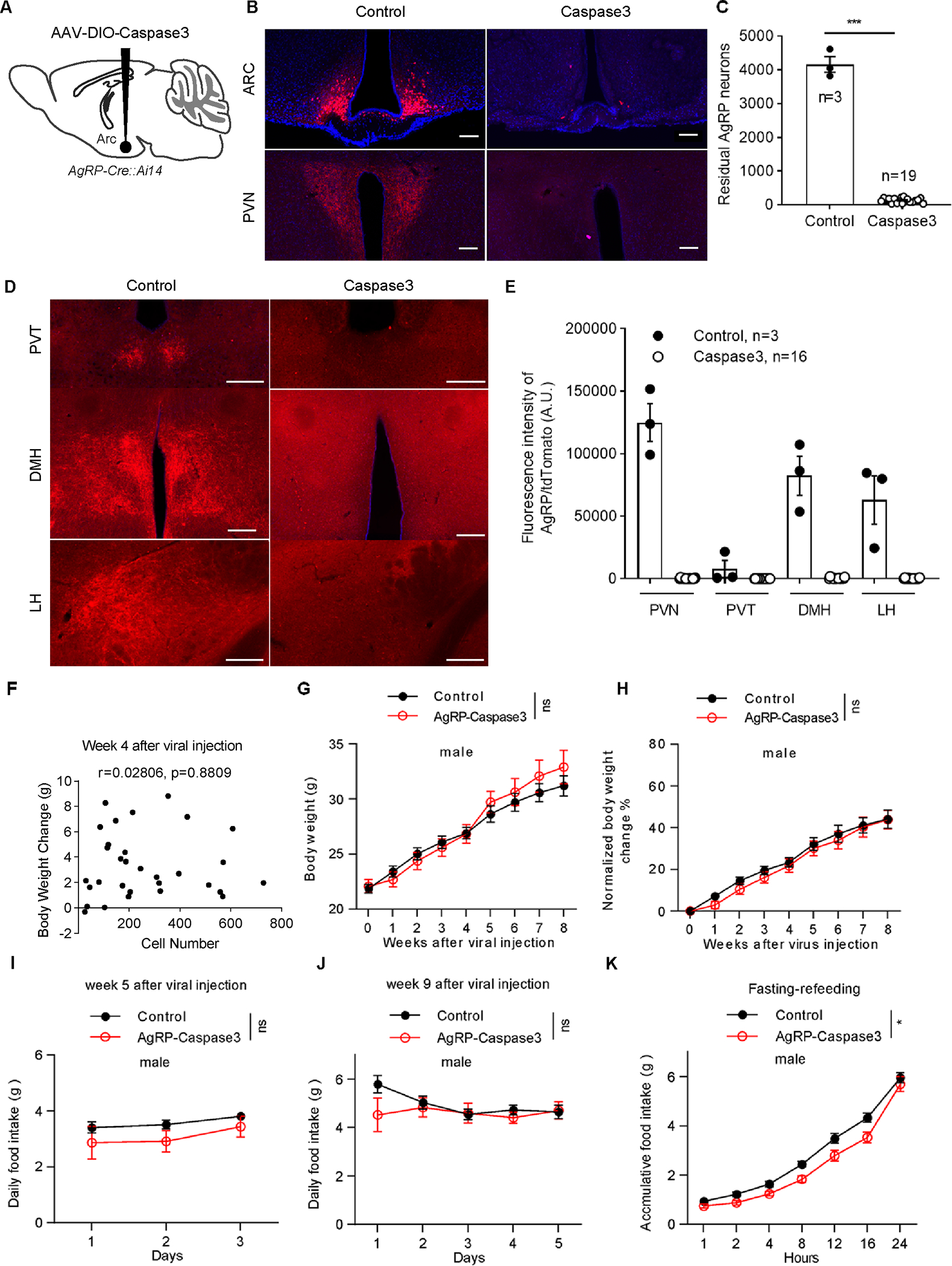
Figure 3.. Caspase 3-mediated lesion of AgRP neurons in the ARC fails to reduce body weight or food intake in male adult mice.
A, Schematic of the virus injection into the ARC of AgRP-Cre::Ai14 mice. B, Ai14 reporter expression (red) and DAPI staining (blue) in mice that received sham (left panels) and AAV-flex-taCasp3-TEVp viral injections (right panels) to bilateral ARC in both ARC (top panels) and one of the major projection sites PVN (bottom panels). Scale bars: 200 μm. C, Comparison of the total numbers of Ai14 reporter-positive neurons in the ARC between the control and AAV-flex-taCasp3-TEVp injection groups. Unpaired Student’s t test. ***p< 0.001. D, E, AgRP/tdTomato terminal signals in projection areas of AgRP neurons. Representative pictures (D) and qualitative results (E). Scale bars: 200 μm. F, The correlation between the number of remaining AgRP neurons and body weight gain at week 4 after viral injection. Each symbol represents an individual mouse. n=31 mice of both sexes. G, H, Comparison of weekly absolute body weight (G) and normalized body weight change (H) between the control mice (n=7 or 15 male mice at different time points) and AAV-flex-taCasp3-TEVp injection groups (n=4 or 11 male mice at different time points) during the 8 weeks after viral delivery. Two-way ANOVA followed by Bonferroni’s multiple comparisons, p = 0.9471 in G, p = 0.4250 in H. ns, not significant. I, J, Daily food intake between the control (n=7 male mice) and AAV-flex-taCasp3-TEVp injection groups (n=6 or 4 male mice) over 3–5 consecutive days at weeks 5 (I) and 9 (J) after viral delivery. Two-way ANOVA followed by Bonferroni’s multiple comparisons, p = 0.2025 in I, p = 0.4476 in J. ns, not significant. K, Fasting-refeeding curve measured at week 9 after viral injections. Two-way repeated ANOVA followed by Bonferroni’s multiple comparisons in control (n=15 mice) and AgRP-ablated mice (n=11), p = 0.0176. *p< 0.05. All data represent the mean ± SEM. See also Figures S5.
Figure 4.
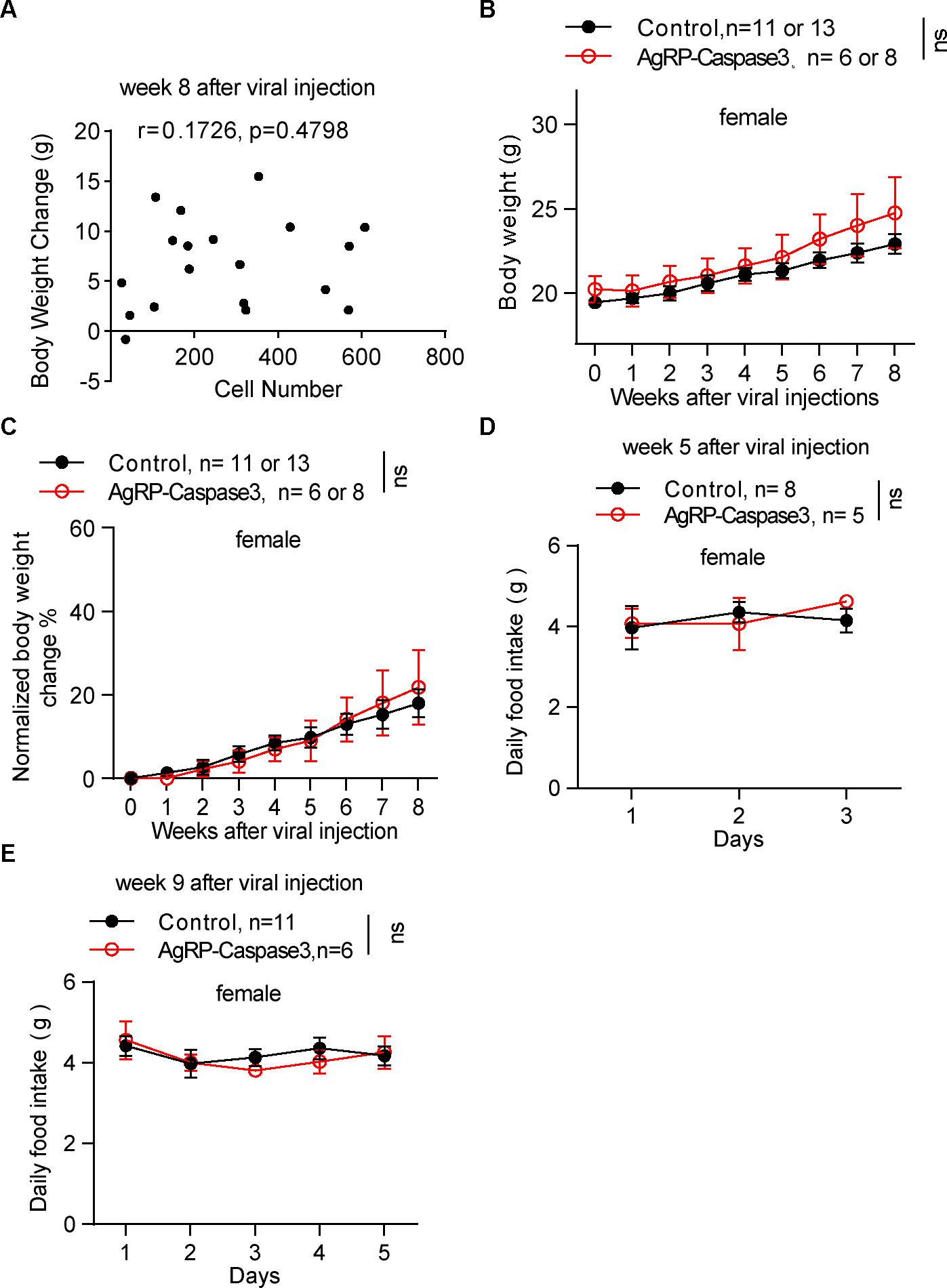
Figure 4.. AgRP neuron lesion did not impair body weight gain and ad libitum feeding in female adult mice.
A, The correlation between the numbers of remaining AgRP neurons and bodyweight gain at week 8 after viral injection. Each symbol represents an individual mouse. n=19 mice of both sexes. B, C, Comparison in weekly absolute body weight (B) and normalized body weight change (C) between control and AAV-flex-taCasp3-TEVp injection groups after viral delivery. Two-way ANOVA followed by Bonferroni’s multiple comparisons, p = 0.3388 in B, p = 0.9669 in C. ns, not significant. D, E, Daily food intake between the control and AAV-flex-taCasp3-TEVp injection groups over 3~5 consecutive days at weeks 5 (D) and 9 (E) after viral delivery. Two-way ANOVA followed by Bonferroni’s multiple comparisons, p = 0.7977 in D, p = 0.8118 in E. All data represent the mean ± SEM.

References

    1. Deem JD, Faber CL, and Morton GJ (2022). AgRP neurons: Regulators of feeding, energy expenditure, and behavior. FEBS J 289, 2362–2381. 10.1111/febs.16176. - DOI - PMC - PubMed
    1. Aponte Y, Atasoy D, and Sternson SM (2011). AGRP neurons are sufficient to orchestrate feeding behavior rapidly and without training. Nat Neurosci 14, 351–355. 10.1038/nn.2739. - DOI - PMC - PubMed
    1. Krashes MJ, Koda S, Ye C, Rogan SC, Adams AC, Cusher DS, Maratos-Flier E, Roth BL, and Lowell BB (2011). Rapid, reversible activation of AgRP neurons drives feeding behavior in mice. J Clin Invest 121, 1424–1428. 10.1172/JCI46229. - DOI - PMC - PubMed
    1. Xu J, Bartolome CL, Low CS, Yi X, Chien CH, Wang P, and Kong D (2018). Genetic identification of leptin neural circuits in energy and glucose homeostases. Nature 556, 505–509. 10.1038/s41586-018-0049-7. - DOI - PMC - PubMed
    1. Zhu C, Jiang Z, Xu Y, Cai ZL, Jiang Q, Xu Y, Xue M, Arenkiel BR, Wu Q, Shu G, and Tong Q (2020). Profound and redundant functions of arcuate neurons in obesity development. Nat Metab 2, 763–774. 10.1038/s42255-020-0229-2. - DOI - PMC - PubMed

Publication types

Substances