


Loss of PMFBP1 Disturbs Mouse Spermatogenesis by Downregulating HDAC3 Expression
- PMID: 37423931
- PMCID: PMC10371971
- DOI: 10.1007/s10815-023-02874-0
Loss of PMFBP1 Disturbs Mouse Spermatogenesis by Downregulating HDAC3 Expression
Abstract
Purpose: Polyamine modulating factor 1 binding protein (PMFBP1) acts as a scaffold protein for the maintenance of sperm structure. The aim of this study was further to identify the new role and molecular mechanism of PMFBP1 during mouse spermatogenesis.
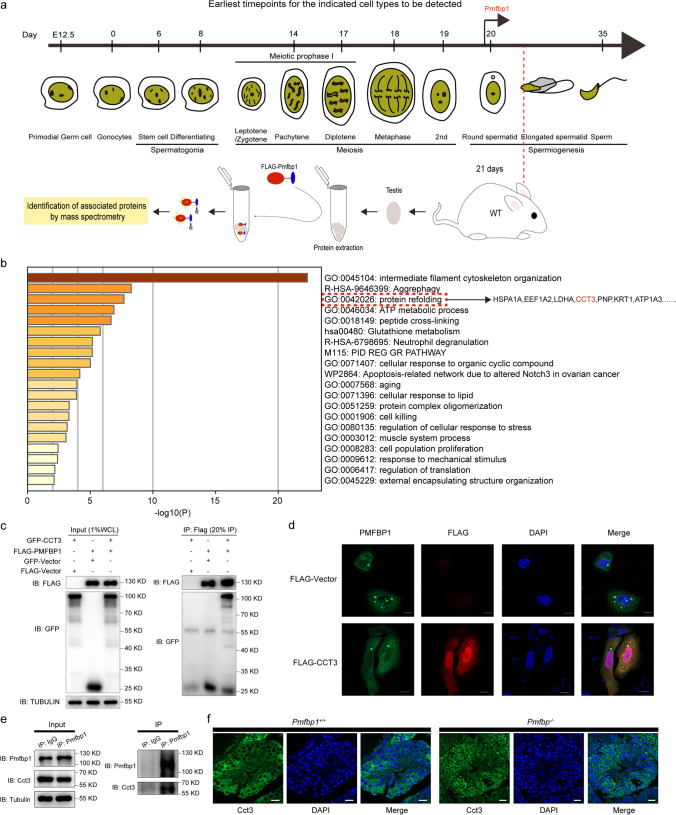
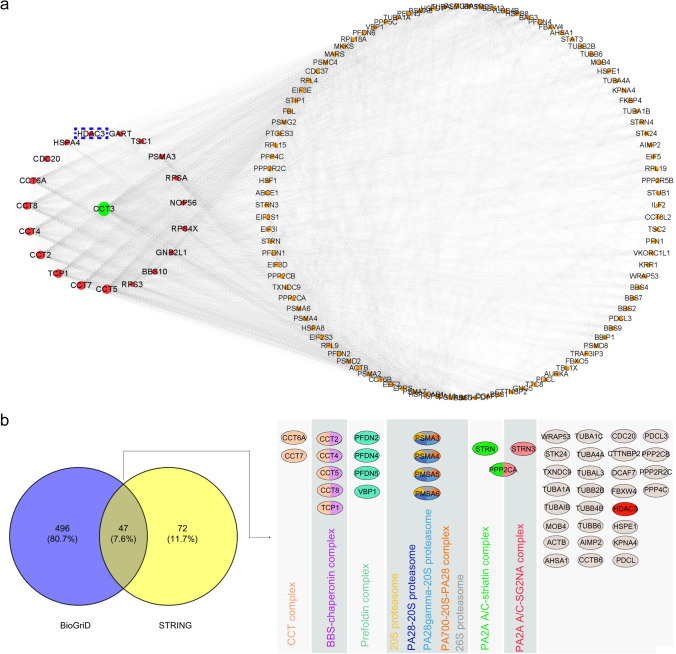
Methods and results: We identified a profile of proteins interacting with PMFBP1 by immunoprecipitation combined with mass spectrometry and demonstrated that class I histone deacetylases, particularly HDAC3 and chaperonin-containing TCP1 subunit 3 (CCT3), were potential interaction partners of PMFBP1 based on network analysis of protein-protein interactions and co-immunoprecipitation. Immunoblotting and immunochemistry assays showed that loss of Pmfbp1 would result in a decline in HDACs and change the proteomic profile of mouse testis, in which differently expressed proteins are associated with spermatogenesis and assembly of flagella, which was proved by proteomic analysis of testis tissue obtained from Pmfbp1-/- mice. After integrating with transcriptome data for Hdac3-/- and Sox30-/- round sperm obtained from a public database, RT-qPCR confirmed ring finger protein 151 (Rnf151) and ring finger protein 133 (Rnf133) were key downstream response factors of the Pmfbp1-Hdac axis affecting mouse spermatogenesis.
Conclusion: Taken together, this study indicates a previously unidentified molecular mechanism of PMFBP1 in spermatogenesis whereby PMFBP1 interacts with CCT3, affecting the expression of HDAC3, followed by the downregulation of RNF151 and RNF133, resulting in an abnormal phenotype of sperm beyond the headless sperm tails. These findings not only advance our understanding of the function of Pmfbp1 in mouse spermatogenesis but also provide a typical case for multi-omics analysis used in the functional annotation of specific genes.
Keywords: CCT3; HDAC3; PMFBP1; Protein-protein interaction; Proteome; Spermatogenesis.
© 2023. The Author(s), under exclusive licence to Springer Science+Business Media, LLC, part of Springer Nature.
Conflict of interest statement
The authors declare no competing interests.
Figures


References
-
- Mazaheri Moghaddam M, Mazaheri Moghaddam M, Hamzeiy H, Baghbanzadeh A, Pashazadeh F, Sakhinia E. Genetic basis of acephalic spermatozoa syndrome, and intracytoplasmic sperm injection outcomes in infertile men: a systematic scoping review. J Assist Reprod Genet. 2021;38:573–586. doi: 10.1007/s10815-020-02008-w. - DOI - PMC - PubMed
MeSH terms
Substances
Grants and funding
- 81972641/National Natural Science Foundation of China
- 82071701/National Natural Science Foundation of China
- 2021zhyx-C25/Scientific Research Foundation of the Institute for Translational Medicine of Anhui Province
- 2022xkjT015/Basic and Clinical Cooperative Research Promotion Program of Anhui Medical University
- KJ2021A0242/Natural Science Research Project for Anhui Universities
LinkOut - more resources
Full Text Sources
Molecular Biology Databases
Miscellaneous
