Anhedonia and Depressive Disorders
- PMID: 37424409
- PMCID: PMC10335915
- DOI: 10.9758/cpn.23.1086
Anhedonia and Depressive Disorders
Abstract
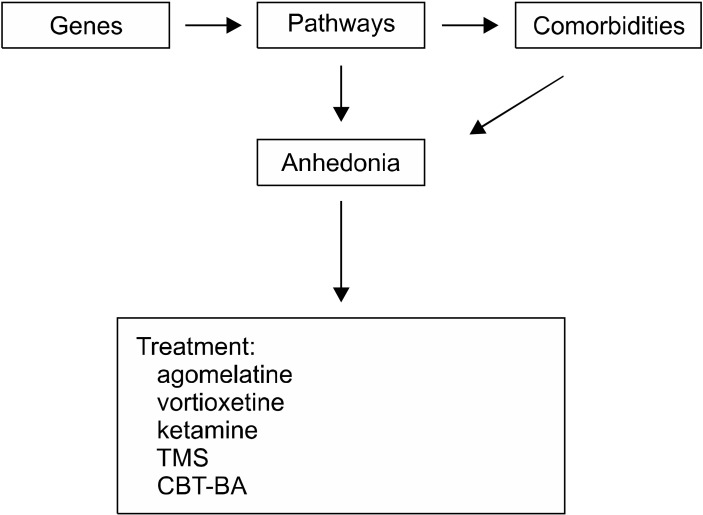
Anhedonia is a core symptom of depression and of several psychiatric disorders. Anhedonia has however expanded from its original definition to encompass a spectrum of reward processing deficits that received much interest in the last decades. It is a relevant risk factor for possible suicidal behaviors, and that it may operate as an independent risk factor for suicidality apart from the episode severity. Anhedonia has also been linked to inflammation with a possible reciprocal deleterious effect on depression. Its neurophysiological bases mainly include alterations in striatal and prefrontal areas, with dopamine being the most involved neurotransmitter. Anhedonia is thought to have a significant genetic component and polygenic risk scores are a possible tool for predicting an individual's risk for developing anhedonia. Traditional antidepressants, such as selective serotonin reuptake inhibitors, showed a limited benefit on anhedonia, also considering their potential pro-anhedonic effect in some subjects. Other treatments may be more effective in treating anhedonia, such as agomelatine, vortioxetine, ketamine and transcranial magnetic stimulation. Psychotherapy is also widely supported, with cognitive-behavioral therapy and behavioral activation both showing benefit. In conclusion, a large body of evidence suggests that anhedonia is, at least partially, independent from depression, therefore it needs careful assessment and targeted treatment.
Keywords: Anhedonia; Antidepressants; Major depressive disorder; Psychopharmacology.
Conflict of interest statement
No potential conflict of interest relevant to this article was reported.
Figures
References
-
- Lewis WB. A text-book of mental diseases: With special reference to the pathological aspects of insanity. Griffin; 1889. p. 552.
-
- American Psychiatric Association, author. Diagnostic and statistical manual of mental disorders. 3rd ed. American Psychiatric Association; 1980.
Publication types
LinkOut - more resources
Full Text Sources