


Transcriptome sequencing and experiments reveal the effect of formyl peptide receptor 2 on liver homeostasis
- PMID: 37426322
- PMCID: PMC10324526
- DOI: 10.3748/wjg.v29.i24.3793
Transcriptome sequencing and experiments reveal the effect of formyl peptide receptor 2 on liver homeostasis
Abstract
Background: Formyl peptide receptor 2 (Fpr2) is an important receptor in host resistance to bacterial infections. In previous studies, we found that the liver of Fpr2-/- mice is the most severely damaged target organ in bloodstream infections, although the reason for this is unclear.
Aim: To investigate the role of Fpr2 in liver homeostasis and host resistance to bacterial infections.
Methods: Transcriptome sequencing was performed on the livers of Fpr2-/- and wild-type (WT) mice. Differentially expressed genes (DEGs) were identified in the Fpr2-/- and WT mice, and the biological functions of DEGs were analyzed by Gene Ontology (GO) and Kyoto Encyclopedia of Genes and Genomes (KEGG) en-richment analysis. Quantitative real time-polymerase chain reaction (qRT-PCR) and western blot (WB) analyses were used to further validate the expression levels of differential genes. Cell counting kit-8 assay was employed to investigate cell survival. The cell cycle detection kit was used to measure the distribution of cell cycles. The Luminex assay was used to analyze cytokine levels in the liver. The serum biochemical indices and the number of neutrophils in the liver were measured, and hepatic histopathological analysis was performed.
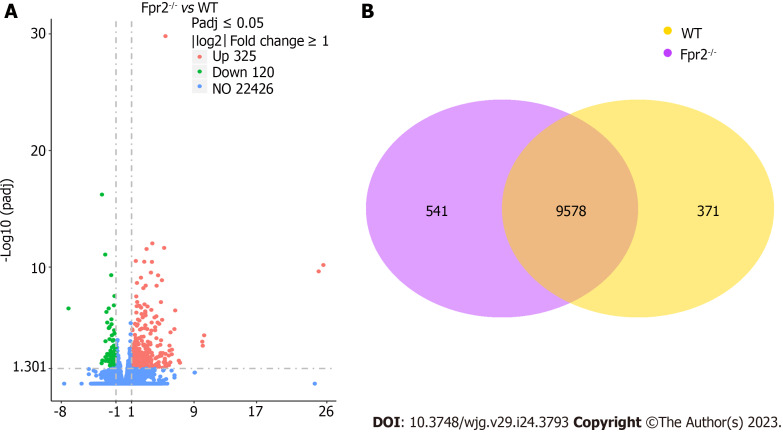
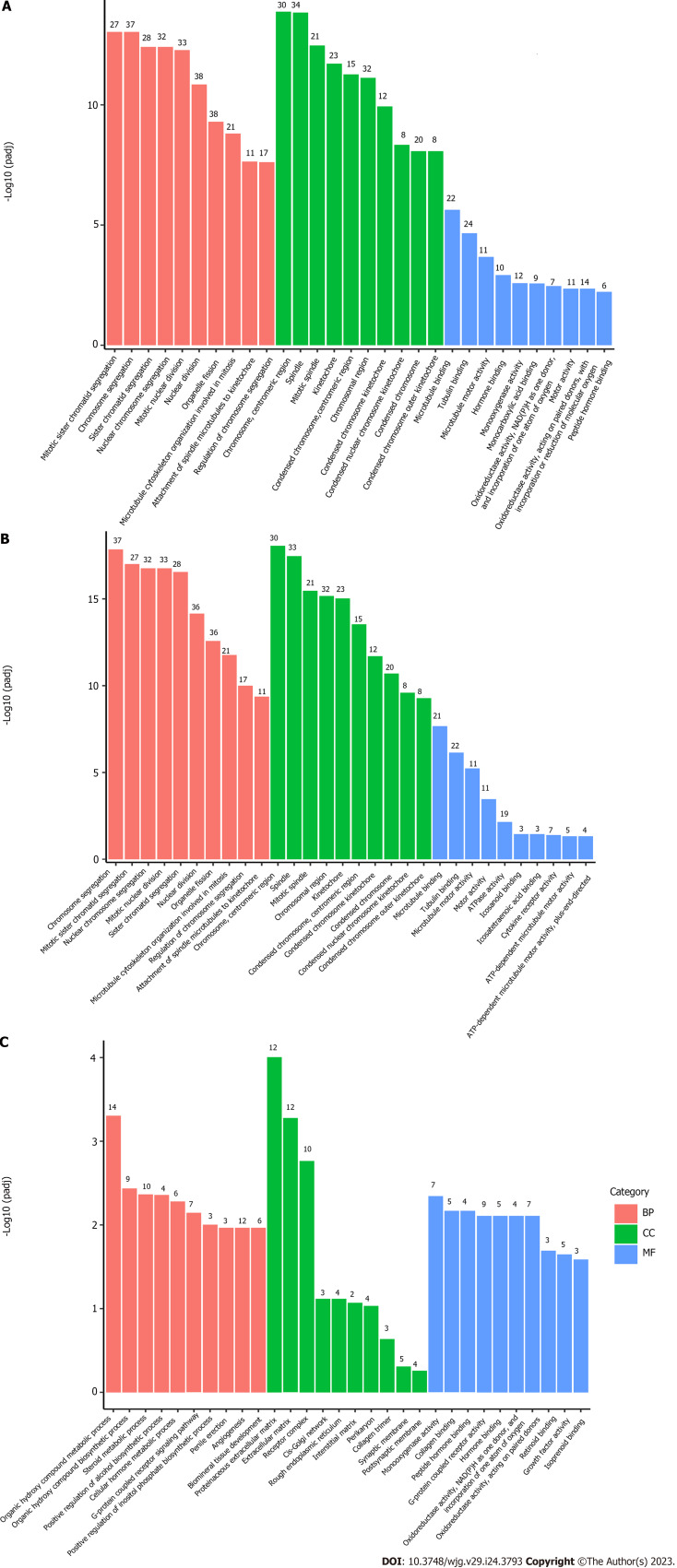
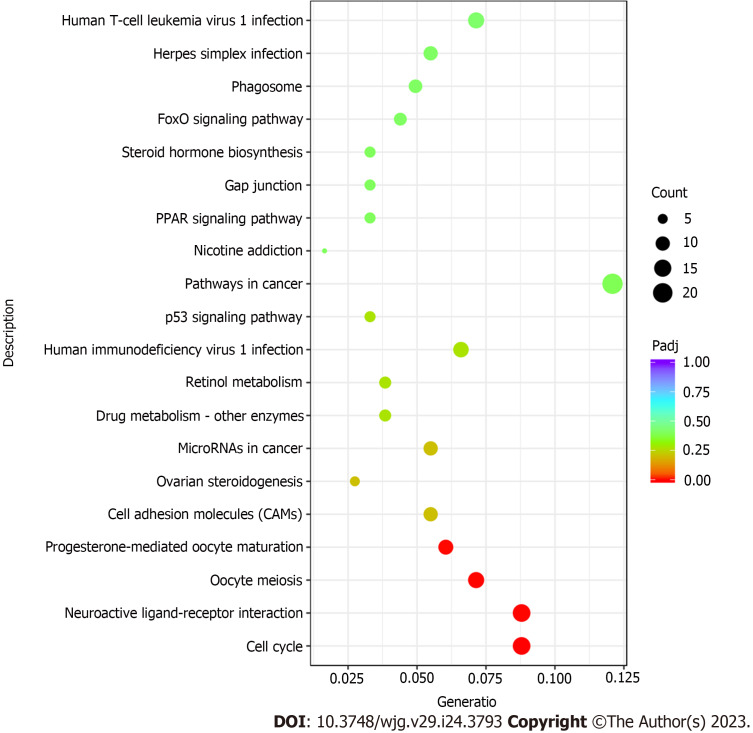
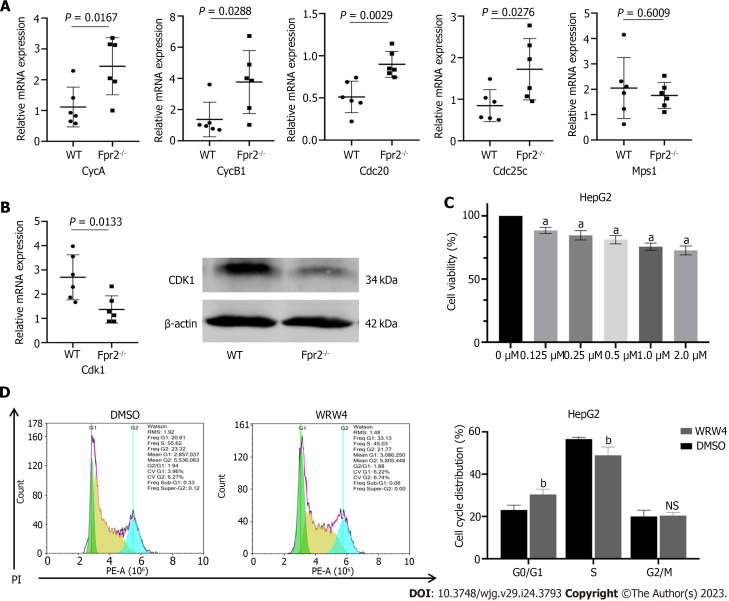
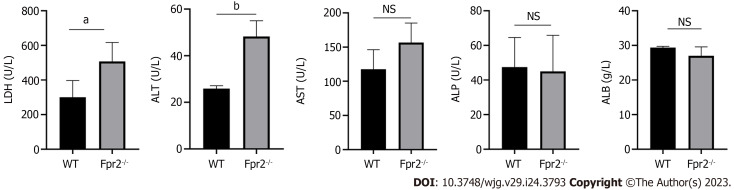
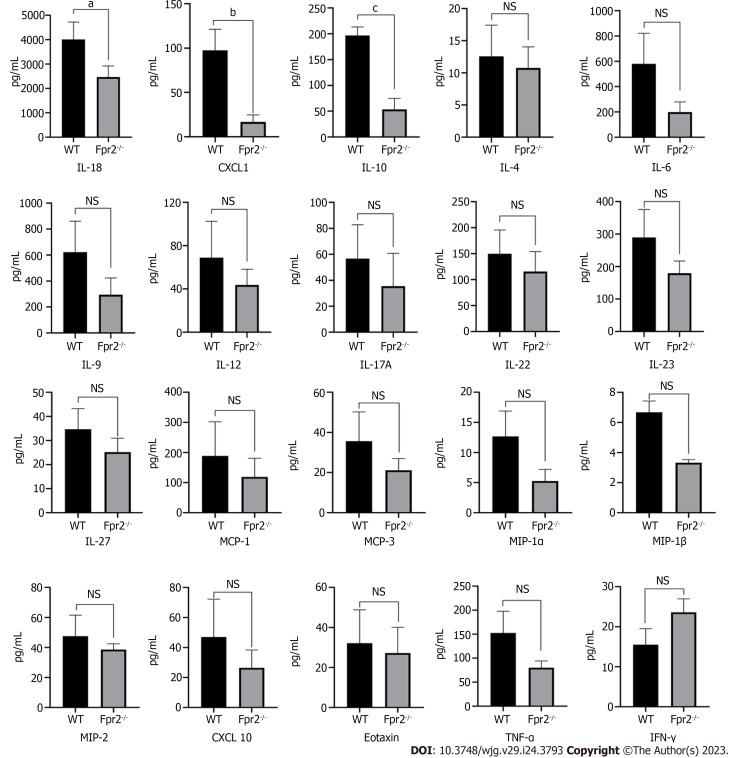
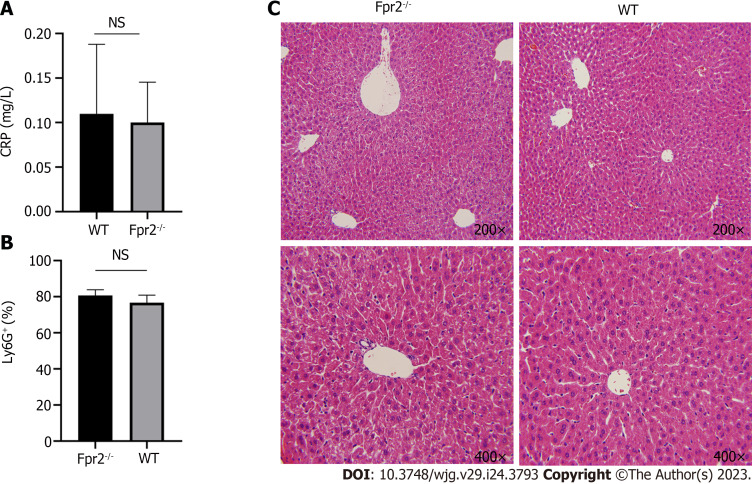
Results: Compared with the WT group, 445 DEGs, including 325 upregulated genes and 120 downregulated genes, were identified in the liver of Fpr2-/- mice. The enrichment analysis using GO and KEGG showed that these DEGs were mainly related to cell cycle. The qRT-PCR analysis confirmed that several key genes (CycA, CycB1, Cdc20, Cdc25c, and Cdk1) involved in the cell cycle had significant changes. The WB analysis confirmed a decrease in the expression of CDK1 protein. WRW4 (an antagonist of Fpr2) could inhibit the proliferation of HepG2 cells in a concentration dependent manner, with an increase in the number of cells in the G0/G1 phase, and a decrease in the number of cells in the S phase. Serum alanine aminotransferase levels increased in Fpr2-/- mice. The Luminex assay measurements showed that interleukin (IL)-10 and chemokine (C-X-C motif) ligand (CXCL)-1 levels were significantly reduced in the liver of Fpr2-/- mice. There was no difference in the number of neutrophils, serum C-reactive protein levels, and liver pathology between WT and Fpr2-/- mice.
Conclusion: Fpr2 participates in the regulation of cell cycle and cell proliferation, and affects the expression of IL-10 and CXCL-1, thus playing an important protective role in maintaining liver homeostasis.
Keywords: Cdk1; Cell cycle; Cell proliferation; Differentially expressed genes; Formyl peptide receptor 2; RNA-sequencing.
©The Author(s) 2023. Published by Baishideng Publishing Group Inc. All rights reserved.
Conflict of interest statement
Conflict-of-interest statement: All the authors report no relevant conflicts of interest for this article.
Figures
References
-
- Llorente C, Schnabl B. Fast-Track Clearance of Bacteria from the Liver. Cell Host Microbe. 2016;20:1–2. - PubMed
-
- Gonnert FA, Kunisch E, Gajda M, Lambeck S, Weber M, Claus RA, Bauer M, Kinne RW. Hepatic Fibrosis in a Long-term Murine Model of Sepsis. Shock. 2012;37:399–407. - PubMed
-
- Broadley SP, Plaumann A, Coletti R, Lehmann C, Wanisch A, Seidlmeier A, Esser K, Luo S, Rämer PC, Massberg S, Busch DH, van Lookeren Campagne M, Verschoor A. Dual-Track Clearance of Circulating Bacteria Balances Rapid Restoration of Blood Sterility with Induction of Adaptive Immunity. Cell Host Microbe. 2016;20:36–48. - PubMed
MeSH terms
Substances
LinkOut - more resources
Full Text Sources
Research Materials
Miscellaneous
