


IGF-1 Therapy Improves Muscle Size and Function in Experimental Peripheral Arterial Disease
- PMID: 37426532
- PMCID: PMC10322901
- DOI: 10.1016/j.jacbts.2022.12.006
IGF-1 Therapy Improves Muscle Size and Function in Experimental Peripheral Arterial Disease
Abstract
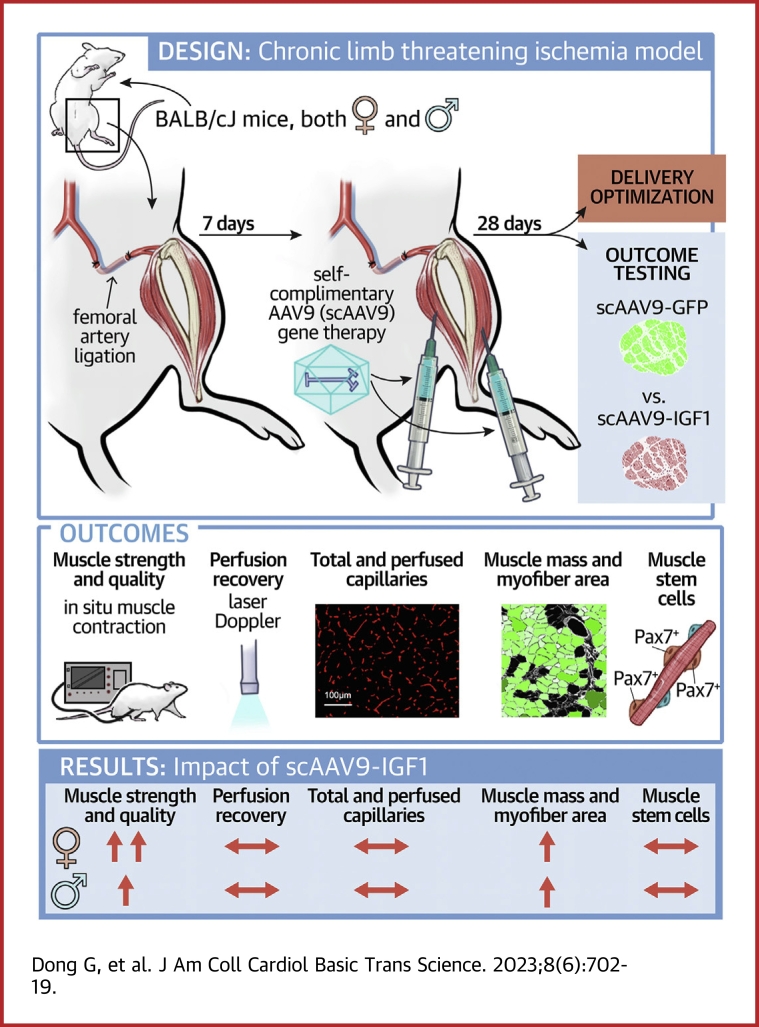
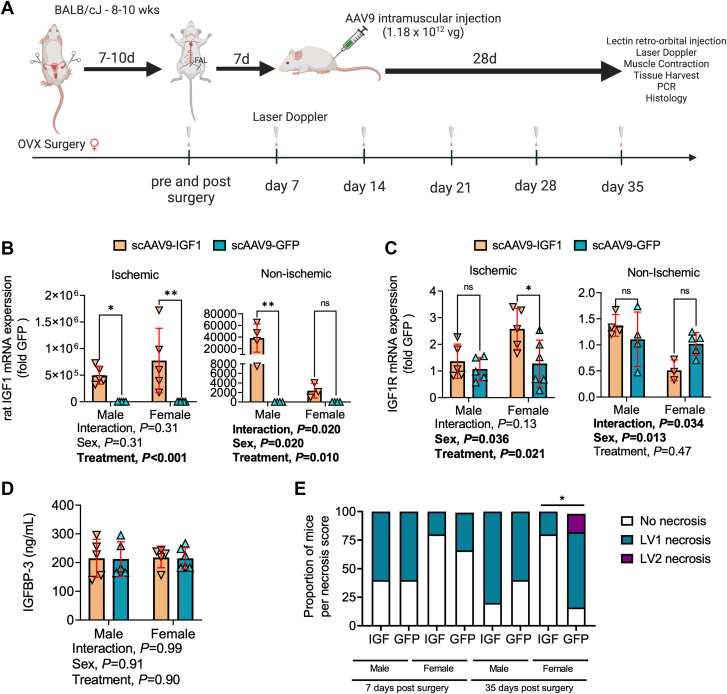
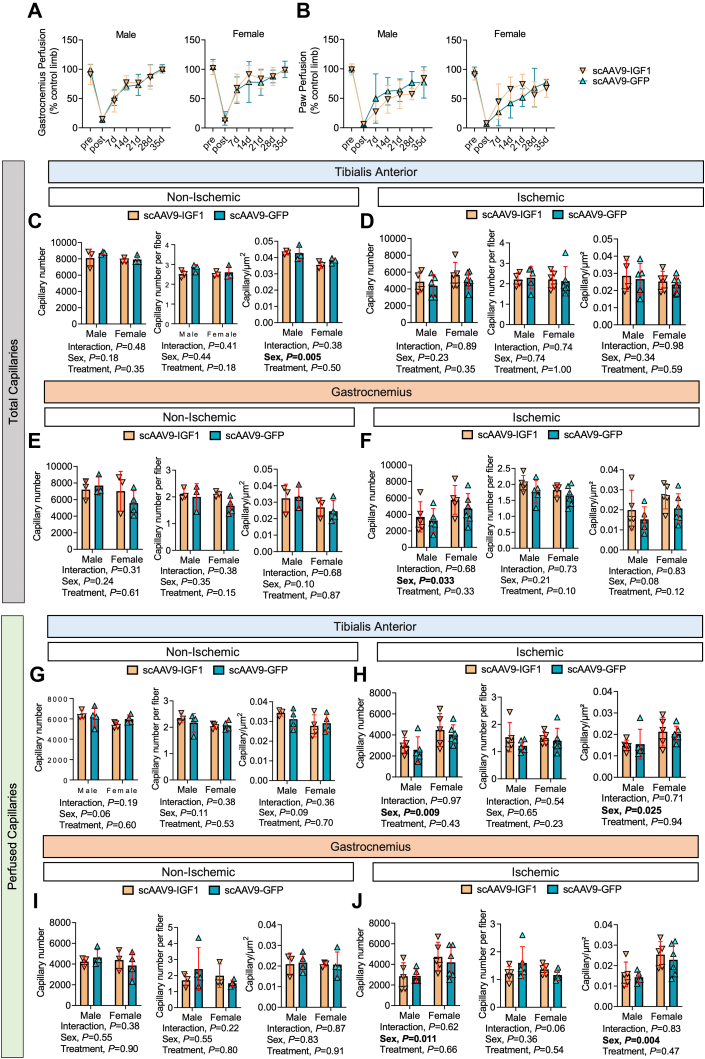
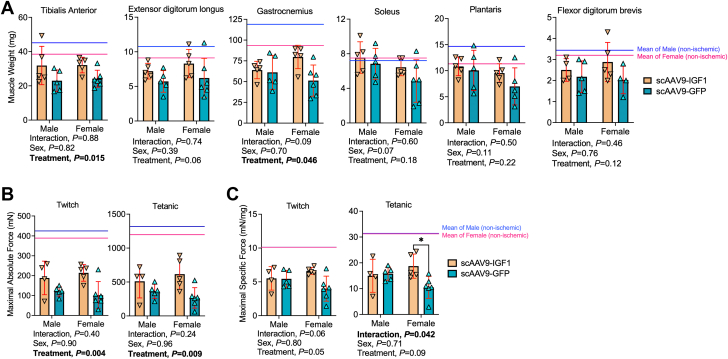
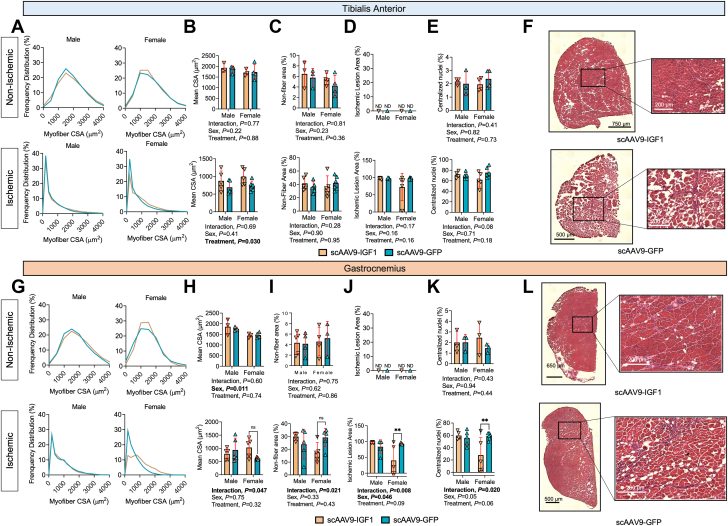
Lower-extremity peripheral arterial disease (PAD) has increased in prevalence, yet therapeutic development has remained stagnant. Skeletal muscle health and function has been strongly linked to quality of life and medical outcomes in patients with PAD. Using a rodent model of PAD, this study demonstrates that treatment of the ischemic limb with insulin-like growth factor (IGF)-1 significantly increases muscle size and strength without improving limb hemodynamics. Interestingly, the effect size of IGF1 therapy was larger in female mice than in male mice, highlighting the need to carefully examine sex-dependent effects in experimental PAD therapies.
Keywords: chronic limb threatening ischemia; gene therapy; regeneration; skeletal muscle.
© 2023 The Authors.
Conflict of interest statement
This study was supported by National Institutes of Health (NIH) grant R01-HL149704 (to Dr Ryan). Dr Kim was supported by American Heart Association grant POST903198. Mr Thome was supported by NIH grant F31-DK128920. All other authors have reported that they have no relationships relevant to the contents of this paper to disclose.
Figures
References
-
- Conte S.M., Vale P.R. Peripheral arterial disease. Heart Lung Circ. 2018;27:427–432. - PubMed
-
- Fowkes F.G., Rudan D., Rudan I., et al. Comparison of global estimates of prevalence and risk factors for peripheral artery disease in 2000 and 2010: a systematic review and analysis. Lancet. 2013;382:1329–1340. - PubMed
-
- Novo S., Coppola G., Milio G. Critical limb ischemia: definition and natural history. Curr Drug Targets Cardiovasc Haematol Disord. 2004;4:219–225. - PubMed
Grants and funding
LinkOut - more resources
Full Text Sources
Miscellaneous
