


Pharmacological interventions for preventing opioid-induced hyperalgesia in adults after opioid-based anesthesia: a systematic review and network meta-analysis
- PMID: 37426819
- PMCID: PMC10324676
- DOI: 10.3389/fphar.2023.1199794
Pharmacological interventions for preventing opioid-induced hyperalgesia in adults after opioid-based anesthesia: a systematic review and network meta-analysis
Abstract
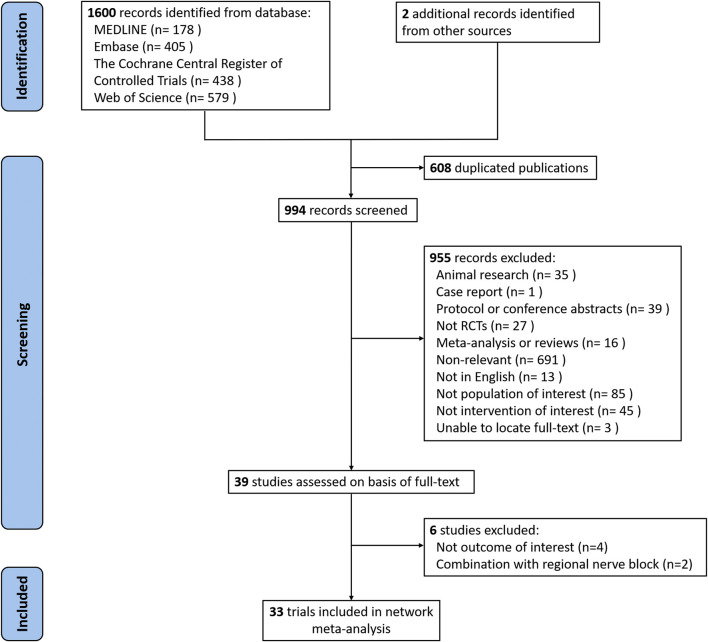
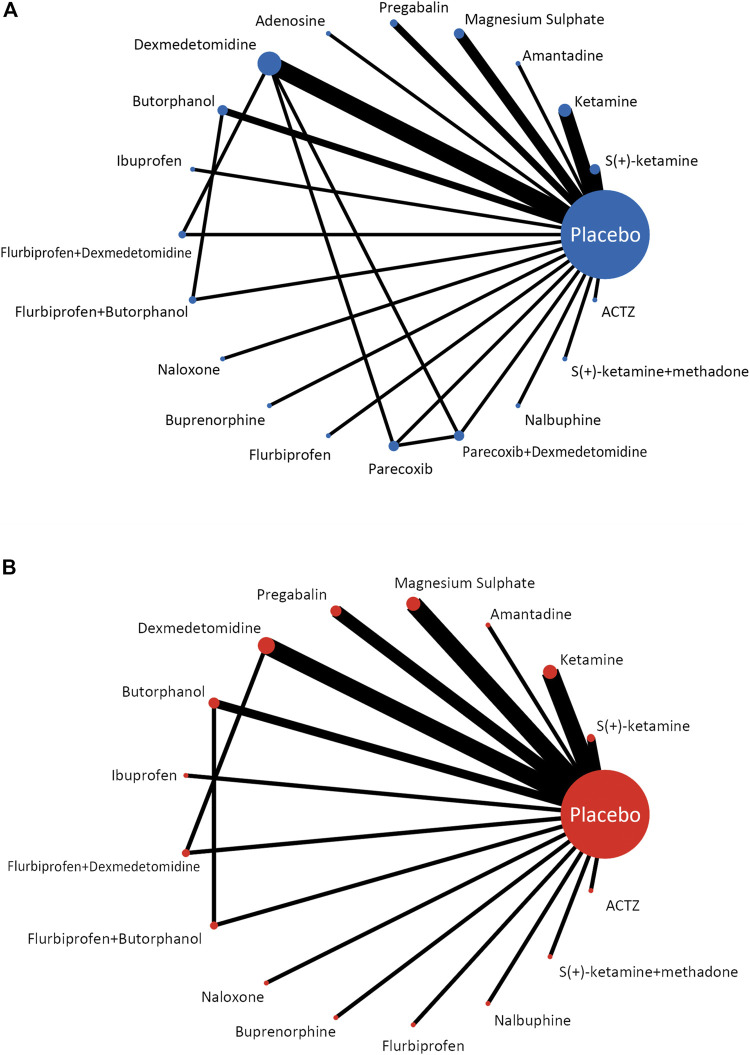
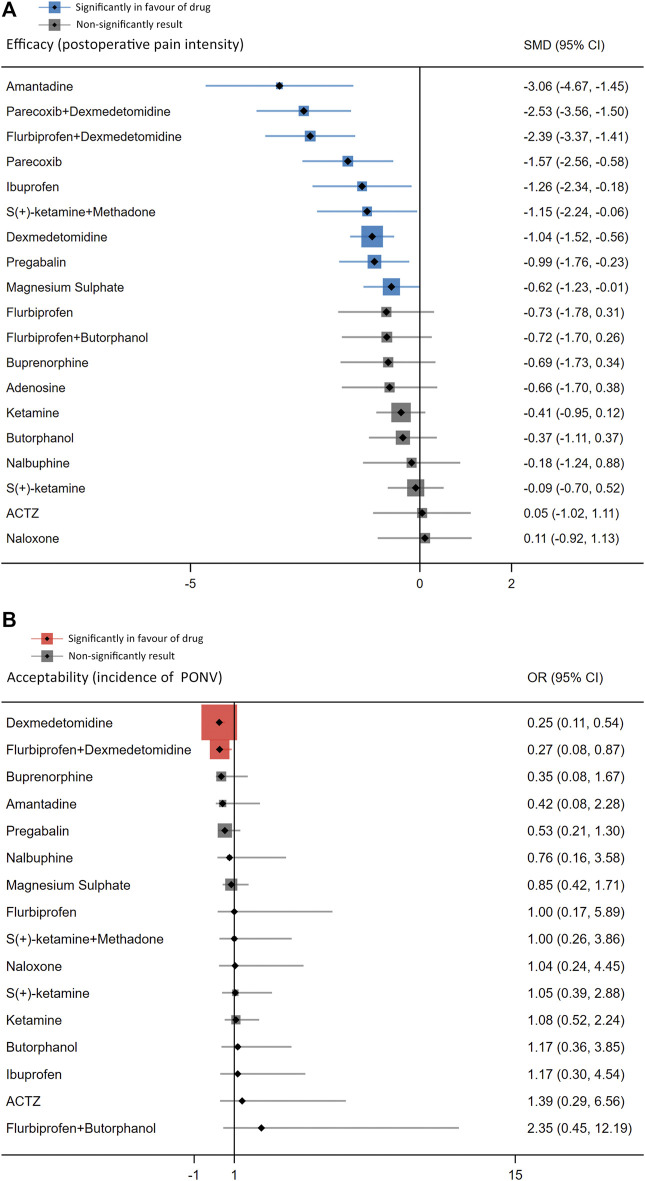
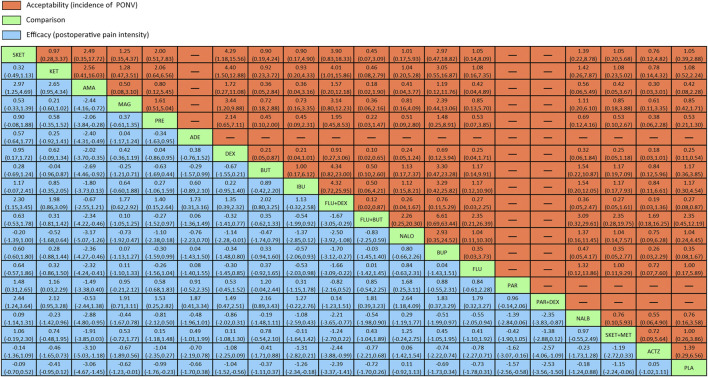
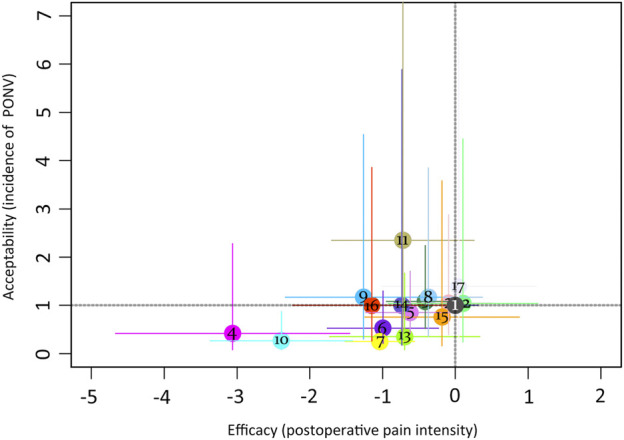
Background: Opioid-induced hyperalgesia (OIH) is an adverse event of prolonged opioid use that increases pain intensity. The optimal drug to prevent these adverse effects is still unknown. We aimed to conduct a network meta-analysis to compare different pharmacological interventions for preventing the increase in postoperative pain intensity caused by OIH. Methods: Several databases were searched independently for randomized controlled trials (RCTs) comparing various pharmacological interventions to prevent OIH. The primary outcomes were postoperative pain intensity at rest after 24 h and the incidence of postoperative nausea and vomiting (PONV). Secondary outcomes included pain threshold at 24 h after surgery, total morphine consumption over 24 h, time to first postoperative analgesic requirement, and shivering incidence. Results: In total, 33 RCTs with 1711 patients were identified. In terms of postoperative pain intensity, amantadine, magnesium sulphate, pregabalin, dexmedetomidine, ibuprofen, flurbiprofen plus dexmedetomidine, parecoxib, parecoxib plus dexmedetomidine, and S (+)-ketamine plus methadone were all associated with milder pain intensity than placebo, with amantadine being the most effective (SUCRA values = 96.2). Regarding PONV incidence, intervention with dexmedetomidine or flurbiprofen plus dexmedetomidine resulted in a lower incidence than placebo, with dexmedetomidine showing the best result (SUCRA values = 90.3). Conclusion: Amantadine was identified as the best in controlling postoperative pain intensity and non-inferior to placebo in the incidence of PONV. Dexmedetomidine was the only intervention that outperformed placebo in all indicators. Clinical Trial Registration: https://www.crd.york.ac. uk/prospero/display_record.php?, CRD42021225361.
Keywords: general anesthesia; network meta-analysis; opioid-induced hyperalgesia; pharmacological interventions; postoperative nausea and vomiting; postoperative pain.
Copyright © 2023 Xie, Hong, Feng, Chen, Li and Li.
Conflict of interest statement
The authors declare that the research was conducted in the absence of any commercial or financial relationships that could be construed as a potential conflict of interest.
Figures
References
-
- Antal M., Fukazawa Y., Eördögh M., Muszil D., Molnár E., Itakura M., et al. (2008). Numbers, densities, and colocalization of AMPA- and NMDA-type glutamate receptors at individual synapses in the superficial spinal dorsal horn of rats. J. Neurosci. 28, 9692–9701. 10.1523/JNEUROSCI.1551-08.2008 - DOI - PMC - PubMed
Publication types
LinkOut - more resources
Full Text Sources
