


Hypertension among persons living with HIV-Zambia, 2021; A cross-sectional study of a national electronic health record system
- PMID: 37428721
- PMCID: PMC10332593
- DOI: 10.1371/journal.pgph.0001686
Hypertension among persons living with HIV-Zambia, 2021; A cross-sectional study of a national electronic health record system
Abstract
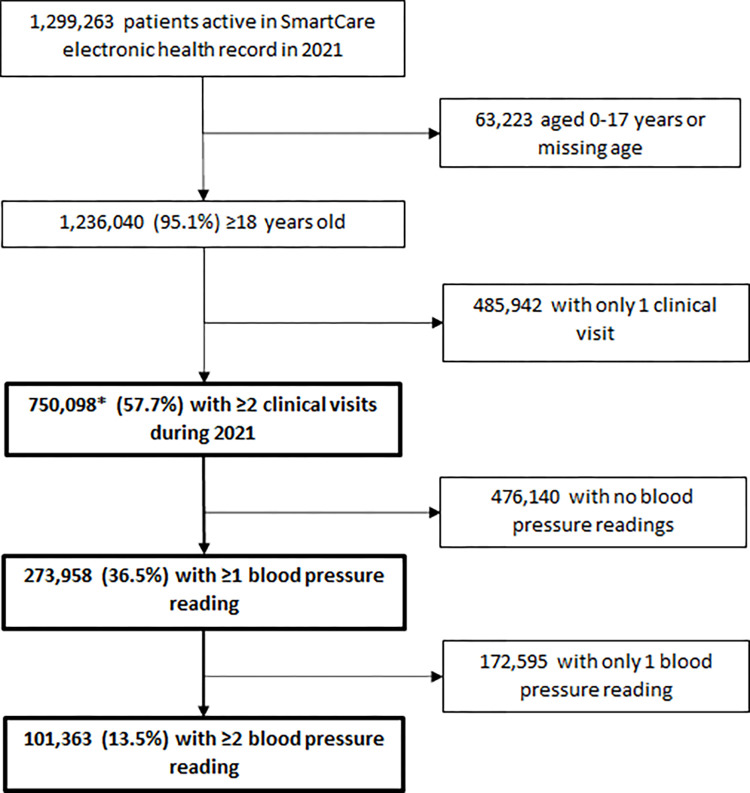
Hypertension is a major risk factor for cardiovascular disease, which is a common cause of death in Zambia. Data on hypertension prevalence in Zambia are scarce and limited to specific geographic areas and/or populations. We measured hypertension prevalence among persons living with HIV (PLHIV) in Zambia using a national electronic health record (EHR) system. We did a cross-sectional study of hypertension prevalence among PLHIV aged ≥18 years during 2021. Data were extracted from the SmartCare EHR, which covers ~90% of PLHIV on treatment in Zambia. PLHIV with ≥2 clinical visits in 2021 were included. Hypertension was defined as ≥2 elevated blood pressure readings (systolic ≥140 mmHg/diastolic ≥90 mmHg) during 2021 and/or on anti-hypertensive medication recorded in their EHR ≤5 years. Logistic regression was used to assess for associations between hypertension and demographic characteristics. Among 750,098 PLHIV aged ≥18 years with ≥2 visits during 2021, 101,363 (13.5%) had ≥2 recorded blood pressure readings. Among these PLHIV, 14.7% (95% confidence interval [CI]: 14.5-14.9) had hypertension. Only 8.9% of PLHIV with hypertension had an anti-hypertensive medication recorded in their EHR. The odds of hypertension were greater in older age groups compared to PLHIV aged 18-29 years (adjusted odds ratio [aOR] for 30-44 years: 2.6 [95% CI: 2.4-2.9]; aOR for 45-49 years: 6.4 [95% CI: 5.8-7.0]; aOR for ≥60 years: 14.5 [95% CI: 13.1-16.1]), urban areas (aOR: 1.9 [95% CI: 1.8-2.1]), and on ART for ≥6-month at a time (aOR: 1.1 [95% CI: 1.0-1.2]). Hypertension was common among PLHIV in Zambia, with few having documentation of treatment. Most PLHIV were excluded from the analysis because of missing BP measurements. Strengthening integrated management of non-communicable diseases in HIV clinics might help to diagnose and treat hypertension in Zambia. Addressing missing data of routine clinical data (like blood pressure) could improve non-communicable diseases surveillance in Zambia.
Copyright: This is an open access article, free of all copyright, and may be freely reproduced, distributed, transmitted, modified, built upon, or otherwise used by anyone for any lawful purpose. The work is made available under the Creative Commons CC0 public domain dedication.
Conflict of interest statement
The authors have read the journal’s policy and have the following competing interests: JTP is an employee of Palantir Technologies. This does not alter our adherence to PLOS policies on sharing data and materials. There are no patents, products in development or marketed products associated with this research to declare. The authors have declared that no competing interests exist.
Figures
References
-
- Abbafati C, Abbas KM, Abbasi-Kangevari M, Abd-Allah F, Abdelalim A, Abdollahi M, et al. Global burden of 369 diseases and injuries in 204 countries and territories, 1990–2019: a systematic analysis for the Global Burden of Disease Study 2019. Lancet. 2020;396(10258). doi: 10.1016/S0140-6736(20)30925-9 - DOI - PMC - PubMed
-
- Institute for Health Metrics and Evaluation. Zambia: What causes the most deaths? [Internet]. [cited 2020 Nov 17]. Available from: http://www.healthdata.org/zambia.
-
- Patel P, Rose CE, Collins PY, Nuche-Berenguer B, Sahasrabuddhe V V, Peprah E, et al. Noncommunicable diseases among HIV-infected persons in low-income and middle-income countries: a systematic review and meta-analysis. AIDS. 2018. Jul;32 Suppl 1(Suppl 1):S5–20. doi: 10.1097/QAD.0000000000001888 - DOI - PMC - PubMed
LinkOut - more resources
Full Text Sources