


Activity-based protein profiling in microbes and the gut microbiome
- PMID: 37429085
- PMCID: PMC10527501
- DOI: 10.1016/j.cbpa.2023.102351
Activity-based protein profiling in microbes and the gut microbiome
Abstract
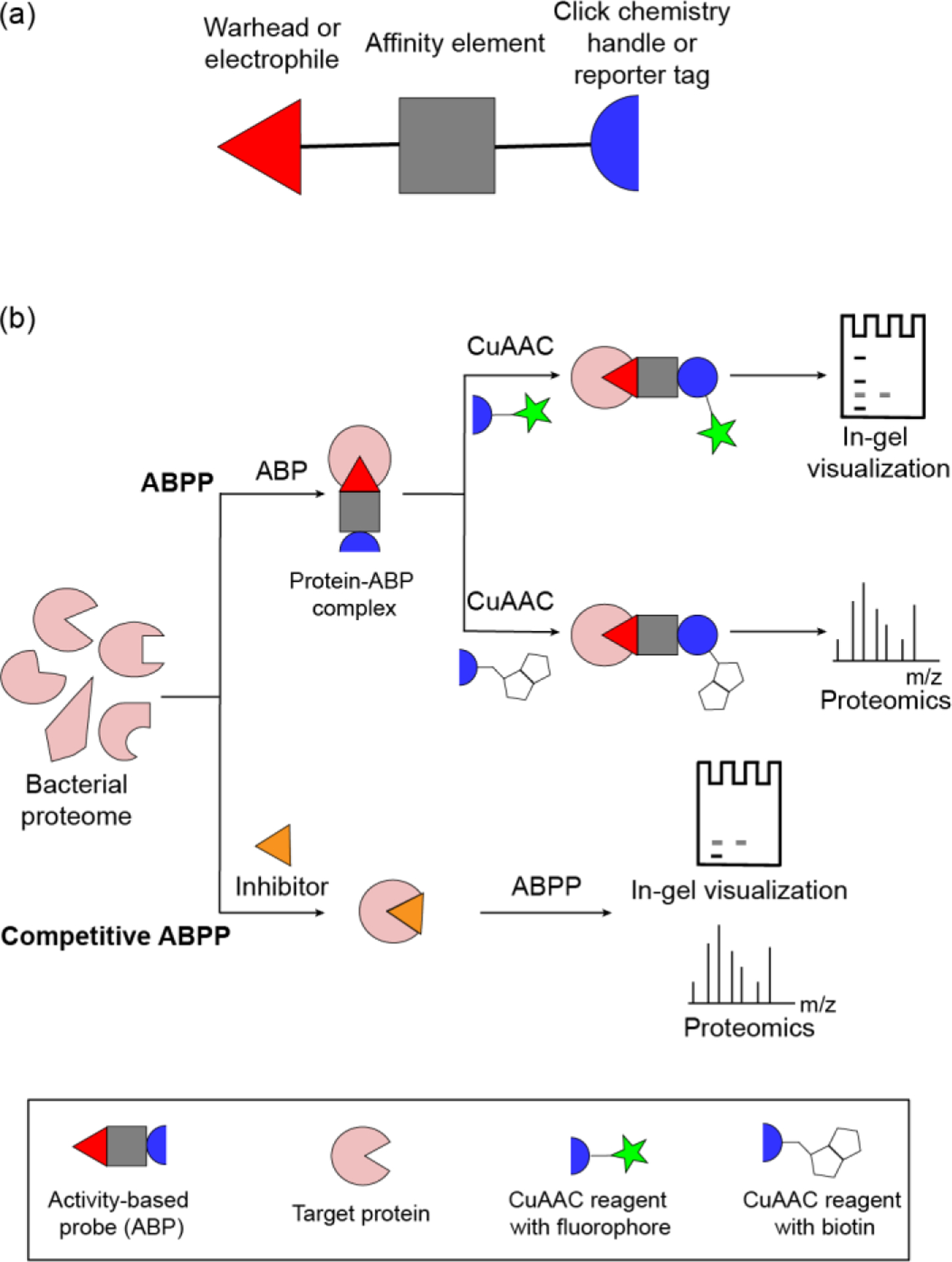
Activity-based protein profiling (ABPP) is a powerful chemical approach for probing protein function and enzymatic activity in complex biological systems. This strategy typically utilizes activity-based probes that are designed to bind a specific protein, amino acid residue, or protein family and form a covalent bond through a reactivity-based warhead. Subsequent analysis by mass spectrometry-based proteomic platforms that involve either click chemistry or affinity-based labeling to enrich for the tagged proteins enables identification of protein function and enzymatic activity. ABPP has facilitated elucidation of biological processes in bacteria, discovery of new antibiotics, and characterization of host-microbe interactions within physiological contexts. This review will focus on recent advances and applications of ABPP in bacteria and complex microbial communities.
Keywords: Activity-based probes; Bacteria; Chemoproteomics; Click chemistry; Gut microbiome.
Copyright © 2023 Elsevier Ltd. All rights reserved.
Conflict of interest statement
Declaration of competing interest The authors declare no competing interests.
Figures
References
-
- Niphakis MJ, Cravatt BF, Enzyme inhibitor discovery by activity-based protein profiling, Annu. Rev. Biochem 83 (2014) 341–377. - PubMed
-
- Karaj E, Sindi SH, Viranga Tillekeratne LM, Photoaffinity labeling and bioorthogonal ligation: two critical tools for designing “Fish Hooks” to scout for target proteins, Bioorg. Med. Chem 62 (2022) 116721. - PubMed
-
- West AV, Woo CM, Photoaffinity labeling chemistries used to map biomolecular interactions, Isr. J. Chem 63 (2023) e202200081.
Publication types
MeSH terms
Substances
Grants and funding
LinkOut - more resources
Full Text Sources
