


Urinary Tract Infection Epidemiology in NICUs in the United States
- PMID: 37429320
- PMCID: PMC11326515
- DOI: 10.1055/s-0043-1771015
Urinary Tract Infection Epidemiology in NICUs in the United States
Abstract
Objective: Our objective was to characterize the incidence, associated clinical factors, timing of infection, microbiology, and incidence of concordant blood culture of urinary tract infections (UTIs) in very low birth weight (VLBW <1,500g) infants.
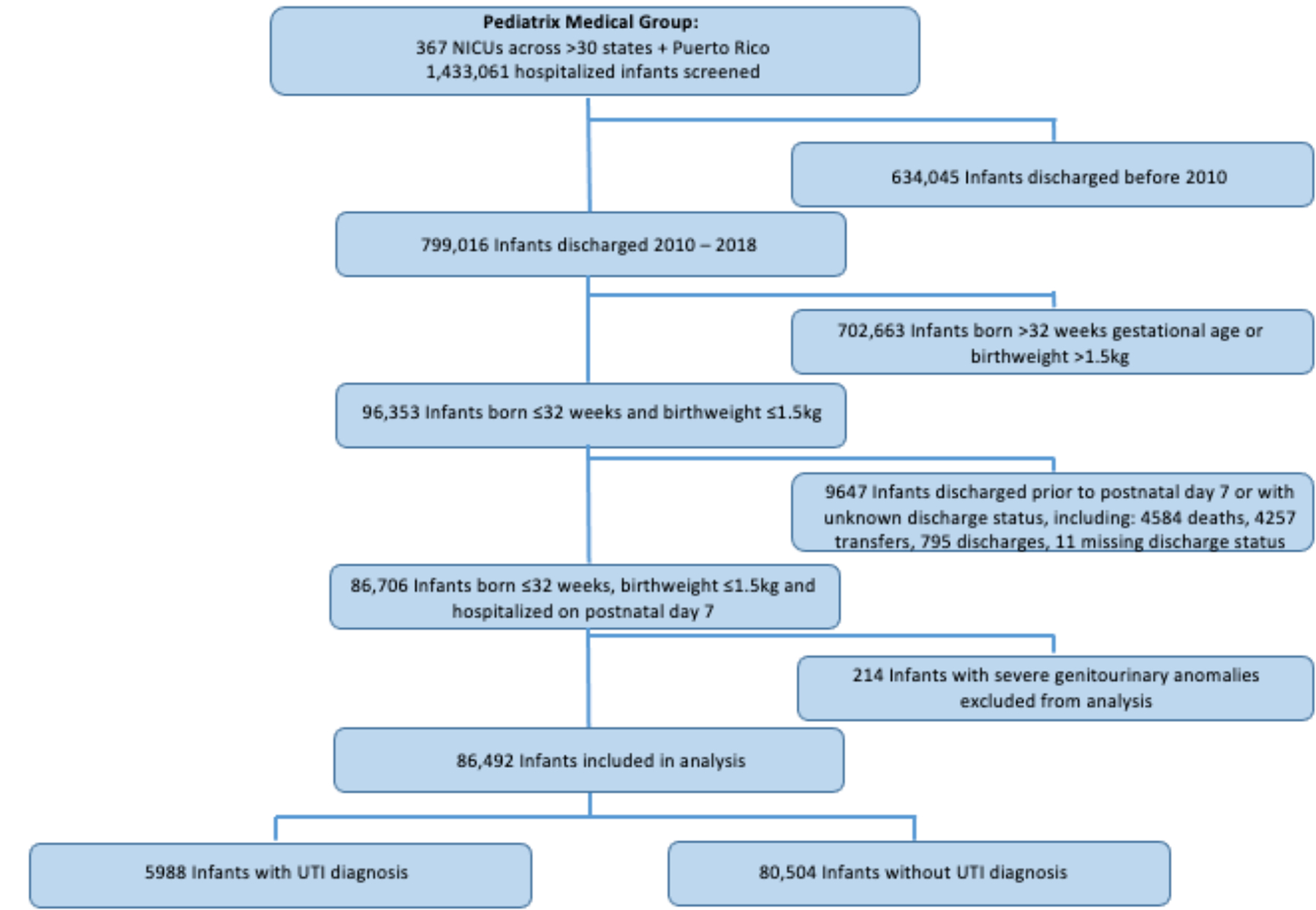
Study design: Multicenter observational cohort study of VLBW infants with gestational age (GA) ≤32 weeks, still hospitalized on postnatal day 7, and discharged 2010 to 2018 from Pediatrix Medical Group neonatal intensive care units. Demographic and clinical characteristics of infants with and without UTI were compared. Multivariable logistic regression evaluated adjusted odds of UTI diagnosis.
Results: Of 86,492 included infants, 5,988 (7%) had a UTI. The most common pathogen was Enterococcus spp. (20%), followed by Escherichia coli (19%) and Klebsiella spp. (18%). Candida spp. (6%) was the most common nonbacterial pathogen. Concordant-positive blood culture was present in 8% of infants with UTI diagnoses. UTI was associated with lower GA, male sex, vaginal delivery, prenatal steroid exposure, and longer duration of hospitalization.
Conclusion: UTI is a common cause of infection in VLBW infants, especially among the smallest, most premature, male infants, and those with a longer duration of hospitalization. Neonatal clinicians should consider obtaining urine culture in the setting of late-onset sepsis evaluations in VLBW infants.
Key points: · UTI is a common cause of LOS in VLBW infants.. · The most common pathogens are Enterococcus spp. and E. coli.. · UTI risk varies among different VLBW infant populations.. · Next steps should include evaluation of preventative measures..
Thieme. All rights reserved.
Conflict of interest statement
R.G.G. has received support from the industry for research services ( https://dcri.org/about-us/conflict-of-interest/ ).
Figures
References
-
- Clarke D, Gowrishankar M, Etches P, Lee BE, Robinson JL. Management and outcome of positive urine cultures in a neonatal intensive care unit. J Infect Public Health. 2010;3:152–8. - PubMed
-
- Griffin MP, Lake DE, Bissonette EA, Harrell FE Jr., O’Shea TM, Moorman JR. Heart rate characteristics: novel physiomarkers to predict neonatal infection and death. Pediatrics. 2005;116:1070–4. - PubMed
-
- Levy I, Comarsca J, Davidovits M, Klinger G, Sirota L, Linder N. Urinary tract infection in preterm infants: the protective role of breastfeeding. Pediatr Nephrol. 2009;24:527–31. - PubMed
Publication types
MeSH terms
Grants and funding
LinkOut - more resources
Full Text Sources
Medical
Miscellaneous
