


Helicobacter pylori strains isolated from raw poultry meat: frequency and molecular characteristics
- PMID: 37430109
- PMCID: PMC10333334
- DOI: 10.1038/s41598-023-38374-5
Helicobacter pylori strains isolated from raw poultry meat: frequency and molecular characteristics
Retraction in
-
Retraction Note: Helicobacter pylori strains isolated from raw poultry meat: frequency and molecular characteristics.Sci Rep. 2024 Apr 23;14(1):9344. doi: 10.1038/s41598-024-60110-w. Sci Rep. 2024. PMID: 38654042 Free PMC article. No abstract available.
Abstract
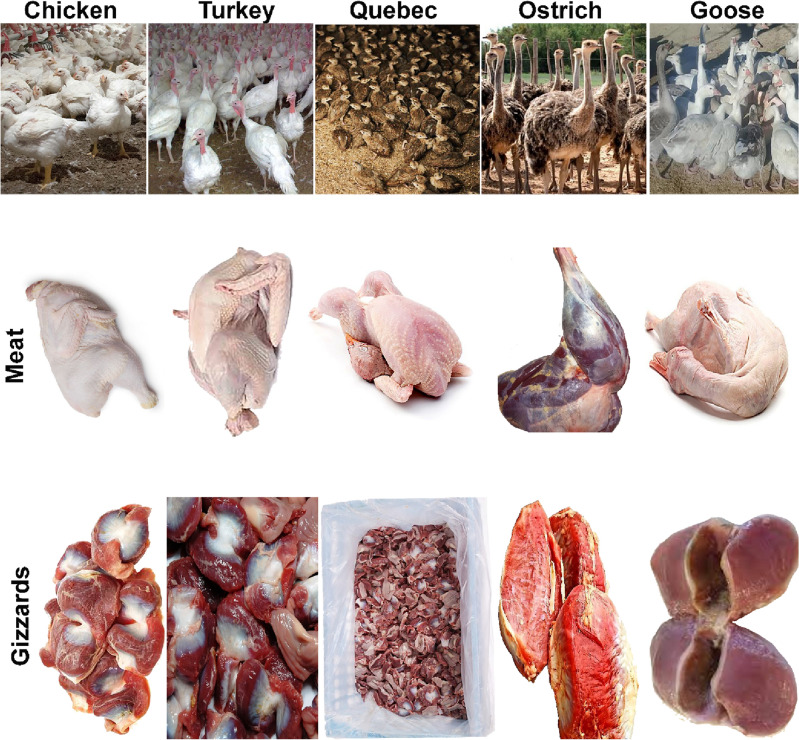
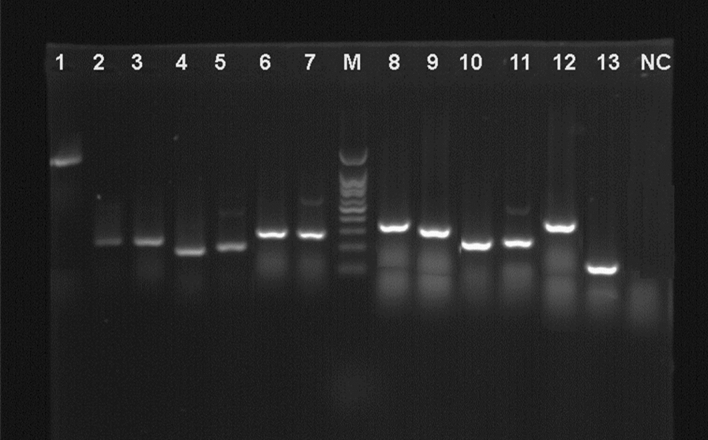
Even though Helicobacter pylori (H. pylori) is a serious pathogen, its origin is unknown. Poultry (Chicken, Turkey, Quebec, Goose, and Ostrich) are consumed as a regular protein source by a large number of people across the world; therefore, sanitary ways of delivering poultry for food are important for global health. As a result, we looked at the distribution of the pathogenicity cagA, vacA, babA2, oipA, and iceA in H. pylori isolates in poultry meat, as well as their antimicrobial resistance. Wilkins Chalgren anaerobic bacterial medium was used to cultivate 320 raw poultry specimens. Disk diffusion and Multiplex-PCR were used to investigate antimicrobial resistance and genotyping patterns, separately. H. pylori was found in 20 of 320 (6.25%) raw poultry samples. The highest incidence of H. pylori was found in chicken raw meat (15%), whereas the fewest was found in Goose and Quebec (0.00%). Resistance to ampicillin (85%), tetracycline (85%), and amoxicillin (75%) were greatest in H. pylori isolates. The percentage of H. pylori isolates with a MAR value of more than 0.2 was 17/20 (85%). The most prevalent genotypes discovered were VacA s1a (75%), m1a (75%), s2 (70%) and m2 (65%), and cagA (60%). The most typically discovered genotype patterns were s1am1a (45%), s2m1a (45%), and s2m2 (30%). BabA2, OipA + , and OipA- genotypes were found in 40%, 30%, and 30% of the population. In summary, the poultry flesh was polluted by H. pylori, with the babA2, vacA, and cagA genotypes being more prevalent. The simultaneous occurrence of vacA, cagA, iceA, oipA, and babA2 genotypes in antibiotic-resistant H. pylori bacteria implies a serious public health concern about raw poultry eating. In the future, researchers should look into H. pylori's resistance to multiple antibacterial drugs in Iran.
© 2023. The Author(s).
Conflict of interest statement
The authors declare no competing interests.
Figures
References
-
- Oz F, Celik T. Proximate composition, color and nutritional profile of raw and cooked goose meat with different methods. J. Food Process. Preserv. 2015;39(6):2442–2454. doi: 10.1111/jfpp.12494. - DOI
-
- Piri Gharaghie T, Doosti A, Mirzaei SA. Prevalence and antibiotic resistance pattern of Acinetobacter spp. infections in Shahrekord medical centers. Dev. Biol. 2021;13(4):35–46.
-
- Wong JT, de Bruyn J, Bagnol B, Grieve H, Li M, Pym R, Alders RG. Small-scale poultry and food security in resource-poor settings: A review. Glob. Food Sec. 2017;15:43–52. doi: 10.1016/j.gfs.2017.04.003. - DOI
-
- Ranjbar R, Farsani FY, Dehkordi FS. Phenotypic analysis of antibiotic resistance and genotypic study of the vacA, cagA, iceA, oipA and babA genotypes of the Helicobacter pylori strains isolated from raw meat. Antimicrob. Resist. Infect. Control. 2018;7(1):1–4. doi: 10.1186/s13756-018-0409-y. - DOI - PMC - PubMed
Publication types
MeSH terms
Substances
LinkOut - more resources
Full Text Sources
Research Materials
