Review
. 2024 Jan;22(1):18-32.
doi: 10.1038/s41579-023-00926-x. Epub 2023 Jul 10.

Plasmids, a molecular cornerstone of antimicrobial resistance in the One Health era

Affiliations
Review

Plasmids, a molecular cornerstone of antimicrobial resistance in the One Health era

Salvador Castañeda-Barba et al. Nat Rev Microbiol. 2024 Jan.

Abstract

Antimicrobial resistance (AMR) poses a substantial threat to human health. The widespread prevalence of AMR is, in part, due to the horizontal transfer of antibiotic resistance genes (ARGs), typically mediated by plasmids. Many of the plasmid-mediated resistance genes in pathogens originate from environmental, animal or human habitats. Despite evidence that plasmids mobilize ARGs between these habitats, we have a limited understanding of the ecological and evolutionary trajectories that facilitate the emergence of multidrug resistance (MDR) plasmids in clinical pathogens. One Health, a holistic framework, enables exploration of these knowledge gaps. In this Review, we provide an overview of how plasmids drive local and global AMR spread and link different habitats. We explore some of the emerging studies integrating an eco-evolutionary perspective, opening up a discussion about the factors that affect the ecology and evolution of plasmids in complex microbial communities. Specifically, we discuss how the emergence and persistence of MDR plasmids can be affected by varying selective conditions, spatial structure, environmental heterogeneity, temporal variation and coexistence with other members of the microbiome. These factors, along with others yet to be investigated, collectively determine the emergence and transfer of plasmid-mediated AMR within and between habitats at the local and global scale.


Conflict of interest statement

Competing Interests

The authors declare no competing interests.

Figures

FIG. 1:
FIG. 1:. Mechanisms of horizontal gene transfer (HGT).
Transformation (top left), transduction (top middle), conjugation (top right), nanotubes (bottom left), gene transfer agents (bottom middle), and membrane vesicles (bottom right). Transformation, transduction, and conjugation are the most well recognized in spread of AMR. Gene transfer agents, nanotubes, and membrane vesicles are other less recognized mechanisms of HGT whose role in spread of AMR remains largely unexplored.
FIG. 2:
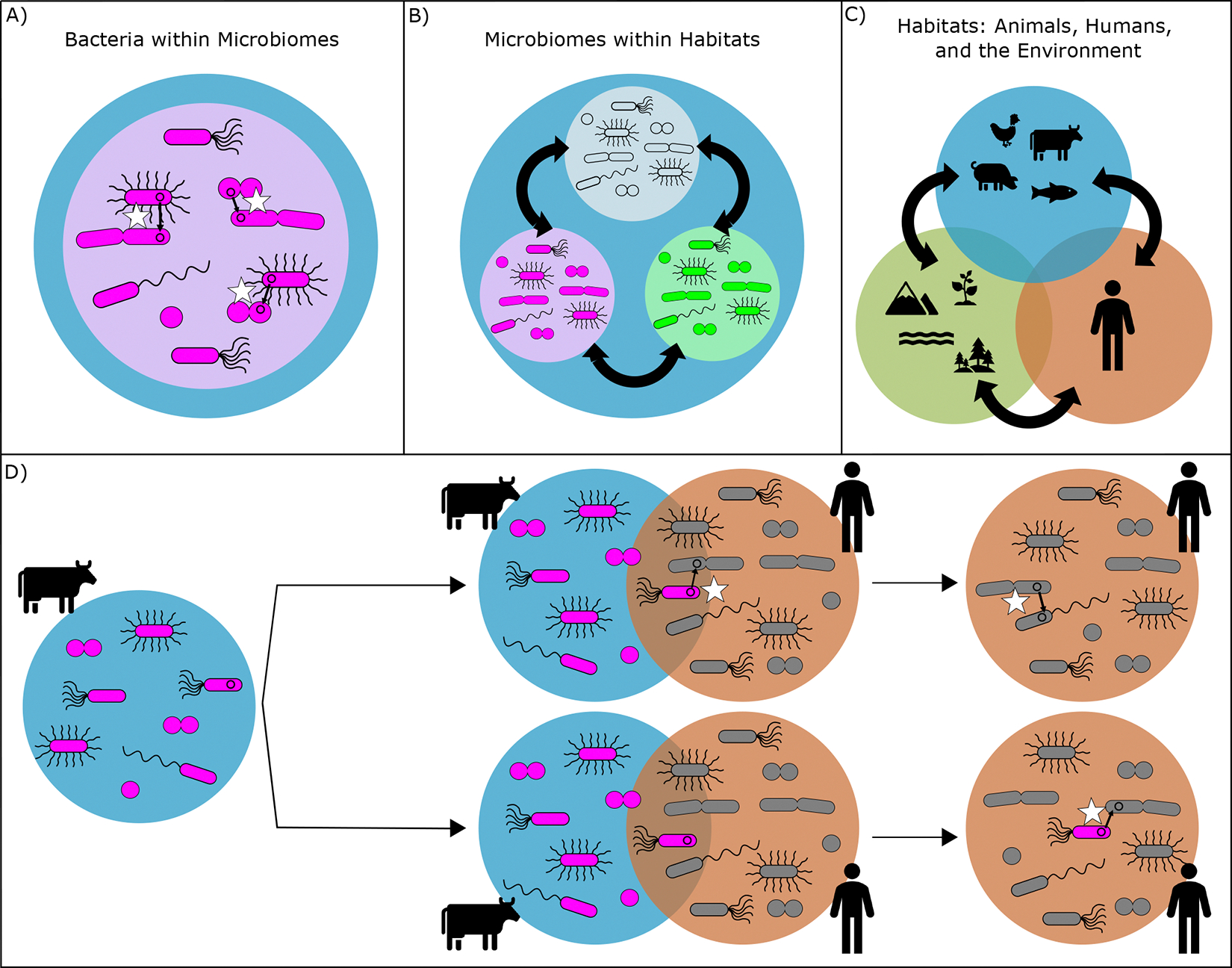
FIG. 2:. Antibiotic resistance gene (ARG) spread under a One Health Framework.
Different biological levels at which ARG spread occurs (A-C). Plasmids do not only play an important role in the spread of ARG between bacteria within a microbiome (white stars in A), and between microbiomes within a habitat (black arrows in B), but they are also pivotal for spreading ARG between habitats (C). A hypothetical pathway of a resistance plasmid from a cow to a human is depicted under (D). The spread of a plasmid can occur at areas of confluence, where microbiomes between two environments overlap. An example of such an area of confluence in farm settings arises when workers interact with cows. In this interaction, a plasmid can spread directly between animal and human bacteria (top pathway), or bacteria from the cow microbiome can survive long enough in the human microbiome to subsequently spread their plasmid (bottom pathway).
FIG. 3:
FIG. 3:. Meta-analysis on plasmids in PLSDB database.
Plasmids were classified according to the source of isolation, i.e. the habitat they were found in: Animal, Environment, or Human. A) Breakdown of habitats that plasmids with and without ARG were classified into. B) Breakdown of the number of plasmid borne antibiotic resistance genes (ARG) that were detected solely in one habitat, or in each combination of habitats. For example, there were ~ 120 ARG that were found only on plasmids in samples of Human origin. The second highest category was of ARG that were found on plasmids in all three habitats (Animal, Environment, and Human). C) Detection of a subset of ARG conferring resistance to clinically important antibiotics in the three habitats. For each gene, the percentage of plasmids within each habitat that carry that gene is shown. The bars at the bottom depict the number of habitats in which at least one plasmid carried that gene; Red = All three habitats, Black = two out of three, White= only one. Methods about this meta-analysis are detailed in the supplementary material.
FIG. 4:
FIG. 4:. In natural communities, plasmid fate is determined by multiple compounding factors at multiple biological scales.
Each box shows a biological scale in which different factors can affect plasmid ecology and evolution in natural settings. Text within each box provides a non-exhaustive list of those factors.

References

    1. Murray CJ et al. Global burden of bacterial antimicrobial resistance in 2019: a systematic analysis. Lancet 399, 629–655 (2022). - PMC - PubMed
    1. Centers for Disease Control and Prevention (U.S.). Antibiotic resistance threats in the United States, 2019. https://stacks.cdc.gov/view/cdc/82532 (2019) doi: 10.15620/cdc:82532. - DOI
    1. European Centre for Disease Prevention and Control. Antimicrobial resistance surveillance in Europe 2022 – 2020 data. European Centre for Disease Prevention and Control https://www.ecdc.europa.eu/en/publications-data/antimicrobial-resistance... (2022).
    1. World Health Organization. Global Antimicrobial Resistance and Use Surveillance System (GLASS) Report: 2021. https://www.who.int/publications-detail-redirect/9789240027336 (2021).
    1. Jonas OB, Irwin A, Berthe FCJ, Le Gall FG & Marquez PV Drug-resistant infections : a threat to our economic future (Vol. 2) : final report (English). (2017).

Substances

LinkOut - more resources