Association Between Historical Neighborhood Redlining and Cardiovascular Outcomes Among US Veterans With Atherosclerotic Cardiovascular Diseases
- PMID: 37432687
- PMCID: PMC10336624
- DOI: 10.1001/jamanetworkopen.2023.22727
Association Between Historical Neighborhood Redlining and Cardiovascular Outcomes Among US Veterans With Atherosclerotic Cardiovascular Diseases
Abstract
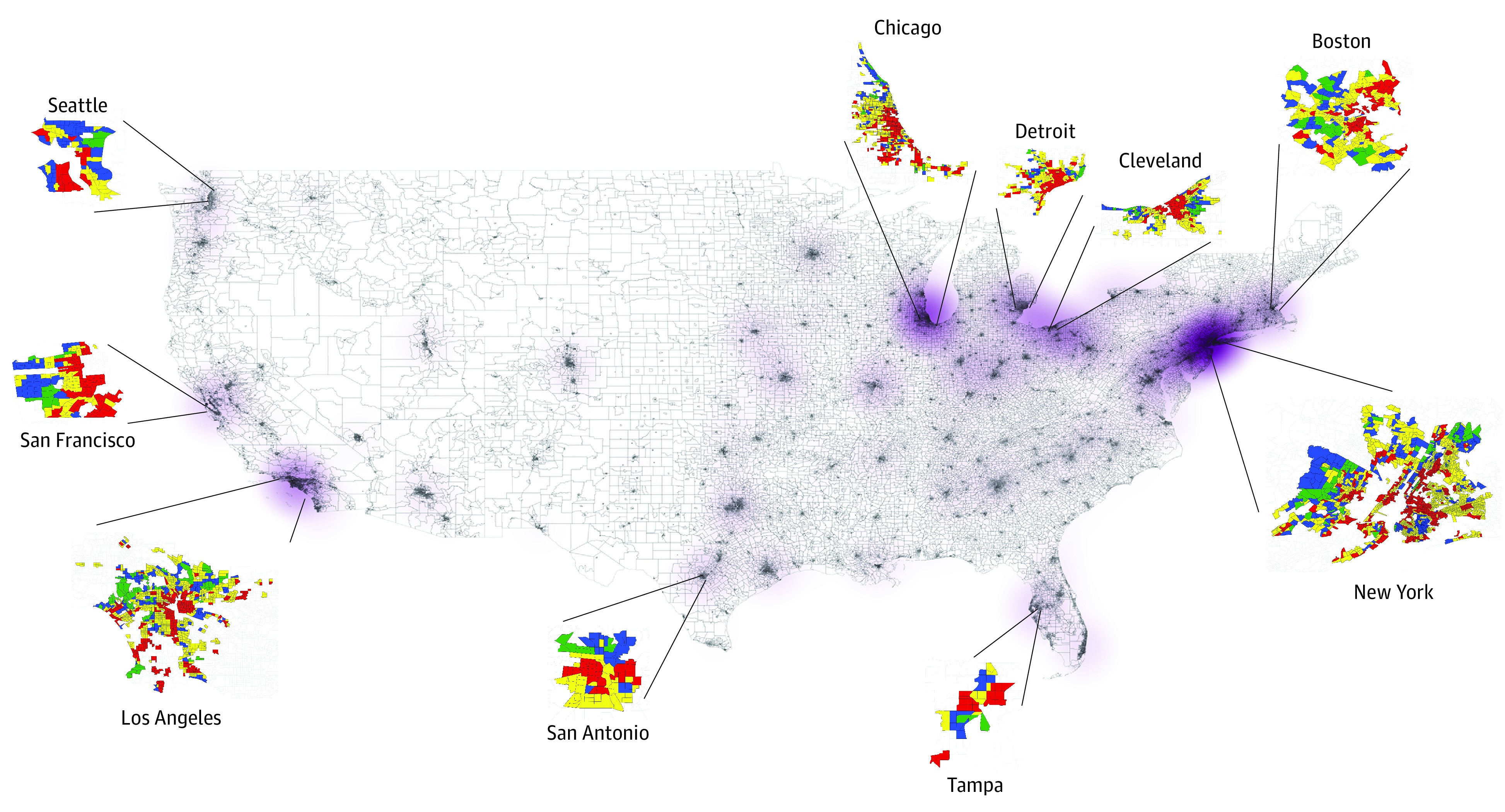
Importance: In the 1930s, the government-sponsored Home Owners' Loan Corporation (HOLC) established maps of US neighborhoods that identified mortgage risk (grade A [green] characterizing lowest-risk neighborhoods in the US through mechanisms that transcend traditional risk factors to grade D [red] characterizing highest risk). This practice led to disinvestments and segregation in neighborhoods considered redlined. Very few studies have targeted whether there is an association between redlining and cardiovascular disease.
Objective: To evaluate whether redlining is associated with adverse cardiovascular outcomes in US veterans.
Design, setting, and participants: In this longitudinal cohort study, US veterans were followed up (January 1, 2016, to December 31, 2019) for a median of 4 years. Data, including self-reported race and ethnicity, were obtained from Veterans Affairs medical centers across the US on individuals receiving care for established atherosclerotic disease (coronary artery disease, peripheral vascular disease, or stroke). Data analysis was performed in June 2022.
Exposure: Home Owners' Loan Corporation grade of the census tracts of residence.
Main outcomes and measures: The first occurrence of major adverse cardiovascular events (MACE), comprising myocardial infarction, stroke, major adverse extremity events, and all-cause mortality. The adjusted association between HOLC grade and adverse outcomes was measured using Cox proportional hazards regression. Competing risks were used to model individual nonfatal components of MACE.
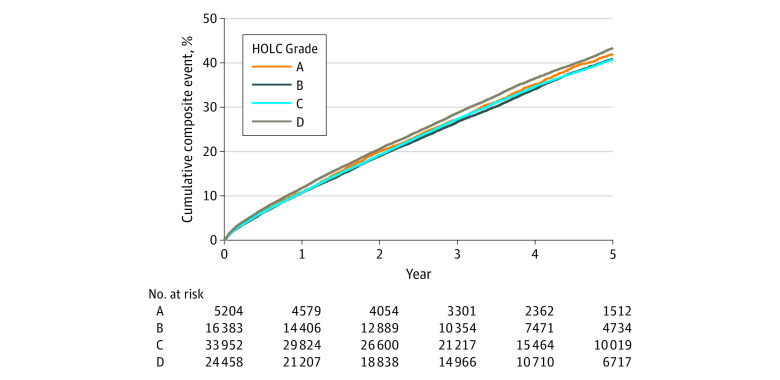
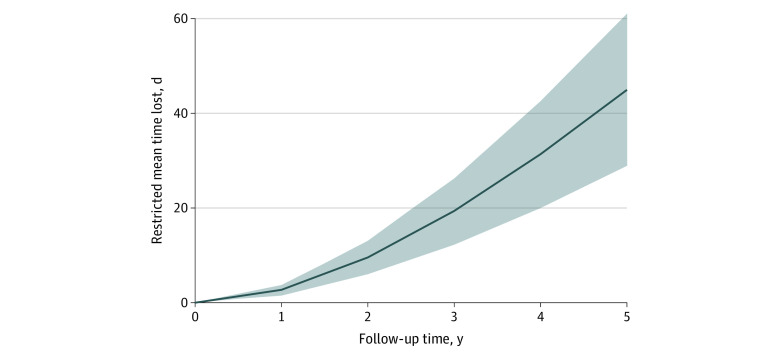
Results: Of 79 997 patients (mean [SD] age, 74.46 [10.16] years, female, 2.9%; White, 55.7%; Black, 37.3%; and Hispanic, 5.4%), a total of 7% of the individuals resided in HOLC grade A neighborhoods, 20% in B neighborhoods, 42% in C neighborhoods, and 31% in D neighborhoods. Compared with grade A neighborhoods, patients residing in HOLC grade D (redlined) neighborhoods were more likely to be Black or Hispanic with a higher prevalence of diabetes, heart failure, and chronic kidney disease. There were no associations between HOLC and MACE in unadjusted models. After adjustment for demographic factors, compared with grade A neighborhoods, those residing in redlined neighborhoods had an increased risk of MACE (hazard ratio [HR], 1.139; 95% CI, 1.083-1.198; P < .001) and all-cause mortality (HR, 1.129; 95% CI, 1.072-1.190; P < .001). Similarly, veterans residing in redlined neighborhoods had a higher risk of myocardial infarction (HR, 1.148; 95% CI, 1.011-1.303; P < .001) but not stroke (HR, 0.889; 95% CI, 0.584-1.353; P = .58). Hazard ratios were smaller, but remained significant, after adjustment for risk factors and social vulnerability.
Conclusions and relevance: In this cohort study of US veterans, the findings suggest that those with atherosclerotic cardiovascular disease who reside in historically redlined neighborhoods continue to have a higher prevalence of traditional cardiovascular risk factors and higher cardiovascular risk. Even close to a century after this practice was discontinued, redlining appears to still be adversely associated with adverse cardiovascular events.
Conflict of interest statement
Figures
Comment in
-
Historical Structural Barriers and Cardiovascular Inequities.JAMA Netw Open. 2023 Jul 3;6(7):e2322673. doi: 10.1001/jamanetworkopen.2023.22673. JAMA Netw Open. 2023. PMID: 37432692 No abstract available.
References
-
- Woods LL. The Federal Home Loan Bank Board, redlining, and the national proliferation of racial lending discrimination, 1921–1950. J Urban Hist. 2012;38(6):1036-1059. doi: 10.1177/0096144211435126 - DOI
-
- Mapping inequality . Accessed January 30, 2022. https://dsl.richmond.edu/panorama/redlining/
Publication types
MeSH terms
Grants and funding
LinkOut - more resources
Full Text Sources
Medical