


Correlation of Common Carotid Artery Blood Flow Parameters With Transthoracic Echocardiographic Cardiac Output for Assessing Fluid Responsiveness After Passive Leg Raising (PLR) Test in Critically Ill Patients
- PMID: 37435241
- PMCID: PMC10332793
- DOI: 10.7759/cureus.40229
Correlation of Common Carotid Artery Blood Flow Parameters With Transthoracic Echocardiographic Cardiac Output for Assessing Fluid Responsiveness After Passive Leg Raising (PLR) Test in Critically Ill Patients
Abstract
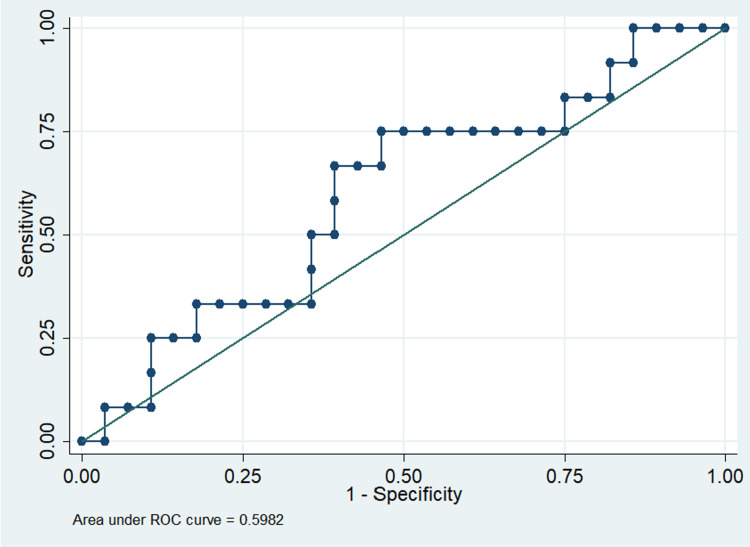
Introduction The passive leg raising (PLR) test is a simple, non-invasive method of knowing fluid responsiveness by acting as an internal-fluid challenge. The PLR test coupled with a non-invasive assessment of stroke volume would be the ideal method to assess fluid responsiveness. This study aimed to determine the correlation between transthoracic echocardiographic cardiac output (TTE-CO) and common carotid artery blood flow (CCABF) parameters in determining fluid responsiveness with the PLR test. Methods We performed a prospective observational study on 40 critically ill patients. Patients were evaluated with a 7-13 MHz linear transducer probe for CCABF parameters calculated using time-averaged mean velocity (TAmean) and with a 1-5 MHz cardiac probe equipped with tissue doppler imaging (TDI) for TTE-CO calculated using left ventricular outflow tract velocity time integral (LVOT VTI) with an apical five-chamber view. Two separate PLR tests (five minutes apart) were done within 48 hours of ICU admission. The first PLR test was to assess the effects on TTE-CO. The second PLR test was performed to assess the effects on CCABF parameters. Patients were designated as fluid responders (FR) if changes in TTE-CO (Δ TTE-CO) ≥ 10 %. Results A positive PLR test was observed in 33% of patients. A strong correlation was present between absolute values of TTE-CO calculated using LVOT VTI and the absolute values of CCABF calculated using TAmean (r=0.60, p<0.05). However, a weak correlation was found between Δ TTE-CO and changes in CCABF (Δ CCABF) during the PLR test (r=0.05, p<0.74). A positive PLR test response could not be detected by Δ CCABF (area under the curve (AUC): 0.59 ± 0.09). Conclusions We found a moderate correlation between TTE-CO and CCABF at baseline. However, Δ TTE-CO had a very poor correlation with Δ CCABF, during the PLR test. Considering this, CCABF parameters may not be recommended as a means to detect fluid responsiveness with PLR tests in critically ill patients.
Keywords: carotid doppler; fluid responsiveness; lvot vti; passive leg raising test; transthoracic echocardiography.
Copyright © 2023, Patnaik et al.
Conflict of interest statement
The authors have declared that no competing interests exist.
Figures


References
-
- Fluid resuscitation in septic shock: a positive fluid balance and elevated central venous pressure are associated with increased mortality. Boyd JH, Forbes J, Nakada TA, Walley KR, Russell JA. Crit Care Med. 2011;39:259–265. - PubMed
-
- Passive leg raising predicts fluid responsiveness in the critically ill. Monnet X, Rienzo M, Osman D, Anguel N, Richard C, Pinsky MR, Teboul JL. Crit Care Med. 2006;34:1402–1407. - PubMed
-
- Monnet X, Teboul JL. Applied Physiology in Intensive Care Medicine 2: Physiological Reviews and Editorials. Berlin: Springer-Verlag; 2012. Passive leg raising; pp. 55–59.
-
- Dynamic changes in arterial waveform derived variables and fluid responsiveness in mechanically ventilated patients: a systematic review of the literature. Marik PE, Cavallazzi R, Vasu T, Hirani A. Crit Care Med. 2009;37:2642–2647. - PubMed
-
- Intravascular volume monitoring and extravascular lung water in septic patients with pulmonary edema. Boussat S, Jacques T, Levy B, Laurent E, Gache A, Capellier G, Neidhardt A. Intensive Care Med. 2002;28:712–718. - PubMed
LinkOut - more resources
Full Text Sources