. 2023 Jul 12;15(704):eadg9452.
doi: 10.1126/scitranslmed.adg9452. Epub 2023 Jul 12.

Additive effects of booster mRNA vaccination and SARS-CoV-2 Omicron infection on T cell immunity across immunocompromised states

Affiliations

Additive effects of booster mRNA vaccination and SARS-CoV-2 Omicron infection on T cell immunity across immunocompromised states

Thomas R Müller et al. Sci Transl Med. .

Abstract

Suboptimal immunity to SARS-CoV-2 mRNA vaccination has frequently been observed in individuals with various immunodeficiencies. Given the increased antibody evasion properties of emerging SARS-CoV-2 subvariants, it is necessary to assess whether other components of adaptive immunity generate resilient and protective responses against infection. We assessed T cell responses in 279 individuals, covering five different immunodeficiencies and healthy controls, before and after booster mRNA vaccination, as well as after Omicron infection in a subset of patients. We observed robust and persistent Omicron-reactive T cell responses that increased markedly upon booster vaccination and correlated directly with antibody titers across all patient groups. Poor vaccination responsiveness in immunocompromised or elderly individuals was effectively counteracted by the administration of additional vaccine doses. Functionally, Omicron-reactive T cell responses exhibited a pronounced cytotoxic profile and signs of longevity, characterized by CD45RA+ effector memory subpopulations with stem cell-like properties and increased proliferative capacity. Regardless of underlying immunodeficiency, booster-vaccinated and Omicron-infected individuals appeared protected against severe disease and exhibited enhanced and diversified T cell responses against conserved and Omicron-specific epitopes. Our findings indicate that T cells retain the ability to generate highly functional responses against newly emerging variants, even after repeated antigen exposure and a robust immunological imprint from ancestral SARS-CoV-2 mRNA vaccination.


Conflict of interest statement

Competing interests

M.B. is a consultant and has received honoraria from Oxford Immunotec, MSD, BMS, Pfizer, and Mabtech. SA has received honoraria for lectures and educational events, not related to this work, from Gilead, AbbVie, MSD, Biogen, and reports grants from Gilead and AbbVie. All other authors declare that they have no competing interests.

Figures
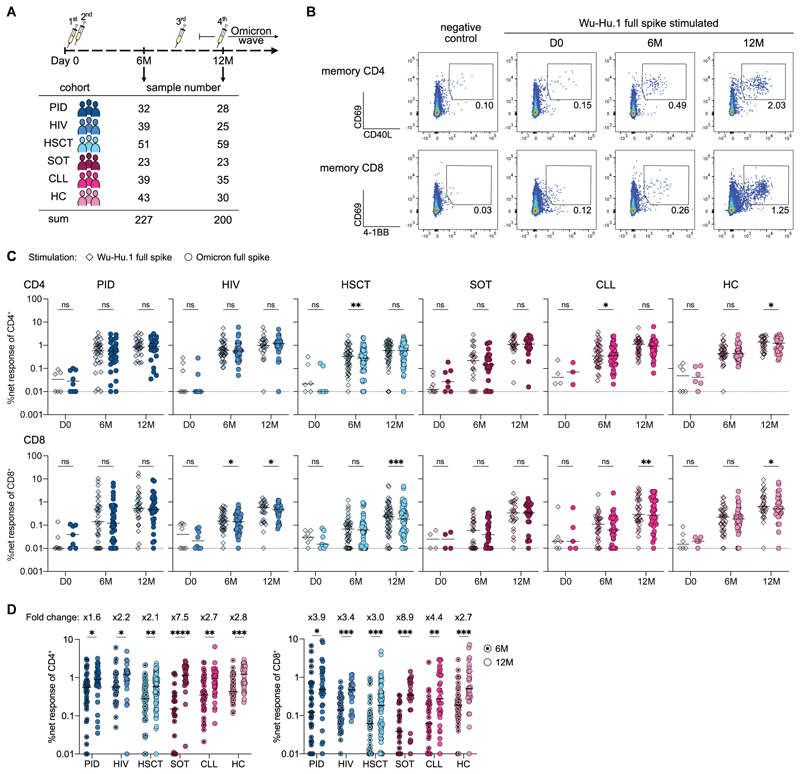
Fig. 1
Fig. 1. Booster with ancestral mRNA vaccine generates robust Omicron-reactive T cell responses across various immunocompromised states.
(A) Schematic of the longitudinal study design involving six groups of healthy and immunocompromised patients. (B) Representative plots depicting upregulation of activation markers on memory CD4+ (CD69, CD40L) and memory CD8+ (CD69, 4-1BB) T cells upon stimulation with negative control or Wu-Hu.1 full spike peptide pool over time. (C) Net frequencies (background-subtracted using DMSO negative control) of T cell responses to Wu-Hu.1 full spike and Omicron full spike peptide pools over time across all patient groups. (D) Comparison of pre- and post-booster net frequencies of CD4 and CD8 Omicron-reactive T cell responses with indicated median fold changes. (A to D) PID, primary immunodeficiency; HIV, human immunodeficiency virus type 1; HSCT, hematopoietic stem-cell transplantation; SOT, solid organ transplantation; CLL, chronic lymphocytic leukemia; HC, healthy controls. (C, D) Each dot represents one donor and lines depict the median. (C) Wilcoxon matched-pairs signed rank test for Wu-Hu.1 versus Omicron comparison with Holm-Šidák posttest to correct for multiple comparisons. (D) Mann-Whitney test with Holm-Šidák posttest. ****p <0.0001, ***p <0.001, **p <0.01, *p <0.05.
Fig. 2
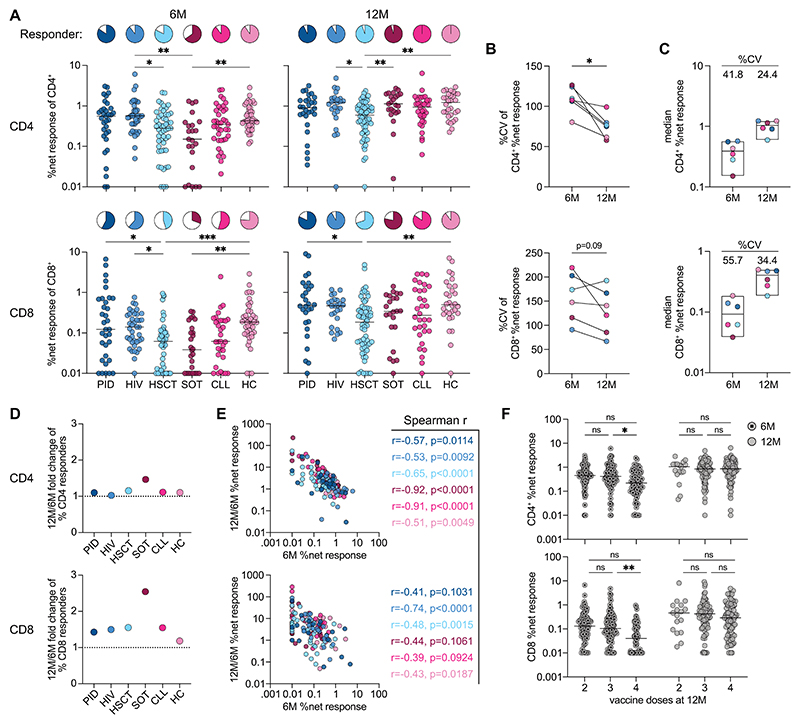
Fig. 2. Individual variability of vaccine-induced Omicron-reactive T cell responses can be counteracted by number of doses.
(A) Patient group comparison of net frequencies and responder frequencies (defined by response ≥ 2 x background) of T cell responses at 6M and 12M. (B) Coefficient of variation (CV) of T cell responses within individual patient groups at 6M and 12M. (C) Median T cell response sizes of individual patient groups at 6M and 12M and respective coefficient of variation between groups. (D) Change of mean CD4 and CD8 responder frequency between pre- and post-booster. (E) Correlation of pre-booster net frequencies with the ratio of net frequencies between pre- and post-booster with indicated Spearman correlation and p-values. (F) Comparison of pre- and post-booster T cell responses based on the number of received vaccine doses at 12M. Pooled data of entire cohort (see Suppl. Fig. 2A for patient group data). (A to F) T cell responses to Omicron full spike peptide pool. (A, E, F) Each dot represents one donor and lines depict the median. (C, D) Each dot represents the median of one patient group. (A) Kruskal Wallis test with Dunn’s posttest for patient group comparison. (B) Wilcoxon matched-pairs signed rank test. (F) Mixed-effects model with the Geisser-Greenhouse correction with Tukey’s multiple comparisons test. ***p <0.001, **p <0.01, *p <0.05.
Fig. 3
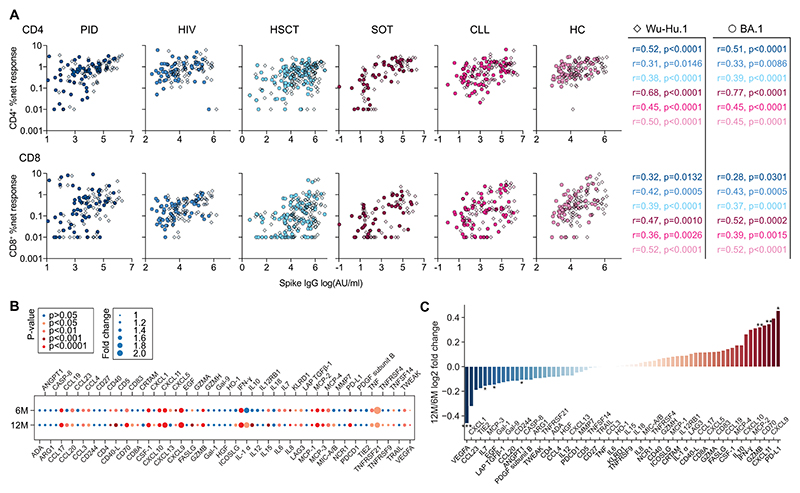
Fig. 3. Vaccine-induced T cell responses are synchronized with antibody titers and display an inflammatory immune signature.
(A) Correlation of anti-Wu-Hu.1 and -Omicron BA.1 spike IgG with CD4+ and CD8+ T cell responses to Wu-Hu.1 full spike and Omicron full spike peptide pools, respectively, with indicated Spearman r and p-values. Each dot represents one donor. Data are pooled over 6M and 12M time points. (B) Magnitude of protein secretion after Omicron full spike peptide pool stimulation of PBMCs (n=30, equally distributed across groups) before and after booster depicted as fold change over unstimulated background. (C) 12M/6M-ratio of data shown in (B) illustrating pre- and post-booster changes in protein secretion. (B, C) Wilcoxon matched-pairs signed rank test. **p <0.01, *p <0.05.
Fig. 4
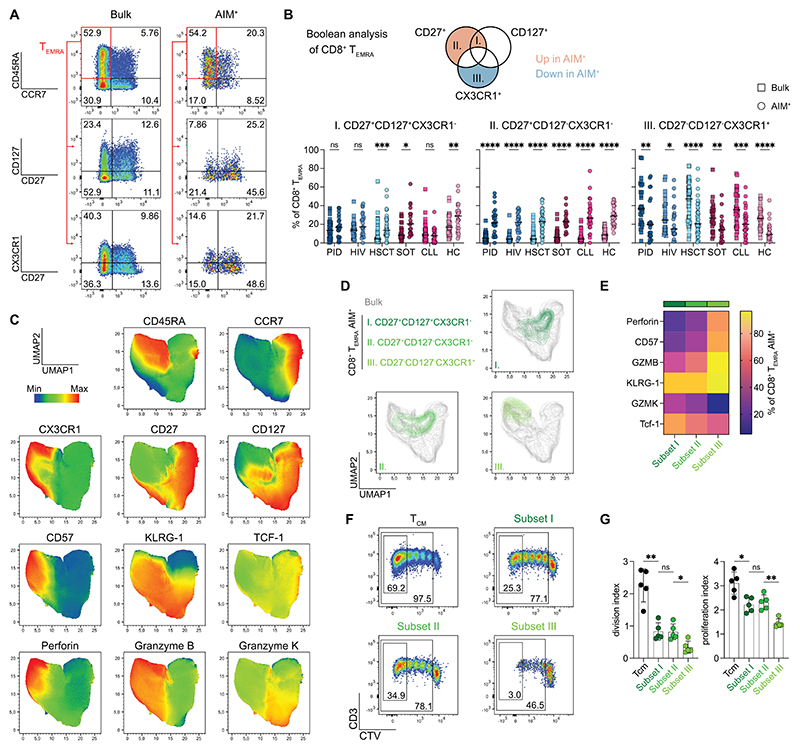
Fig. 4. TEMRA subpopulations with stem-like signatures are enriched in Omicron-reactive CD8+ T cells.
(A) Representative plots show gating on CD8+ TEMRA population as well as expression of CD27, CD127, and CX3CR1. (B) Boolean gating of CD8+ TEMRA cells based on CD27, CD127, and CX3CR1 expression. Quantification shows frequencies of three different TEMRA subpopulations between bulk and Omicron-reactive after booster doses. Each dot represents one donor, and lines depict the median. Wilcoxon matched-pairs signed rank test with Holm-Šidák posttest. (C) UMAP of bulk memory CD8+ T cells upon stimulation with Omicron full spike peptide pool (n=5 healthy donors, activation-markers excluded from UMAP calculation). (D) UMAP from (C) with an overlay of Omicron-reactive CD8+ TEMRA subsets. (E) Heatmap of key differentiation markers from data shown in (C, D) (n=11 healthy donors). (F) Representative plots showing Cell Trace Violet (CTV) dilution after five days of CD3/CD28 stimulation of sorted CD8+ TEMRA subsets and TCM as control. (G) Proliferative capacity shown as division and proliferation index calculated with data measured in (F). Each dot represents one donor, and lines depict the mean ± SD. Mann-Whitney test between indicated groups. (B, G) ****p <0.0001, ***p <0.001, **p <0.01, *p <0.05.
Fig. 5
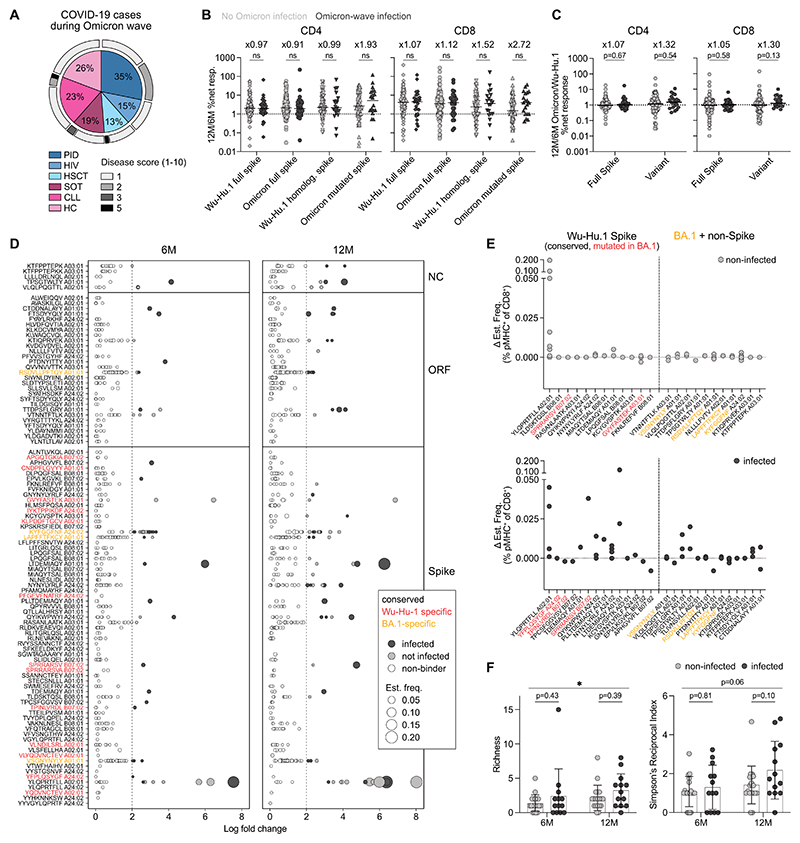
Fig. 5. Omicron infection induces T cell responses to Omicron spike and non-spike epitopes.
(A) Distribution of cases between patient groups and disease grade of infected individuals during the Omicron wave of the entire COVAXID cohort (n=356). Disease score according to WHO clinical progression scale (32). Percentages of cases in each individual patient group are indicated. (B) Ratio of 12M/6M T cell responses to Wu-Hu.1 and Omicron spike peptide pools in Omicron-wave infected and non-infected individuals. (C) Full spike and variant peptide pool Omicron/Wu-Hu.1-ratios of 12M/6M T cell responses. (D) Binding of pMHC-multimers across nucleocapsid (NC), open reading frame (ORF), and spike epitopes restricted to HLA-A01:01, -A02:01, -A03:01, A24:02, -B07:02, and -B08:01 depicted as log fold change over background (n=23 non-infected and n=13 infected, evenly distributed across groups except HIV) (E) Magnitude difference of detected pMHC-binder frequencies between 12M and 6M time points for Wu-Hu.1 spike versus Omicron BA.1 and non-spike epitopes. (F) Calculated Richness and Simpson’s Reciprocal Index of all detected pMHC-binders (spike and non-spike, conserved, Wu-Hu.1-specific and Omicron BA.1-specific). Lines depict mean ± SD. Student’s t-test for comparison of time points with pooled data. Two-way ANOVA with Šidák posttest for comparison of non-infected versus infected. *p <0.05. (B, C) Data are pooled across all patient groups. Numbers indicate median fold changes. Mann-Whitney test with Holm-Šidák posttest. (B, C, F) One dot represents one patient. (D to F) Data are pooled across all patient groups except HIV. (D, E) Each dot represents a binding response to one individual pMHC-multimer.

References

    1. Cao Y, Wang J, Jian F, Xiao T, Song W, Yisimayi A, Huang W, Li Q, Wang P, An R, Wang J, et al. Omicron escapes the majority of existing SARS-CoV-2 neutralizing antibodies. Nature. 2022;602:657–663. - PMC - PubMed
    1. Liu L, Iketani S, Guo Y, Chan JF-W, Wang M, Liu L, Luo Y, Chu H, Huang Y, Nair MS, Yu J, et al. Striking antibody evasion manifested by the Omicron variant of SARS-CoV-2. Nature. 2022;602:676–681. - PubMed
    1. Collie S, Champion J, Moultrie H, Bekker L-G, Gray G. Effectiveness of BNT162b2 Vaccine against Omicron Variant in South Africa. N Engl J Med. 2022;386:494–496. - PMC - PubMed
    1. Bertoletti A, Le Bert N, Tan AT. SARS-CoV-2-specific T cells in the changing landscape of the COVID-19 pandemic. Immunity. 2022 - PMC - PubMed
    1. Bobrovitz N, Ware H, Ma X, Li Z, Hosseini R, Cao C, Selemon A, Whelan M, Premji Z, Issa H, Cheng B, et al. Protective effectiveness of previous SARS-CoV-2 infection and hybrid immunity against the omicron variant and severe disease: a systematic review and meta-regression. Lancet Infect Dis. 2023:S1473309922008015 - PMC - PubMed

Publication types