


Adverse effects of antipsychotics on sleep in patients with schizophrenia. Systematic review and meta-analysis
- PMID: 37441144
- PMCID: PMC10333591
- DOI: 10.3389/fpsyt.2023.1189768
Adverse effects of antipsychotics on sleep in patients with schizophrenia. Systematic review and meta-analysis
Abstract
Introduction: Our objective was to conduct a systematic review and meta-analysis of adverse effects on sleep in patients with schizophrenia receiving antipsychotic treatment.
Methods: A systematic search was performed in PubMed, Cochrane Central, Embase, Toxline, Ebsco, Virtual Health Library, Web of Science, SpringerLink, and in Database of abstracts of Reviews of Effects of Randomized Clinical Trials to identify eligible studies published from January 1990 to October 2021. The methodological quality of the studies was evaluated using the CONSORT list, and the Cochrane bias tool. Network meta-analysis was performed using the Bayesian random-effects model, with multivariate meta-regression to assess the association of interest.
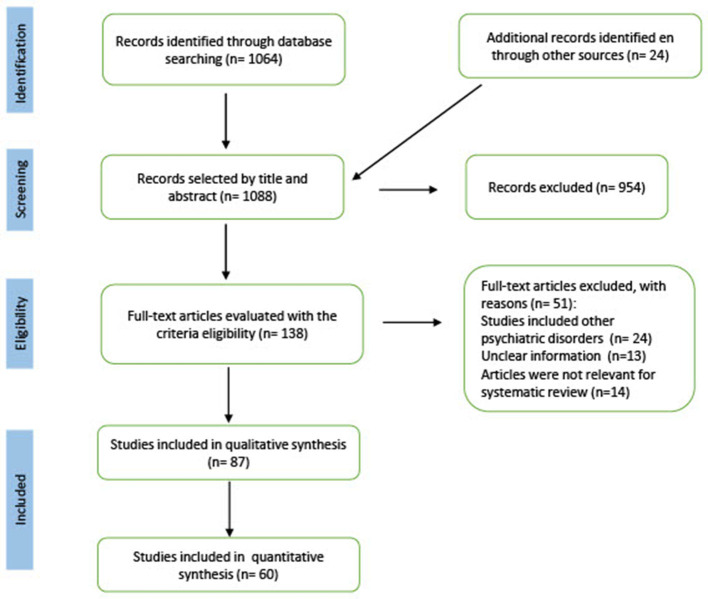
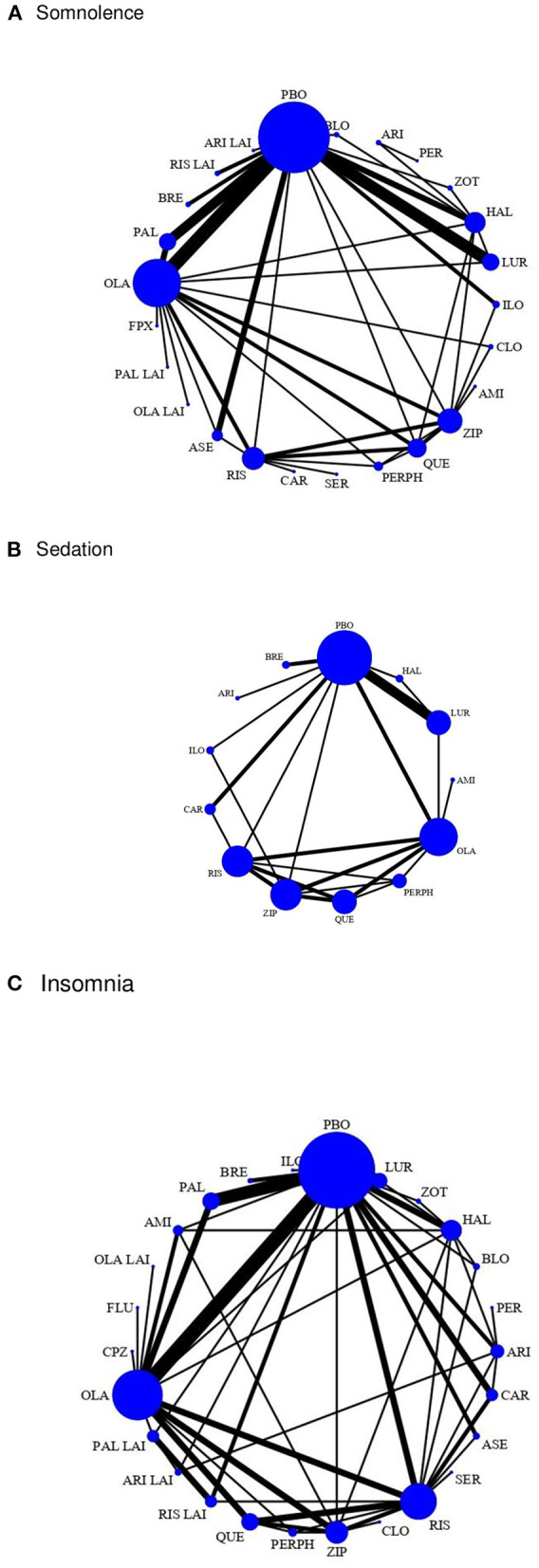
Results: 87 randomized clinical trials were identified that met the inclusion criteria, and 70 articles were included in the network meta-analysis. Regarding the methodological quality of the studies, 47 had a low or moderate bias risk. The most common adverse effects on sleep reported in the studies were insomnia, somnolence, and sedation. The results of the network meta-analysis showed that ziprasidone was associated with an increased risk of insomnia (OR, 1.56; 95% credible interval CrI, 1.18-2.06). Several of the included antipsychotics were associated with a significantly increased risk of somnolence; haloperidol (OR, 1.90; 95% CrI, 1.12-3.22), lurasidone (OR, 2.25; 95% CrI, 1.28-3.97) and ziprasidone (OR, 1.79; 95% CrI, 1.06-3.02) had the narrowest confidence intervals. In addition, perphenazine (OR, 5.33; 95% CrI, 1.92-14.83), haloperidol (OR, 2.61; 95% CrI, 1.14-5.99), and risperidone (OR, 2.41; 95% CrI, 1.21-4.80) were associated with an increased risk of sedation compared with placebo, and other antipsychotics did not differ. According to the SUCRAs for insomnia, chlorpromazine was ranked as the lowest risk of insomnia (57%), followed by clozapine (20%), while flupentixol (26 %) and perospirone (22.5%) were associated with a lower risk of somnolence. On the other hand, amisulpride (89.9%) was the safest option to reduce the risk of sedation.
Discussion: Insomnia, sedation, and somnolence were the most frequent adverse effects on sleep among the different antipsychotics administered. The evidence shows that chlorpromazine, clozapine, flupentixol, perospirone, and amisulpride had favorable safety profiles. In contrast, ziprasidone, perphenazine, haloperidol, and risperidone were the least safe for sleep.
Systematic review registration: https://www.crd.york.ac.uk/prospero/display_record.php?ID=CRD42017078052, identifier: PROSPERO 2017 CRD42017078052.
Keywords: antipsychotics; insomnia; schizophrenia; sedation; somnolence.
Copyright © 2023 Valencia Carlo, Saracco-Alvarez, Valencia Carlo, Vázquez Vega, Natera Rey and Escamilla Orozco.
Conflict of interest statement
The authors declare that the research was conducted in the absence of any commercial or financial relationships that could be construed as a potential conflict of interest.
Figures
References
-
- Winokur A, Kamath J. The effect of typical and atypical antipsychotic drugs on sleep of schizophrenic patients. In: En: Serotonin and Sleep: Molecular, Functional and Clinical Aspects. Basel: Birkhäuser Basel; (2008). p. 587–610.
Publication types
LinkOut - more resources
Full Text Sources
Miscellaneous
