


Asynchronous e-learning with technology-enabled and enhanced training for continuing education of nurses: a scoping review
- PMID: 37442970
- PMCID: PMC10339492
- DOI: 10.1186/s12909-023-04477-w
Asynchronous e-learning with technology-enabled and enhanced training for continuing education of nurses: a scoping review
Abstract
Background: Asynchronous e-learning has become the mainstream choice since the transformation of learning formats by the coronavirus disease-19 pandemic. This scoping review aimed to examine the technologies used in asynchronous e-learning for the continuing education of clinical nurses and their modes of delivery and effectiveness.
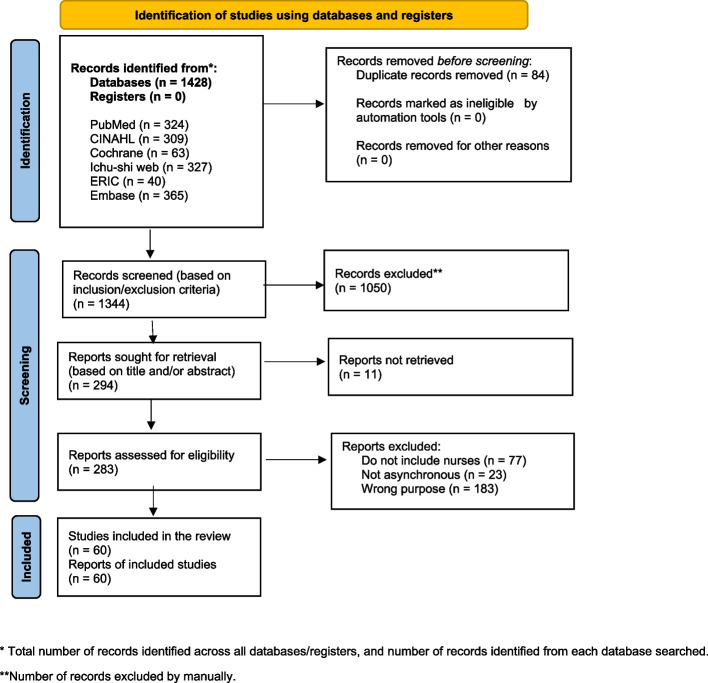
Methods: This scoping review covered the period between 2011 and 2023. Six databases were searched for relevant studies following the Preferred Reporting Items for Systematic Reviews and Meta-Analysis extension for Scoping Reviews (PRISMA-ScR) protocol.
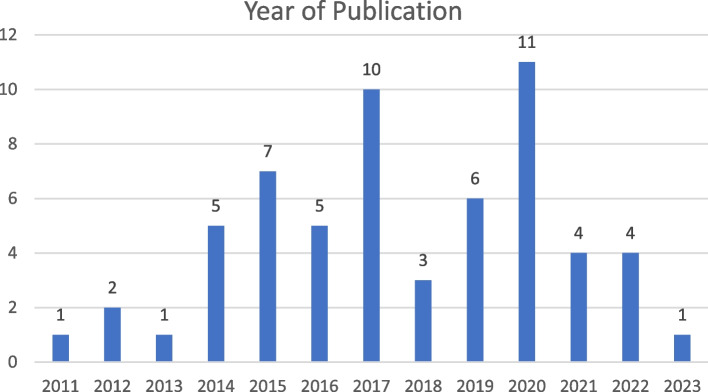
Results: Sixty articles met the inclusion criteria. There was a noticeable trend toward using diverse technology-enabled and enhanced training (TEET) options after 2017. The enabling technological approaches, such as interactive online modules (25 articles) and video modules (25 articles), are described in the articles. The most commonly used enhancing technologies were scenario-based learning (nine articles), resource access (eight articles), computer simulation or virtual reality (three articles), and gamification (three articles). Among the outcomes, knowledge acquisition was the most commonly examined outcome (41 articles).
Conclusions: Notably, many interactive TEET modules were used in asynchronous e-learning. There were few studies on gamification, computer simulation or virtual reality, and scenario-based learning (techniques to enhance intrinsic motivation further). However, the adoption of asynchronous e-learning with advanced TEET options is anticipated to increase in the future. Therefore, objective outcome measures are required to determine the effects of such learning methods on knowledge acquisition and behavioral changes.
Keywords: Asynchronous e-learning; Clinical nurses; Continuing education; Technology-enabled and enhanced training.
© 2023. The Author(s).
Conflict of interest statement
The authors declare no competing interests.
Figures
References
-
- Seymour-Walsh AE, Bell A, Weber A, Smith T. Adapting to a new reality: COVID-19 coronavirus and online education in the health professions. Rural Remote Health. 2020;20:6000. - PubMed
-
- Hamilton LS, Grant D, Kaufman JH, Diliberti MK, Schwartz HL, Hunter GP, et al. COVID-19 and the state of K–12 Schools: results and technical documentation from the Spring 2020 American educator panels COVID-19 surveys. https://www.rand.org/pubs/research_reports/RRA168-1.html. Accessed 30 Jan 2023.
Publication types
MeSH terms
LinkOut - more resources
Full Text Sources
Medical
Miscellaneous
